On this page
- When is the best time for summer roof maintenance in Ontario?
- The 10-point summer roof check at a glance
- 5 checks you can do from the ground
- 3 checks that need a closer look
- 2 checks from inside your attic
- Which of these checks are DIY, and which need a roofer?
- What does roof maintenance cost, and what does skipping it cost?
- An Ontario roof maintenance calendar: what to do each season
- When to book a professional roof inspection
- Frequently asked questions
- Reader reviews
Key takeaways
- Summer, from late June to early September, is the best time for roof maintenance in Ontario: it is dry and warm, so repairs cure before the freeze-thaw season.
- You can do about half of a 10-point roof check safely from the ground or a stable ladder; flashing, valleys, and the roof slope belong to a roofer.
- Small summer fixes run $150 to $600; the same faults left to leak through a winter typically cost $1,200 to $4,000 in deck, insulation, and ceiling repairs.
- Your attic is the most honest test: daylight through the deck, damp insulation, or a musty smell reveal roof problems the shingles hide.
- Book a free professional roof inspection every two to three years, after any major storm, and before you buy or sell a home.
By mid-July, an Ontario winter is a distant memory. The ice dams have melted, the wind has stopped prying at your shingles, and from the driveway the roof looks perfectly fine. That calm stretch is exactly when smart roof maintenance happens. Summer is the one season dry enough, warm enough, and long enough to catch small problems and fix them before the freeze-thaw cycle turns a lifted shingle into a February leak. On a recent check in Aurora, we found three lifted shingles and a cracked plumbing boot on a roof the owner was sure was flawless.
This is the summer roof check our crews run across York Region and the GTA, written as a plain 10-point list you can work through yourself: five things you can see from the ground, three that need a closer look, and two from inside your attic. We will also show what each fix costs now against what it costs after a hard winter, and when it pays to book a free roof inspection instead of climbing up. If a stain is already spreading across a ceiling, skip the list and read our guide on what to do about a roof leak first.
When is the best time for summer roof maintenance in Ontario?
The best window for roof maintenance in Ontario is late June through early September, when the roof deck is dry and daytime temperatures hold above 15 degrees. Sealants cure properly, asphalt shingles are pliable instead of winter-brittle, and every repair has months to settle before the first freeze-thaw cycle arrives in November.
Timing matters more than most homeowners think. Try to fix a shingle in January and the sealant strips will not bond, the shingle cracks the moment you flex it, and you are back up there in spring. Do the same job in July and it holds for years. The Canadian Roofing Contractors' Association recommends a twice-yearly roof review, and in Ontario the natural rhythm is a full check in summer and a quick clear-out in late fall before the snow flies.
Spring roof maintenance has its place too, mostly clearing winter debris and looking for storm damage once the snow is gone. Summer is when you do the actual repairs, because the weather finally cooperates and nothing you fix has to survive a frost while it cures. A hot July roof also gives sealant and shingle adhesive the warmth they need to bond fully, something a cool, damp spring day simply cannot offer.
The 10-point summer roof check at a glance
Here is the full check in the order we work it, from safest to most involved. Start at the top and stop the moment a step calls for a ladder or a pitch you are not comfortable on. Nothing on a roof is worth a fall from twenty feet.
- Shingles: look for lifted, curled, cracked, or missing pieces
- Rooflines: check the ridges and eaves for sagging or waviness
- Granules: look for shingle grit collecting where downspouts drain
- Moss and black streaks: note any green patches or dark staining
- Eavestroughs: watch for overflow marks and plants growing in them
- Flashing: inspect the metal around the chimney, vents, and skylights
- Plumbing boots: check the rubber collars on vent pipes for cracks
- Valleys: clear leaves and debris from where two roof slopes meet
- Attic daylight and stains: look up for light, damp spots, or rings
- Attic ventilation: confirm air is moving and the insulation is dry
5 checks you can do from the ground
Five of the ten checks need nothing but your eyes, a pair of binoculars, and a slow walk around the house. From the ground you can catch lifted shingles, sagging rooflines, granule loss, moss and streaks, and overflowing eavestroughs, which together account for most of the early roof problems our crews are called out to fix.
Walk the full perimeter and study each slope with binoculars. Lifted or curled shingles usually show first along the south and west faces that take the most sun. A roofline that dips or waves can mean a sagging deck or a structural problem underneath, and that one is worth a call rather than a wait.
Granules are the sandy coating that shields asphalt shingles from UV. A handful collecting at the base of a downspout is normal on a new roof and a warning on a 15-year-old one, because it means the shingles are wearing thin. Black streaks are usually algae, more ugly than urgent, but thick green moss traps moisture against the shingles and shortens their life, so it belongs on the fix list.
Eavestroughs tell you plenty from below. Overflow stains running down the fascia, or a little garden of maple seedlings sprouting in the trough, means water is not draining and is backing up under the roof edge. On a 1990s two-storey in Newmarket we traced a rotted fascia board straight back to two summers of clogged eavestroughs. That is the usual order of events, and our guide to soffit and fascia in Ontario works through the four upstream causes of a rotted board. Snap a photo of anything that looks off, so next summer you can compare and see whether it is holding steady or getting worse.
3 checks that need a closer look
The next three checks, eavestroughs, flashing, and roof valleys, need you up close on a stable ladder, or a roofer up on the slope. This is where summer earns its keep: clearing a blocked valley or resealing a cracked flashing joint now is a 20-minute job, while the same fault left through winter is where most leaks begin.
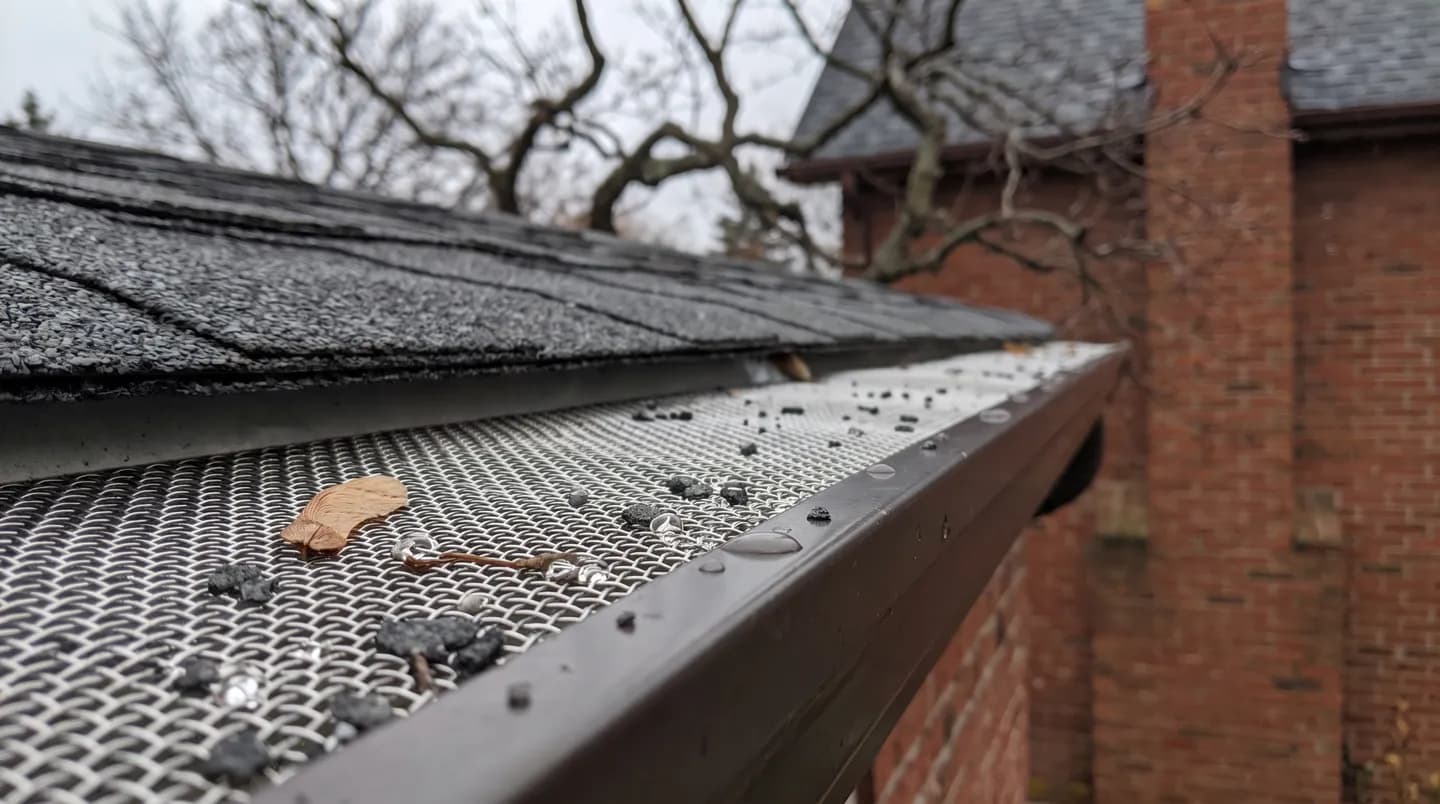
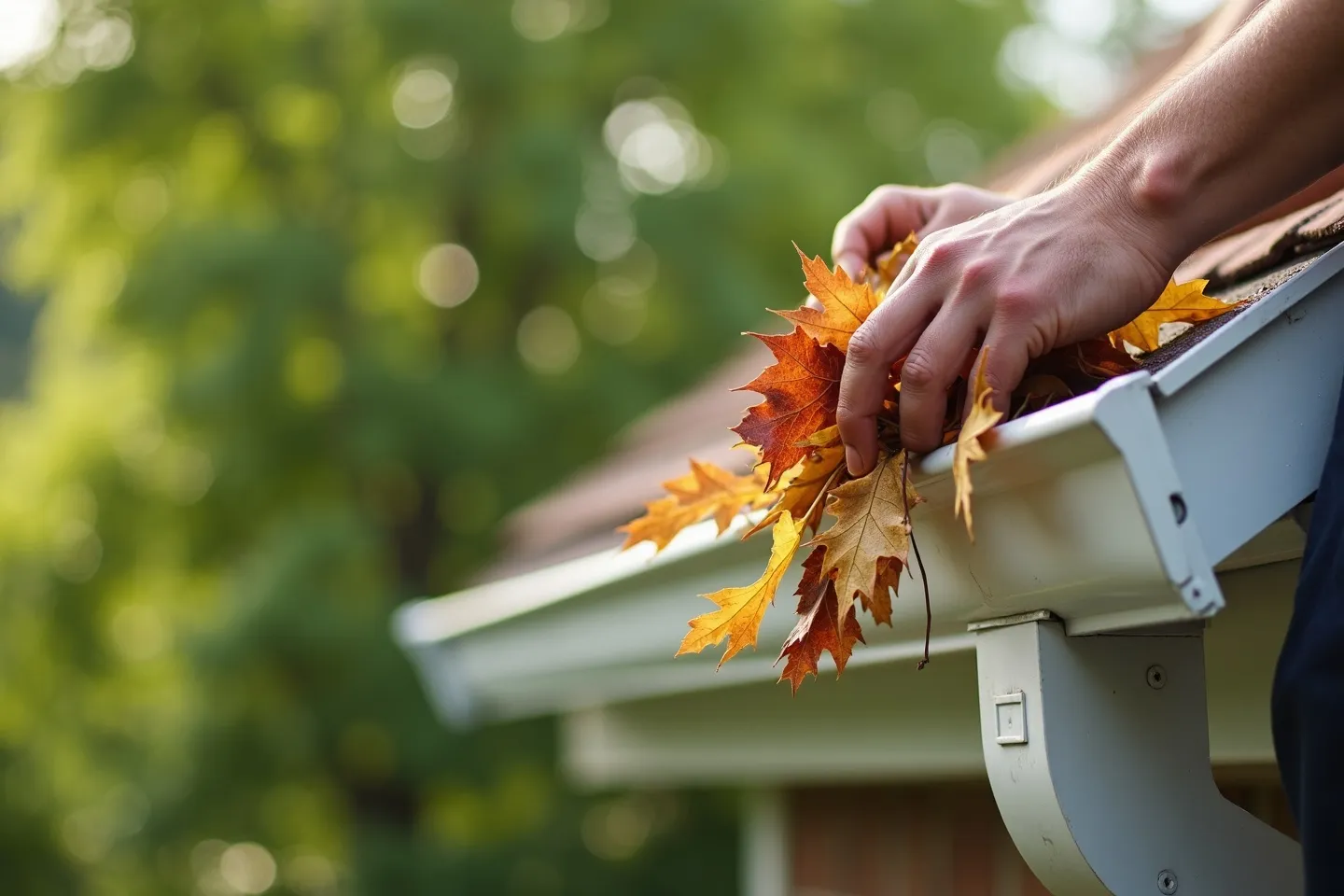
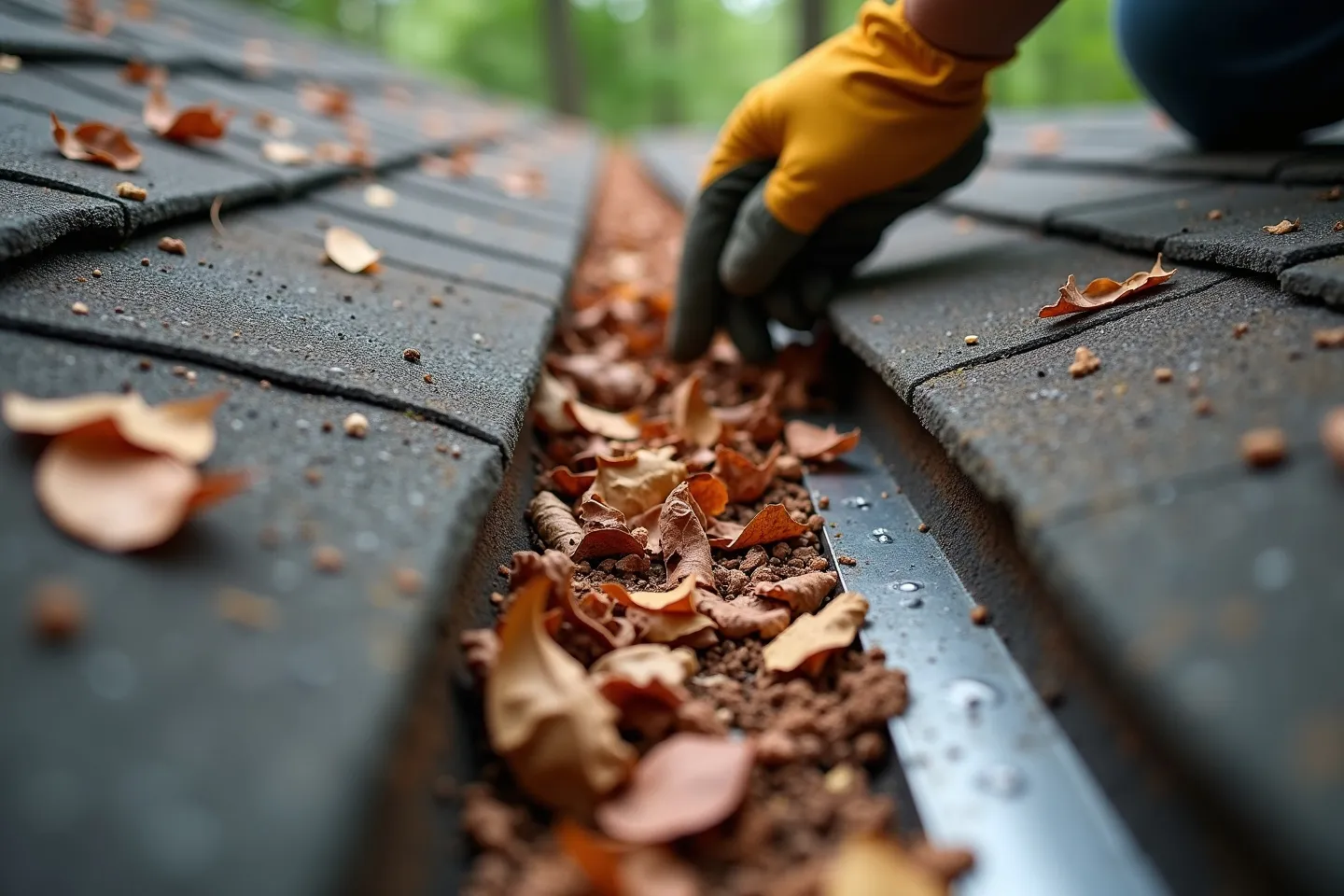
Clean the eavestroughs first. Scoop the leaves, flush the troughs and downspouts with a hose, and confirm every bracket still holds the trough tight to the fascia. How often that actually needs doing on an Ontario home, and the point where you should come down and call someone, is set out in our guide to eavestrough cleaning. While you are at the edge, look at the drip edge and the first course of shingles for damage. A seamless eavestrough fitted with a leaf guard cuts this job to almost nothing, which is why we add them to most re-roofs, though the guard has to be matched to the debris your trees actually drop. If the troughs themselves are weeping at the seams rather than simply clogged, our comparison of seamless and sectional eavestroughs covers what to replace them with.
Flashing is the metal that seals the joints a shingle cannot: around the chimney, against walls, at vent pipes, and along skylights. Roughly eight out of ten leaks we repair start at failed flashing or a split plumbing boot, not in the open shingle field. Look for lifted metal, gaps, rust, and dried-out or missing sealant. The rubber collar on a plumbing vent is a known weak point: they tend to split around the 10 to 15 year mark and cost little to replace before they leak.
Roof valleys carry the most water on the whole roof, so a valley packed with leaves and grit is a dam waiting for the next storm. Clear it by hand, check the valley flashing underneath, and make sure water runs straight to the eavestrough. On a Barrie bungalow this spring we cleared a valley holding a compost heap of pine needles, and the deck below had already started to soften.
2 checks from inside your attic
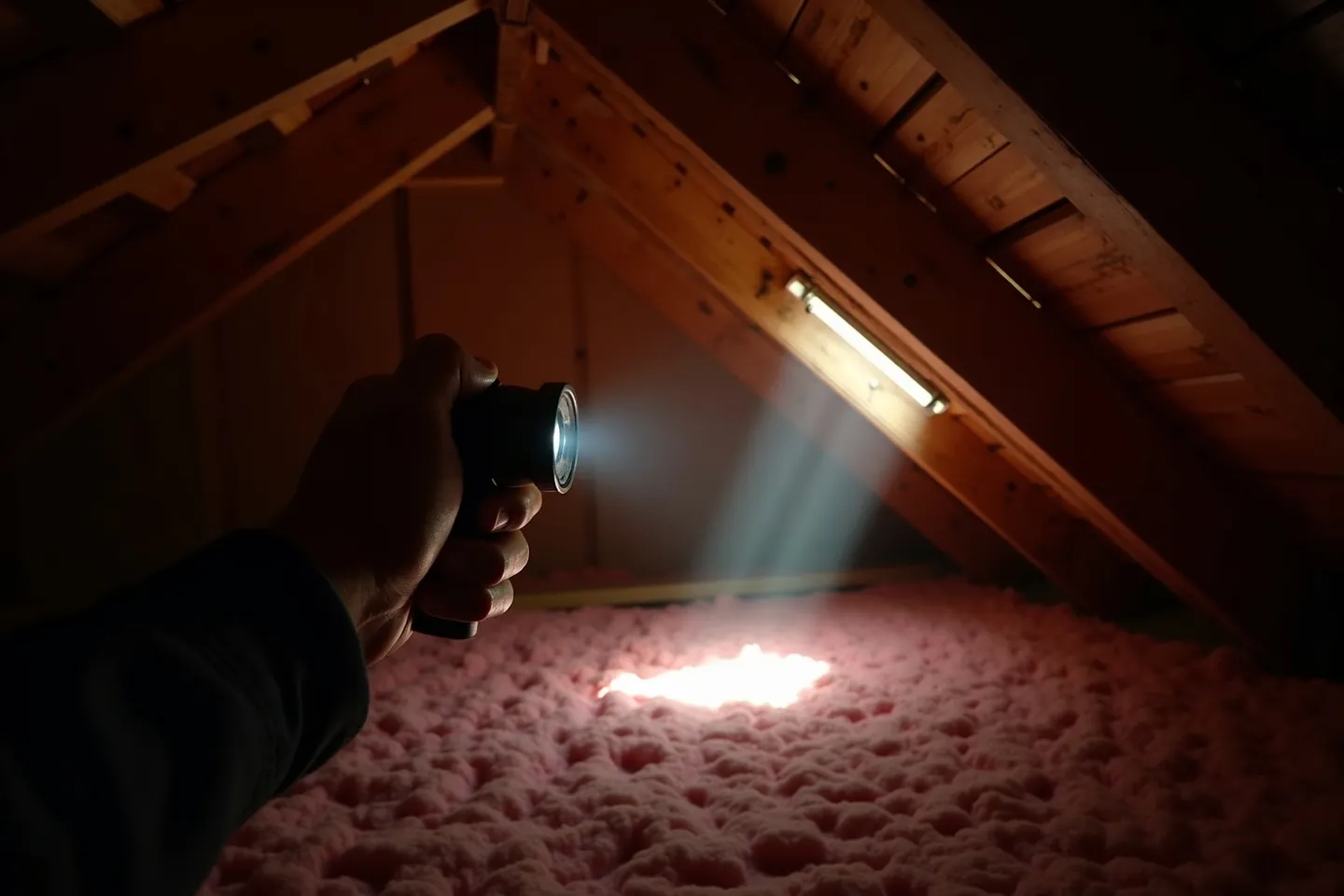
Your attic is the most honest room in the house. Two checks from inside, one for water and one for airflow, catch the roof problems you can never see from the shingles: a pinhole leak staining the sheathing, or poor ventilation that bakes your shingles in summer and breeds ice dams in winter.
Ventilation is also the exclusion most shingle warranties lean on hardest, which our guide to the best asphalt shingles for an Ontario roof works through in detail. Go up on a bright day and switch your flashlight off for a moment. Any daylight coming through the roof deck is a hole that also lets water in. Turn the light back on and scan the underside of the sheathing and the rafters for dark stains, streaks, damp insulation, or a musty smell, which all point to a leak that has not yet reached the ceiling below.
The second check is airflow. A roof needs to breathe: cool air in at the soffits, warm moist air out at the ridge. Blocked or painted-over soffit vents are one of the most common faults we find, and they matter, because the Ontario Building Code sets a minimum of roughly one square metre of vent area for every 300 square metres of insulated ceiling, the 1:300 rule. Good ventilation keeps shingles cooler, and cooler shingles last longer, which Natural Resources Canada ties to attic energy performance. Frost on the nails or damp insulation in winter is the classic sign warm air is leaking up and not venting out. If the soffits are blocked, our soffit and fascia crew can open the airflow back up.
Which of these checks are DIY, and which need a roofer?
Roughly half the list is safe to do yourself: anything from the ground or a stable step ladder at the eaves. The moment a check needs you out on the roof slope, on a steep pitch, or near power lines, it belongs to a roofer. A $300 repair is never worth a fall from twenty feet.
Here is how we sort the ten checks. The rule of thumb is simple: stay off the roof itself unless you are trained and tied off. Most of what actually protects your roof can be done with both feet on a ladder or on the ground.
| Check | DIY or pro | Why |
|---|---|---|
| Shingle and roofline scan | DIY (ground) | Binoculars from the yard, no height risk |
| Granule, moss, and streak check | DIY (ground) | Visible from below; note it, do not scrub from a ladder |
| Eavestrough clean and flush | DIY (ladder) | Safe at the eaves on stable footing |
| Flashing and plumbing boots | Pro | Needs access onto the slope to inspect and reseal |
| Valley clearing | Pro | Centre of the roof, steep and slippery when debris is wet |
| Attic daylight and stain check | DIY (interior) | Done from inside, no height risk |
| Attic ventilation check | DIY or pro | You can spot blocked soffits; opening them is our job |
Not sure a check is safe to do yourself?
We will inspect the whole roof, inside and out, and tell you what actually needs doing. Free, with no obligation.
What does roof maintenance cost, and what does skipping it cost?
A summer service call to fix the small stuff, resealing a flashing, replacing a cracked boot, refastening a few shingles, or clearing eavestroughs, typically runs $150 to $600 in Ontario. Leave those same faults for a winter and the repair bill climbs into the thousands once water reaches the deck, insulation, and ceiling below.
This is the whole argument for summer roof maintenance in one line: small money now, or large money later. The chart below pairs the typical cost of each fix against what we have actually billed to repair the same problem after it was left to leak through a winter. The gap is not small.
A cracked plumbing boot is the clearest example. Replacing the rubber collar is about $200 on a service call. Ignore it, and a winter of meltwater running down the vent pipe stains the ceiling, soaks the insulation, and becomes a $1,200 drywall and insulation repair. A failed chimney flashing left alone can run past $3,000 once water gets into the wall. None of those figures include the disruption of an interior repair, which flashing and shingle work never cause.
The math holds across the whole list. Spending around $600 a year keeping a roof maintained is far cheaper than one major repair, and it is a rounding error next to the $9,000 to $16,000 replacement you can bring on early by letting shingles bake under a blocked, unventilated attic. Set aside a small annual roof budget the way you would for a furnace tune-up, and the roof stops handing you surprises in the middle of February. When maintenance is no longer the answer, our 2026 breakdown of roof replacement cost in Ontario sets out what a full replacement should cost before you start collecting quotes.
| Category | Fix now | Repair after neglect |
|---|---|---|
| Clogged valley | $150 | $2,500 |
| Cracked vent boot | $200 | $1,200 |
| Lifted shingles | $300 | $1,500 |
| Chimney flashing | $400 | $3,000 |
| Attic venting | $600 | $4,000 |
An Ontario roof maintenance calendar: what to do each season
A roof does not need constant attention, it needs the right attention at the right time. Here is the year we recommend to homeowners across Simcoe County and the GTA, built around Ontario's freeze-thaw climate. Different roofs age differently, which is half of the metal roof against asphalt shingles decision: a standing seam metal roof needs far less of this than an aging asphalt roof, but every roof benefits from the seasonal rhythm below.
| Season | What to do |
|---|---|
| Spring | Clear winter debris, check for wind and ice damage, watch for granule loss |
| Summer | The full 10-point check and every repair, while it is warm and dry |
| Fall | Final eavestrough clean and downspout flush before the snow |
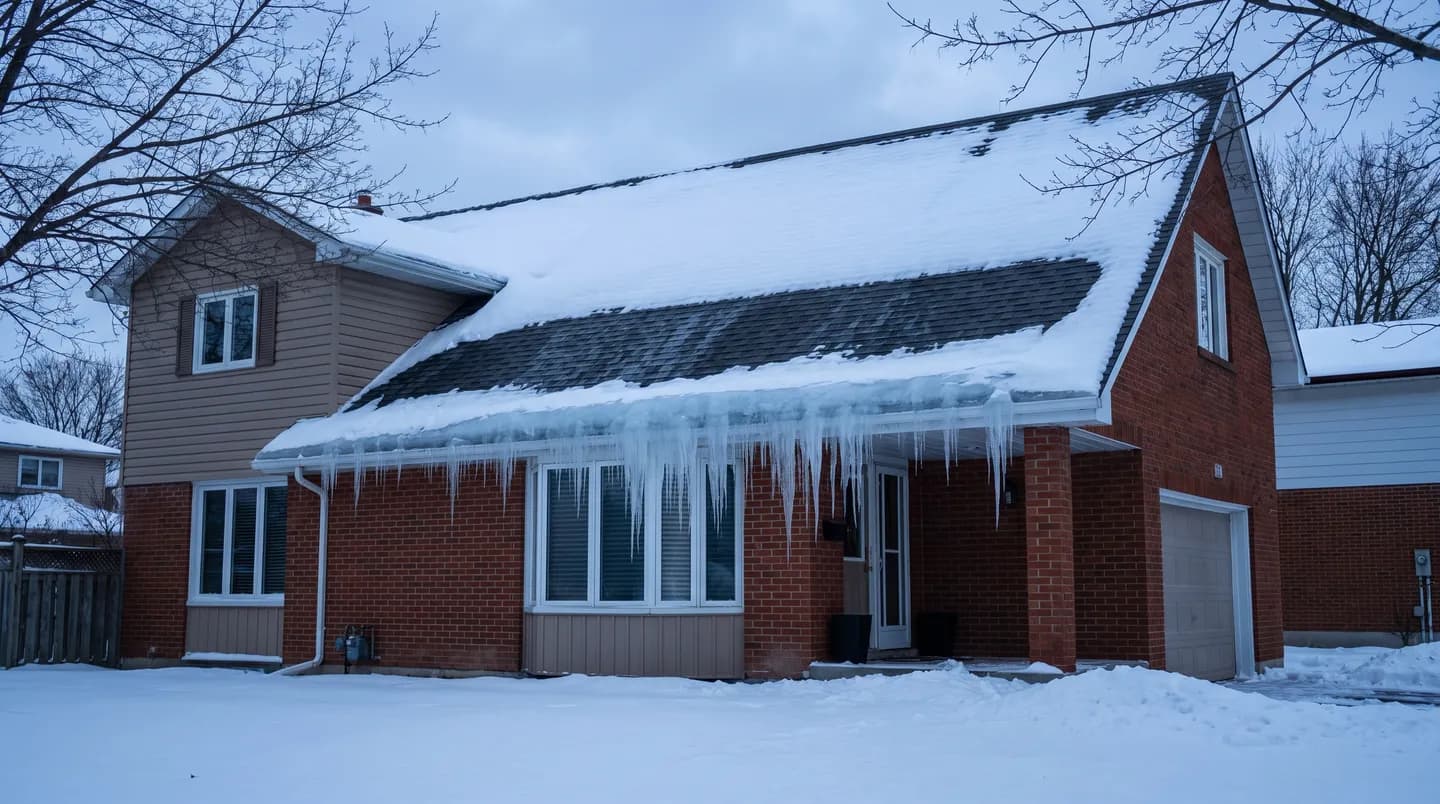
| Winter | Watch for ice dams and icicles, keep attic vents clear, stay off the roof |
We will add to our seasonal maintenance guides through the year, including how to get ahead of ice dams before winter. The roof maintenance habit that matters most is simply looking, on a schedule, before a small fault becomes an expensive one.
When to book a professional roof inspection
Book a professional roof inspection every two to three years, after any severe wind or hail storm, and before you buy or sell a home. A roofer gets onto the roof safely, checks the parts you cannot reach, and hands you a written condition report, which is worth far more than a guess made from the ground.
A homeowner check catches the obvious. A professional inspection catches what is coming: the flashing with two winters left in it, the deck softening under a valley, the ventilation quietly cooking the shingles. At Sherak, our roof repair and inspection team does this daily across York Region and the GTA, and every inspection is free with no obligation.
We back the work that follows with a 10 year workmanship warranty, $5 million liability insurance, and terms where you pay the final 10 percent only once you are satisfied. If a storm has just come through, the emergency side of the same team is on call 24/7. Book your free summer roof check and we will tell you honestly whether your roof needs work now or is good for another few years.
Sherak Ltd, Head Office 12275 Woodbine Avenue, Gormley, ON L0H 1G0 Phone: +1 905 490 8800 Email: info@sherak.ca When you do hire out, our guide on how to choose a roofing contractor covers what to check first.
Get ahead of winter with a free roof inspection
Our crews check your roof inside and out, then give you an honest written report. 10 year workmanship warranty, $5M insurance, and 10 percent due only when you are satisfied.
Book Your Free InspectionFrequently asked questions
How often should I do roof maintenance in Ontario?
Can I inspect my roof myself, or do I need a professional?
What are the signs my roof needs repair, not just cleaning?
Does roof maintenance actually save money?
Should I pressure wash my roof to remove moss and black streaks?
How much does a professional roof inspection cost in Ontario?
Written by
Emad Alikhanpour
Roofing & Exterior Specialist
Emad has 15 years of hands-on experience across roofing and every exterior service Sherak offers, from shingle and metal roofs to siding, eavestroughs, soffit and fascia, and custom flashing.
15 years in the trade · Roofing and exterior services
View profileReader reviews
Loading reviews...