On this page
- What to do in the first 10 minutes of a roof leak
- Is a roof leak an emergency? How to tell
- What is actually causing your roof leak?
- How does a roofer find the source of a leak?
- How much does roof leak repair cost in Ontario?
- Does home insurance cover roof leaks?
- How to stop a roof leak until help arrives
- Repair or replace: when a leak means more than a patch
- When to call Sherak, and what 24/7 really means
- Frequently asked questions
- Reader reviews
Key takeaways
- A minor roof leak repair in Ontario runs about $150 to $600. Once water rots the deck or shows up in several spots, expect $2,000 to $10,000 or more.
- Treat it as an emergency if water is coming in fast, pooling near a light or the electrical panel, or a ceiling is bulging. Shut off that circuit and call a 24/7 line.
- Contain the water and photograph everything before you clean up. Those photos matter for both the repair and any insurance claim.
- Insurance usually covers sudden, accidental damage such as a storm tearing off shingles, but not leaks from age, wear, or skipped maintenance.
- Most leaks start at flashing, valleys, vent boots, or ice dams, not the open shingle field, so a lasting fix means finding the real entry point.
You are watching a brown ring spread across the ceiling while rain hammers the roof, and you need two answers fast: is this an emergency, and what will it cost. A roof leak repair in Ontario runs anywhere from about $150 for a minor flashing reseal to several thousand dollars once water reaches the deck, and how quickly you act often decides which end of that range you land on. Below are the first six steps, how to tell a true emergency from a leak that can wait a day, and how our emergency roof repair crews handle it.
At Sherak we are based in Gormley and run 24/7 emergency roof repair across York Region, Simcoe, the Kawarthas, and the GTA, so we take these calls at 2 a.m. during a February thaw and in the middle of an August thunderstorm. What follows is exactly what we tell homeowners to do while a truck is on the way, and what we look for once we are up on the roof.
What to do in the first 10 minutes of a roof leak
Move electronics and valuables clear of the drip, then put a bucket under it. If the ceiling is bulging with trapped water, pierce the low point with a screwdriver and drain it into a pail before it lets go. Kill power to any room where water is near a fixture, photograph the damage, then call a roofer. Work through these six steps in order.
- Protect what you can. Slide furniture and electronics clear of the drip and lay towels down.
- Contain the water. Set a bucket under the drip and check the floor below, since water runs along joists before it shows.
- Relieve a bulging ceiling. Poke a small hole at the low point of the bulge and drain it into a pail. A coin-sized hole beats a collapsed ceiling.
- Cut the power if water is near it. If water tracks toward a light, fan, or panel, switch off that circuit at the breaker.
- Photograph everything. Shoot photos and a short video of the damage before you mop up, for the repair and any claim.
- Call a roofer, not a ladder. Phone a pro while the leak is fresh and stay off the roof; wet roofs are where injuries happen.
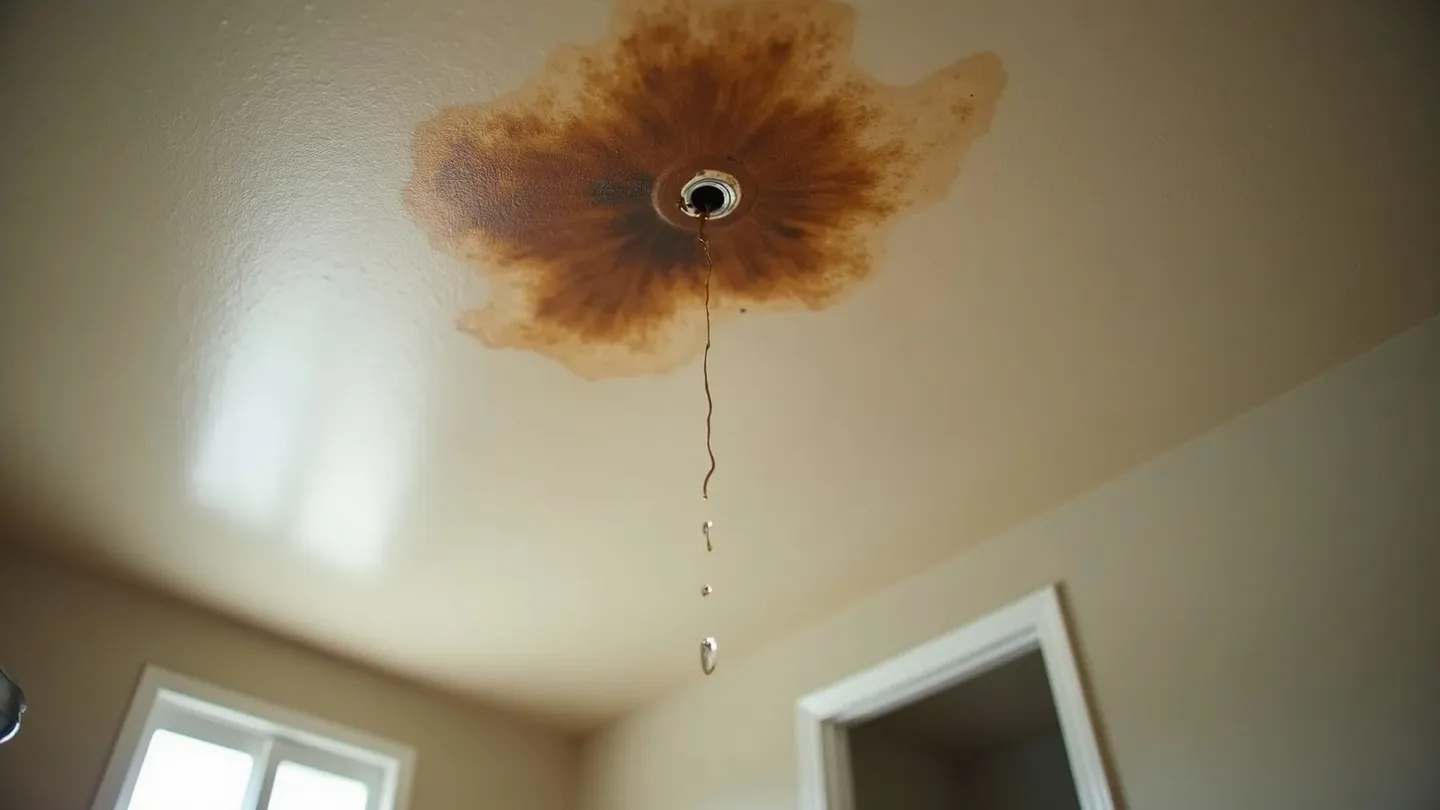
Water coming in right now?
Our 24/7 emergency roof repair crews cover the GTA, York, Simcoe, and Kawartha. Call and we will talk you through containing it, then get a truck out before a small leak turns into a ceiling.
Is a roof leak an emergency? How to tell
A roof leak is an emergency when water is coming in fast, spreading across a ceiling, pooling near electrical, or when a storm has torn part of the roof open. A slow drip that only shows during heavy rain and stops once the weather clears can usually wait a day or two for a scheduled repair.
The test is not how alarming the stain looks, it is how fast water is moving and where it is going. A steady stream, a spreading wet patch, or anything near wiring means call now. A single small mark that is not growing can be booked in. When in doubt, phone it in and describe what you see: we would rather talk you down than have you sit under a live one.
| Call for emergency repair now | Can wait for a scheduled visit |
|---|---|
| Active dripping or a steady stream | A slow drip only during heavy rain |
| A ceiling bulging or sagging with water | A small stain that is not spreading |
| Water near lights, fans, or the panel | A stain in an unfinished attic or garage |
| Shingles or flashing torn off in a storm | A minor spot you are keeping an eye on |
| Several leaks or a large wet area | One small area with dry weather ahead |
Time is the other reason to move fast. Drywall and insulation start growing mould within about 24 to 48 hours of getting wet, and soaked insulation loses much of its R-value and rarely dries out on its own. A leak caught in an hour is a stain to repaint; the same leak left a week can mean cutting out drywall, replacing insulation, and treating mould.
Homeowners in Barrie and across the Kawarthas call us most after wind and ice storms, when a gust strips shingles or an ice dam backs meltwater up under the roof. Even a leak that can wait should be looked at within a week, because the signs of shingle damage rarely fix themselves.
What is actually causing your roof leak?
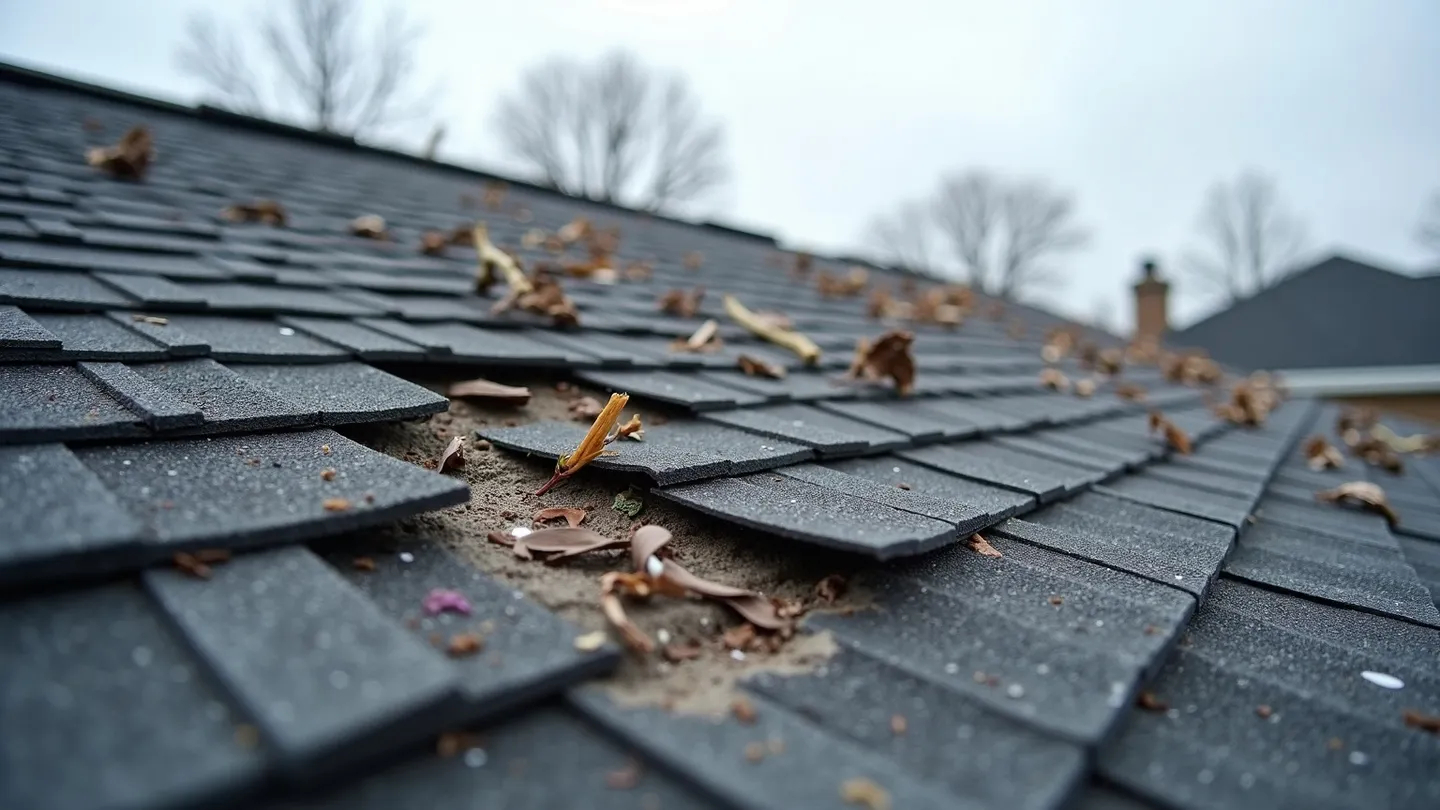
Most roof leaks do not start where the stain appears. Water slips through a gap at a flashing joint, a cracked vent boot, an open valley, a lifted shingle, or behind an ice dam, then runs along the deck or a rafter before it drips inside. Finding that true entry point is the entire job.
This is why a smear of roofing tar over the wet spot on the ceiling never works: the water is getting in somewhere uphill. On a recent repair on a two-storey in Aurora, the stain sat over the dining room, but the leak was a failed plumbing vent boot almost two metres away. We trace it back to the source, then fix that. An overflowing eavestrough belongs on the same list, since water backing up at the roof edge works its way under the shingles, and our comparison of seamless and sectional eavestroughs shows where those systems give way first. Whether that overflow is a worn-out trough or simply a full one is worth settling before anybody quotes you, and our guide to eavestrough cleaning works through how to tell.
| Common source | What you might notice | Typical fix |
|---|---|---|
| Step or chimney flashing | Stains near a chimney or a wall | Reseal or rebuild the flashing |
| Plumbing vent boot | A drip below a bathroom or kitchen | Replace the cracked rubber boot |
| Open roof valley | A stain along a roofline crease | Repair the valley and underlayment |
| Lifted or missing shingles | Granules in the eavestrough, visible gaps | Replace shingles, check underlayment |
| Ice dam at the eaves | Winter-thaw leaks, thick icicles | Clear it, then fix attic ventilation |
| Clogged eavestroughs | Water spilling over the edge, rotting fascia | Clean and repair the eavestrough |
Two of those trace back to work beyond the shingles. Failed metalwork is a job for custom flashing, and water spilling behind the gutter usually points to a tired eavestrough that is no longer carrying water away from the house. Ice dams are a ventilation problem as much as a roofing one: keeping the attic cold and dry with good insulation and airflow is what actually stops them, and the Ontario Building Code sets the ventilation and flashing standards we build to.
How does a roofer find the source of a leak?
We start inside at the stain, then work uphill on the roof, because water almost always enters above where it drips. We check the usual suspects first, flashing at chimneys and walls, vent boots, valleys, and lifted shingles, then confirm with a hose test: running water down the roof in stages until the leak reappears at the exact spot.
A hose test is the honest way to be certain. Rather than guess, we wet one area at a time, starting low and working up, while someone watches inside for the first drop. That pinpoints the entry within inches instead of tearing open a roof that is doing its job. Guesswork is how a small repair becomes a big one.
In the attic we look for the tells water leaves behind: daylight showing at a penetration, dark streaks running down the underside of the deck, and damp, matted insulation. Those often reveal a leak that has been running quietly for months, long before it stained the ceiling below, which is why we check the attic even when the drip seems to have one obvious cause.
How much does roof leak repair cost in Ontario?
A minor roof leak repair in Ontario, such as resealing flashing or swapping a vent boot, usually costs $150 to $600. A moderate repair runs $500 to $2,000, a major one $2,000 to $5,000, and once rotted decking or structural water damage is involved the bill climbs to $3,000 to $10,000 or more. The longer a leak runs, the further up that scale it moves.
Four things move the number: how hard the leak is to reach (a steep, cut-up roof takes longer and needs more safety setup), how long water has been getting in, whether it is a single point or several, and how much interior repair the drywall and insulation need. An after-hours emergency call-out also carries a premium over a scheduled daytime visit, which is one more reason to catch a leak early.
Acting fast is the cheapest insurance there is. On that Aurora repair the vent boot itself was a $300 fix, and because the homeowner called at the first stain we swapped it, checked the deck, and were done in a morning. Left a season, the same leak would have soaked the sheathing and turned a $300 job into a $3,000 one.
The chart below shows the ranges we see most. Treat them as a guide, not a quote: the only honest figure is a measured one, so we find the source, tell you whether it is a patch or a bigger job, and give you a free, no obligation quote before any work starts.
| Category | Low | High |
|---|---|---|
| Minor | 150 | 600 |
| Moderate | 500 | 2,000 |
| Major | 2,000 | 5,000 |
| Structural | 3,000 | 10,000 |
Does home insurance cover roof leaks?
Home insurance in Ontario usually covers a roof leak when the cause is sudden and accidental, like a windstorm tearing off shingles or a tree limb going through the roof. It generally does not cover leaks from age, wear, or deferred maintenance, which insurers treat as damage you were responsible for preventing.
So a healthy roof wrecked by a storm is typically claimable, while a twenty-year-old roof that finally gave up at a worn valley usually is not. To give yourself the best shot at a claim, do these four things:
- Document the damage with the photos and video you took before cleaning up.
- Mitigate further damage promptly (a temporary tarp counts), since policies expect you to limit the loss.
- Keep receipts for tarps, buckets, and any emergency work.
- Call your insurer early and get the claim number before major repairs begin.
One caveat worth knowing: if the repair is small, it may sit under your deductible, so a $400 fix is often not worth a claim. The Insurance Bureau of Canada explains how home policies treat water damage, and your own policy wording is the final word. When we handle a storm repair, we document the damage clearly so you have what you need for the adjuster.
How to stop a roof leak until help arrives
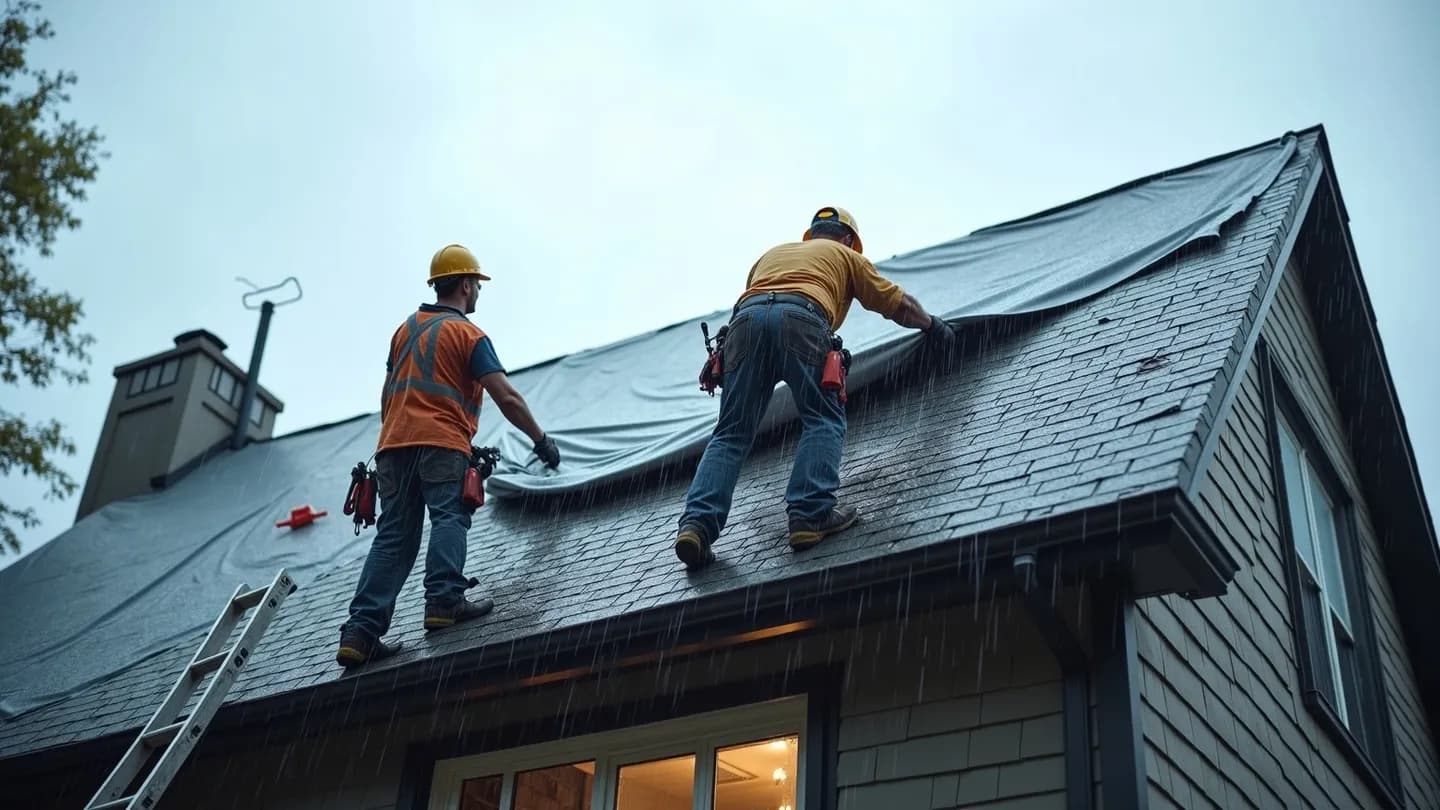
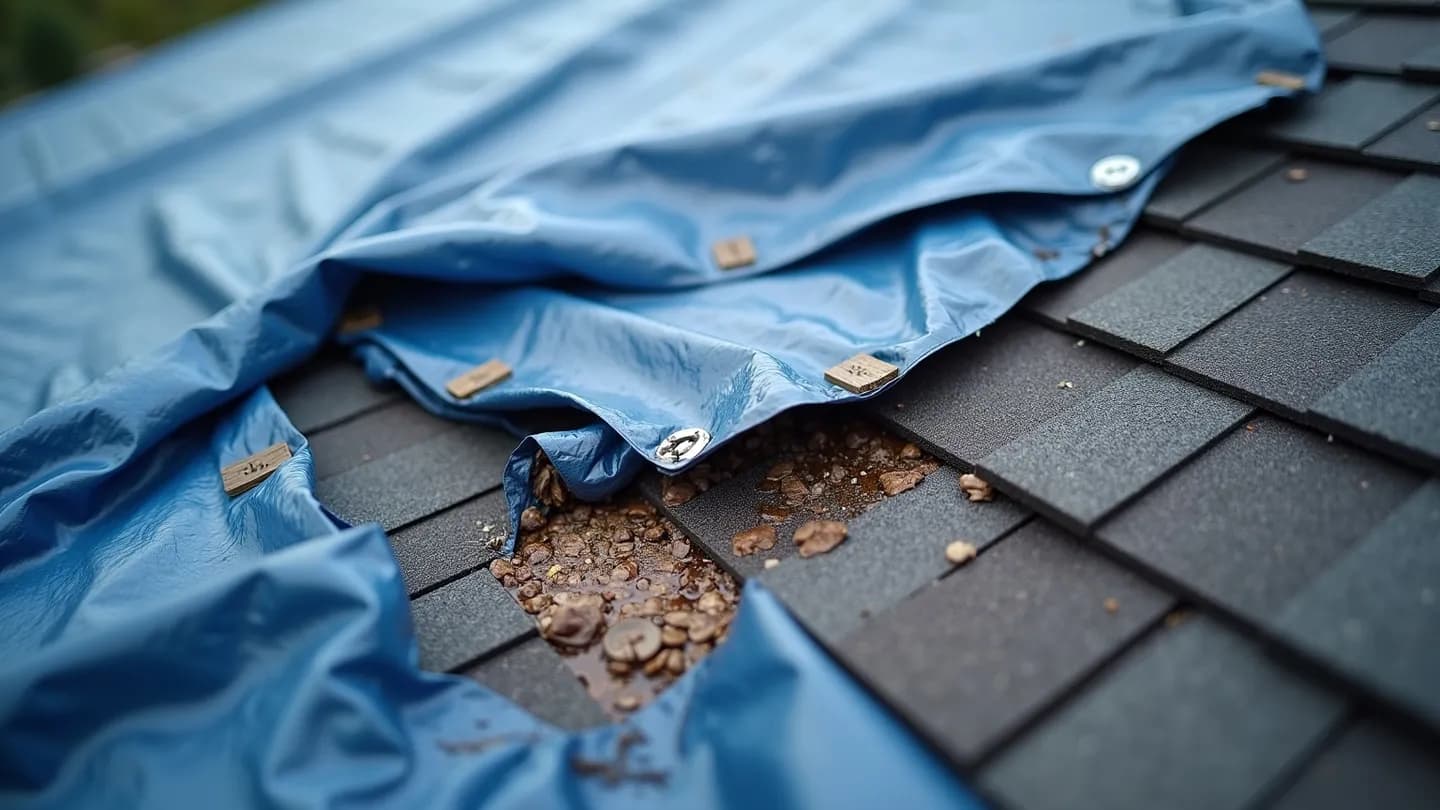
From inside, drain the ceiling and catch the water in a bucket. From outside, and only if the roof is dry and safe to stand on, cover the area with a tarp that runs from the ridge down past the leak and weight or batten it down so wind cannot get under it. If the roof is wet, icy, or steep, do not go up: wait for a pro.
A proper temporary dry-in buys you time without making things worse. The tarp has to start above the leak and lap over it, so water runs down the top of the tarp rather than under it, and the edges need battens or sandbags, not a few bricks that blow off in the next gust. From the underside, in the attic, you can slow an active drip with roofing tape on a clean, dry section of the deck, but that is a stopgap, not a repair.
A well-fastened tarp will hold for a few weeks, long enough to get a proper repair booked, but it is not a season-long fix: sun and wind break tarps down, and the damage underneath keeps spreading until it is dealt with. What you should not do is climb onto a slick roof in a storm, or trust a blob of sealant to hold. Our crews carry tarps and do a proper emergency cover so the inside stays dry until we can trace and fix the real source in daylight.
Repair or replace: when a leak means more than a patch
One leak on a roof with years left in it is a repair, plain and simple. The picture changes when a roof is near the end of its life: widespread granule loss, curling shingles, and leaks in more than one spot mean patching one hole just sends the water to the next weak point. We will tell you honestly which situation you are in, because selling you a new roof you do not need is a fast way to lose a customer for life.
There is a rough rule of thumb. If a repair would cost less than about a third of a full replacement and the roof has real life left, repair it. If you are patching the same roof every year, or a single repair starts creeping toward half the price of a new roof, replacement is usually the better money.
If replacement is the smarter call, it is a chance to weigh your options rather than just swap like for like. Our guide to the best asphalt shingles for an Ontario roof covers which grade to buy and the install details that decide how long it lasts, and if you are open to a longer-lasting roof, the numbers in our standing seam metal roof guide are worth a read. We install both asphalt shingle and metal roofs, so the advice is not tilted toward one product. When you hire, a member of the Canadian Roofing Contractors' Association with proper insurance is a safer bet than the cheapest truck in the driveway.
If the answer is replacement, our 2026 guide to roof replacement cost in Ontario sets out what the job should cost before you collect quotes. Most of the leaks we repair trace back to a small fault a summer check would have caught, which is why we walk homeowners through a 10-point summer roof maintenance list once the emergency is handled.
When to call Sherak, and what 24/7 really means
Call us the moment a leak is active, spreading, or anywhere near electrical, and call us the next morning for the slow ones. A leak never gets cheaper by waiting: today's $300 flashing reseal is next winter's rotted deck. Our emergency roof repair team answers around the clock across York Region, Simcoe, Kawartha, and the GTA, and you can browse the rest of our roof repair and storm damage guides while you decide.
Every repair we do is backed by a 10 year workmanship warranty, $5 million liability insurance, and our pay-after-satisfaction terms, so you hold back 10 percent until the work is right. That is the difference between a patch and a fix you can forget about. Call us at 905 490 8800 or request a free quote and we will find where the water is really getting in.
Sherak Ltd, Head Office
12275 Woodbine Avenue, Gormley, ON L0H 1G0
Phone: +1 905 490 8800
Email: info@sherak.ca And if you are still deciding who to call, our guide on how to choose a roofing contractor covers the credentials and red flags to check before you hire, storm chasers included.
Dealing with a roof leak? Let us find the source.
Sherak provides 24/7 emergency roof repair across York, Simcoe, Kawartha, and the GTA, backed by a 10 year workmanship warranty and $5M liability insurance.
Get a Free QuoteFrequently asked questions
How much does it cost to fix a roof leak in Ontario?
Is a roof leak always an emergency?
Will my home insurance cover a roof leak?
Can I fix a roof leak myself?
Why is my roof leaking when it is not even raining?
How fast can Sherak come out for an emergency leak?
Written by
Emad Alikhanpour
Roofing & Exterior Specialist
Emad has 15 years of hands-on experience across roofing and every exterior service Sherak offers, from shingle and metal roofs to siding, eavestroughs, soffit and fascia, and custom flashing.
15 years in the trade · Roofing and exterior services
View profileReader reviews
Loading reviews...