On this page
- The best asphalt shingles for an Ontario roof: the short answer
- What does a limited lifetime shingle warranty actually pay?
- Read the small print under that cliff
- 3-tab, architectural, or premium: which belongs on your house?
- Why six nails, not four, decide your wind rating
- The ridge cap that quietly voids your warranty
- What the warranty will not cover in an Ontario winter
- Open valleys, closed valleys, and what the manufacturer recommends
- So does the shingle brand matter at all?
- The eight lines to look for on a shingle quote
- How we spec a shingle roof
- Frequently asked questions
- Reader reviews
Key takeaways
- A "limited lifetime" shingle warranty pays in full for 15 years. After that it covers about 20 percent of the replacement shingles and no labour at all.
- Architectural (laminated) shingles belong on almost every Ontario home. The 3-tab class product carries a 25 year period with only 5 years of full coverage.
- A 210 km/h wind rating is not a product you buy, it is an installation you specify: six nails per shingle instead of four, plus starter strip at the eaves and rakes.
- Cutting field shingles into strips for the ridge cap voids the warranty. Matching hip and ridge product is required.
- Poor attic ventilation, closed valleys, and ice damming are written exclusions, so the assembly around the shingle decides whether the warranty ever pays.
Almost every homeowner asks us the same question in the same way: which brand makes the best asphalt shingles? It is the wrong first question. Every major shingle sold in Ontario is a fibreglass mat coated in asphalt and surfaced with mineral granules, and the majors sit within a few dollars a bundle of each other. The document that actually separates a 30 year roof from a 14 year roof is the one nobody reads, and it comes free with the shingles.
That document is the manufacturer's limited warranty. Read it once and it stops being a warranty and starts being a specification: it tells you how many nails your roof needs, what has to go on the ridge, why the valleys should be open, and the exact year your coverage falls off a cliff. Below we walk through it using IKO's published Canadian limited warranty, because IKO is a Canadian manufacturer that publishes its full terms. Other majors are structured similarly, but read the one that comes with your roof. If you have not settled on shingles at all yet, start with our metal roof versus asphalt shingles comparison, then come back here to pick the shingle.
The best asphalt shingles for an Ontario roof: the short answer
Buy an architectural (laminated) shingle with a limited lifetime warranty, algae resistance, and a high-wind installation to 210 km/h. Then spend your attention on the assembly: six nails, matching ridge cap, starter strip at eaves and rakes, open metal valleys, and code-compliant attic ventilation. That list matters more than the brand on the wrapper.
We install asphalt shingle roofs across York Region, Simcoe, Kawartha, and the GTA most weeks of the year, and the roofs that come back to us early almost never failed because the homeowner picked the wrong brand. They failed at the eaves, at the ridge, in a valley, or in an attic with no airflow.
So here is the honest hierarchy of what decides how long your shingle roof lasts, heaviest first:
- Whether the attic is ventilated properly
- Whether the crew followed the manufacturer's nailing and sealing instructions
- Whether the accessory products (starter, ridge cap, valley, ice and water shield) are the specified ones
- Which grade of shingle you bought
- Which brand made it
Brand comes fifth. That is not a popular thing for a roofer to say, because brand is the easiest thing to sell. Put another way, the best asphalt shingles are whichever decent laminated product gets installed to the manufacturer's own written instructions, and the warranty is where those instructions live.
What does a limited lifetime shingle warranty actually pay?
It pays in full for 15 years and very little after that. Under IKO's Canadian terms, the first 180 months are non-prorated Iron Clad Protection. From month 181 the obligation is reduced by 384/480, leaving 20 percent of the cost of replacement shingles, and from month 481 it drops to 10 percent.
The phrase "limited lifetime" does a lot of work in a sales conversation and almost none on a roof. Here is what the schedule looks like when you plot it.
| Period | From | To | Value |
|---|---|---|---|
| Iron Clad: repair or replace | 0 yrs | 15 yrs | 100% |
| Prorated: shingles only, no labour | 15 yrs | 40 yrs | 20% |
| Year 40 onward | 40 yrs | 50 yrs | 10% |
Read the small print under that cliff
The 20 percent is narrower than it looks. Beyond the Iron Clad period the manufacturer's maximum liability is the prorated portion of the replacement shingles themselves. Labour, tear-off, disposal of the old shingles, flashings, metal work, vents, and any other damage are all excluded in writing.
IKO's own worked example makes it concrete. Shingles installed in October 2024, a manufacturing defect found in October 2042, which is 216 months later: the obligation is reduced by 384/480, or 80 percent, so the maximum payout is 20 percent of the cost of the replacement shingles. On a job where materials are a third of the price, that is roughly seven percent of what a new roof costs you.
Even inside the 15 year Iron Clad window, tear-off and disposal of the existing shingles are not covered. What is covered is the replacement shingles plus a reasonable allowance for installing them, which is a genuinely useful promise, and it is the strongest thing in the document.
One more clause worth knowing before you sell the house. The warranty can be transferred exactly once, only during the first 10 years, and only if the new owner notifies the manufacturer in writing within 30 days of closing. After that transfer the new owner's coverage is capped at 10 years from the original installation date. Treat a shingle warranty as protection for you, not as a selling feature.
Want to see the spec, not just the price?
We will measure your roof and hand you an itemised shingle quote with the nailing pattern, starter, ridge, and valley detail written on it. Free, no obligation.
3-tab, architectural, or premium: which belongs on your house?
Architectural shingles are the right answer for almost every Ontario home. They last 25 to 30 years against 15 to 20 for 3-tab, they carry three times the non-prorated coverage, and they hold a far higher wind rating. Premium and designer shingles buy appearance and weight, not a proportionate jump in performance.
The gap is wider than the price difference suggests once you read the warranty terms rather than the lifespan claim:
| 3-tab class | Architectural (laminated) | Premium / designer | |
|---|---|---|---|
| Typical lifespan | 15 to 20 years | 25 to 30 years | 30 to 50 years |
| Warranty period | 25 years | Limited lifetime | Limited lifetime |
| Full (non-prorated) coverage | 5 years | 15 years | 15 years |
| Wind warranty, standard / high wind | 112 / 129 km/h | 177 / 210 km/h | 177 / 210 km/h |
| Algae resistance warranty | 5 years | 10 years | 10 years |
| Look | Flat, uniform | Layered, textured | Slate or cedar look |
Those warranty figures are IKO's published Canadian terms for its Marathon Plus AR against its laminated range, and the shape holds across the majors. Five years of full coverage against fifteen is the number that should end the 3-tab conversation on any house you plan to keep.
Spec-wise, a mainstream architectural shingle such as IKO's Cambridge line carries Class A fire resistance over approved underlayment and a Class 3 impact rating under UL 2218, which is the rating your insurer may ask about. Premium shingles are heavier and deeper, and they suit a house whose roof is a design feature. On a plain gable in Newmarket they are money spent where nobody looks. If you want the slate or cedar appearance and the longest life, the honest comparison is not against premium asphalt, it is against a standing seam metal roof. Grade is the single biggest cost lever on a shingle quote, and our 2026 breakdown of roof replacement cost in Ontario prices each grade per square foot alongside every other line on the bill.
Why six nails, not four, decide your wind rating
The 210 km/h wind rating is not a shingle you buy, it is an installation you specify. High Wind Application means two additional nails per shingle, six in total instead of four, on most laminated products. Without them the same shingle carries 177 km/h, and the crew that skips them saves about twenty minutes a square.
This is the single clearest example of the warranty being a spec sheet. The manufacturer states the nail count per product: two additional (six in total) on Cambridge and RoofShake HW, three additional (eight in total) on Crowne Slate, one additional (six in total) on Armourshake. Hit the number and the wind coverage roughly doubles in speed terms. Miss it and you have quietly bought the lower rating.
The rest of the wind clause is just as specific. Coverage applies only if the shingles were fastened with roofing nails rather than staples, in strict accordance with the wrapper instructions. High Wind Application additionally requires manufacturer starter strip shingles at the eaves and at the rakes, and the matching hip and ridge product on the capping. Any one of those missing and the high-wind warranty does not apply, whatever the box said.
Worth knowing too: for a laminated shingle the wind resistance warranty runs for the first 15 years only. For lesser products it is the first five years at 112 km/h. If a windstorm strips tabs off a twelve year old roof, our roof leak and storm damage guide covers what to do first, and across York Region we see wind take shingles off the same exposed corners and rake edges every spring.

The ridge cap that quietly voids your warranty
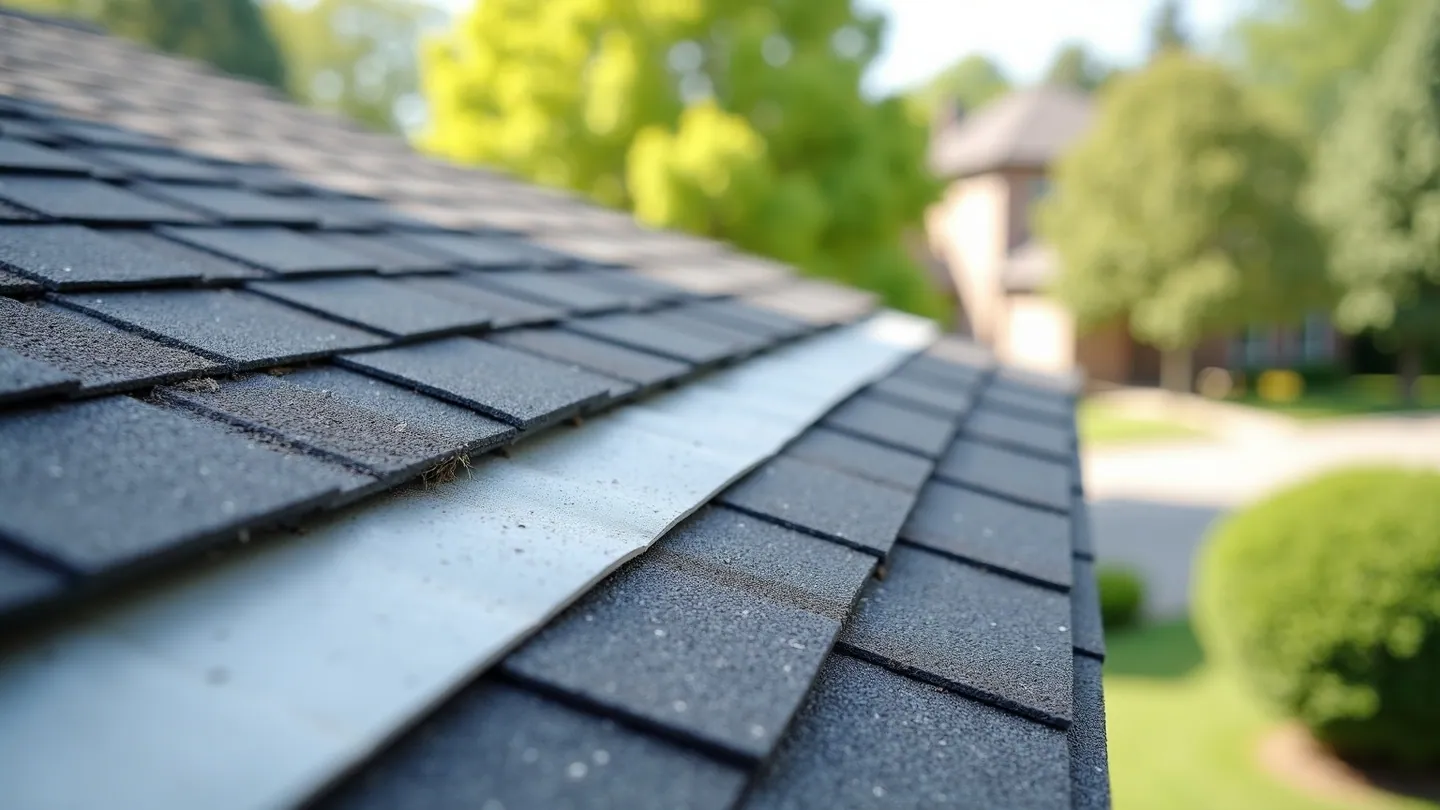
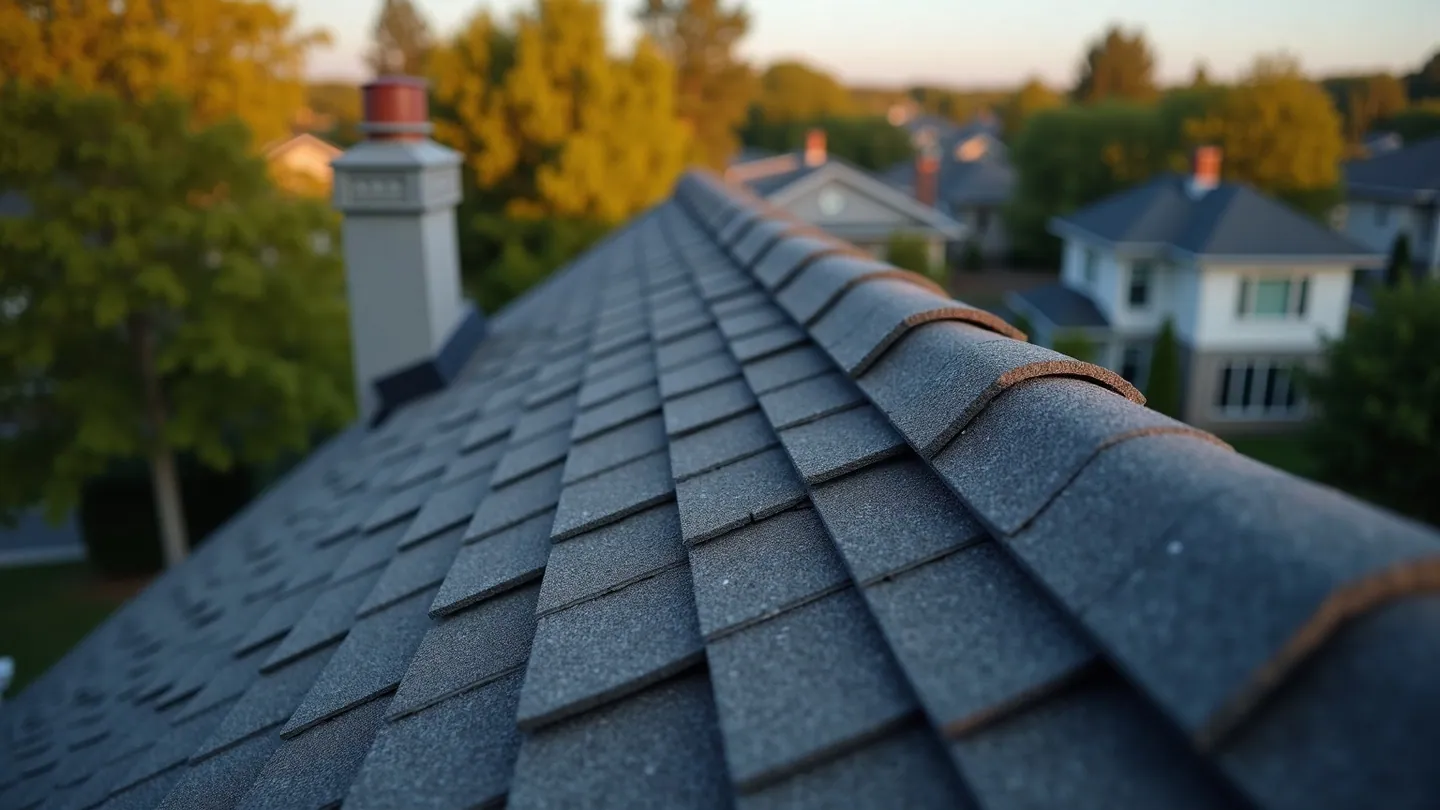
Warranty coverage requires matching hip and ridge product on the capping. Cutting field shingles into three strips to cap the ridge is a common shortcut, it is cheaper and faster, and it invalidates the coverage on the whole roof. Ask which ridge product is on the quote by name.
A capped ridge takes a beating that field shingles never see. It is bent over the peak, it is the most wind-exposed line on the house, and on a laminated shingle the bend point is exactly where two glued layers want to separate. Purpose-made hip and ridge shingles are formed to take that bend, which is why the manufacturer names the approved products and will not warrant a roof capped with anything else.
The same logic runs down at the eaves. Starter strip is not a cost-saving formality, it is what the first course seals to and what gives the rake edge its wind resistance. A roof finished with an upside-down field shingle in place of a proper starter is a roof that loses its bottom course in a March gale.
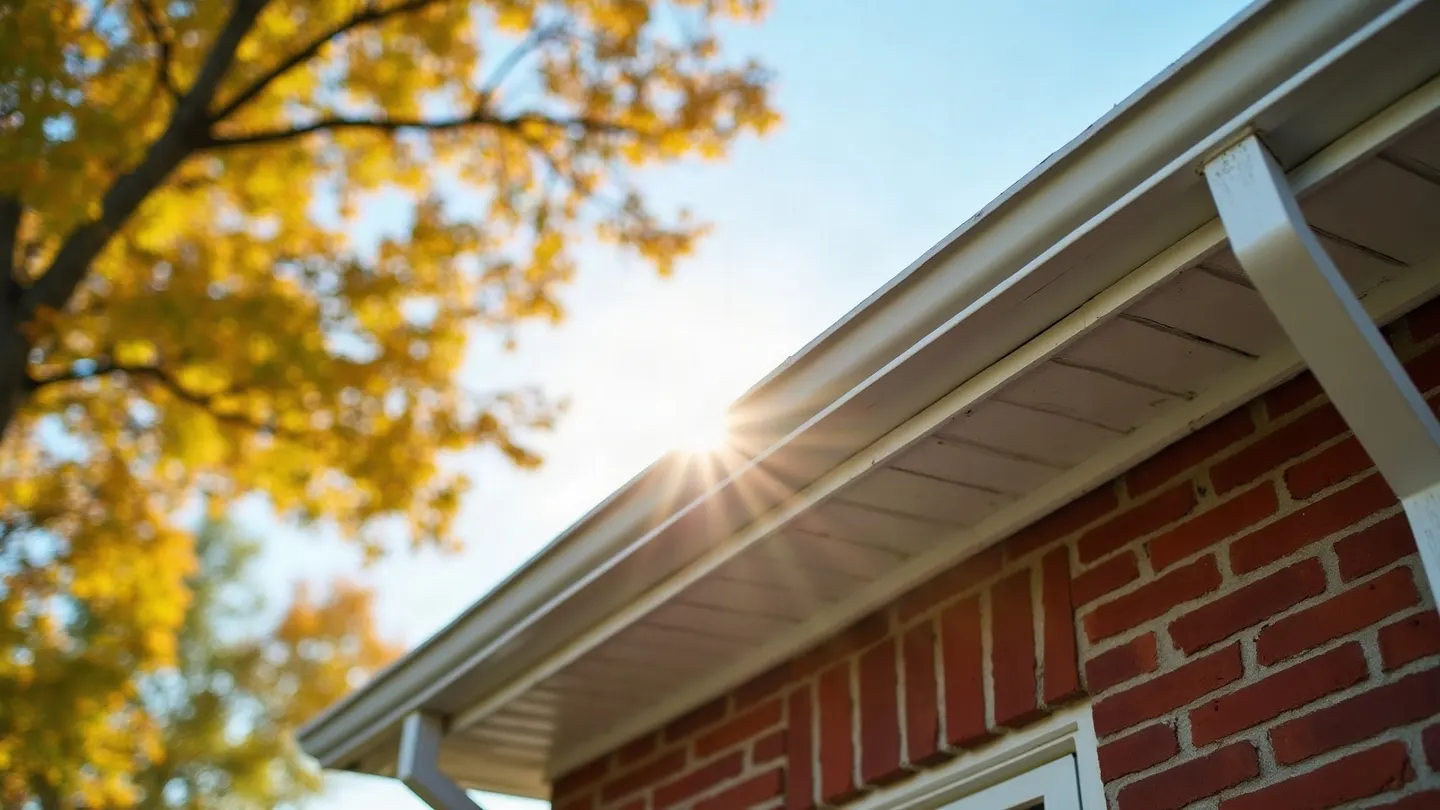
While the crew is at the ridge, that is also where half of your attic ventilation lives. A ridge vent has to pair with clear intake at the soffit to move any air at all, so if you are unsure what is up there, our guide to soffit and fascia explains the intake side, and we replace soffit and fascia as part of a re-roof when the existing run is blocked or damaged.
What the warranty will not cover in an Ontario winter
Three exclusions matter more here than anywhere else in Canada: water getting in because of ice damming is excluded outright, damage caused by inadequate attic ventilation is excluded, and shingles laid late in the season may not seal until spring, during which time wind damage is not the manufacturer's problem.
Start with ventilation, because it is the one you control. The warranty excludes any damage or distortion caused by inadequate ventilation at the eaves or at the rooftop, including ventilation defeated by blocked or non-working vents, and it requires that venting meet local code for total area and be distributed evenly between the ridge and the eaves. In Ontario that means the Ontario Building Code figure of at least 1/300 of the insulated ceiling area, with a quarter high and a quarter low. A roof that fails that test has a shingle warranty on paper and none in practice.
Ice damming is excluded separately, and it is worth understanding why that is fair rather than sneaky. Ice dams form because warm air escapes into a cold attic, melts the snow, and the meltwater refreezes at the cold eave. That is a house problem, not a shingle problem, which is why attic insulation and air sealing does more for your roof than any upgrade on the shingle line. Ice and water shield at the eaves is what protects the deck when a dam forms anyway, and it is not optional on an Ontario roof. If dams are an annual event at your house, our guide to preventing ice damming before winter covers the fix in the order that works.
The seasonal one catches people out. Asphalt shingles rely on a factory-applied sealant strip that needs direct sun and warm surface temperatures over several days to bond. Shingles laid in November may not seal until the following spring, and the manufacturer states plainly that a failure to seal in those conditions is not a manufacturing defect and that blow-offs before sealing are not covered. A good crew hand-seals cold-weather installs for exactly this reason. Ask whether yours does, and if a storm gets there first, we run 24/7 emergency roof repair across the region.
Open valleys, closed valleys, and what the manufacturer recommends
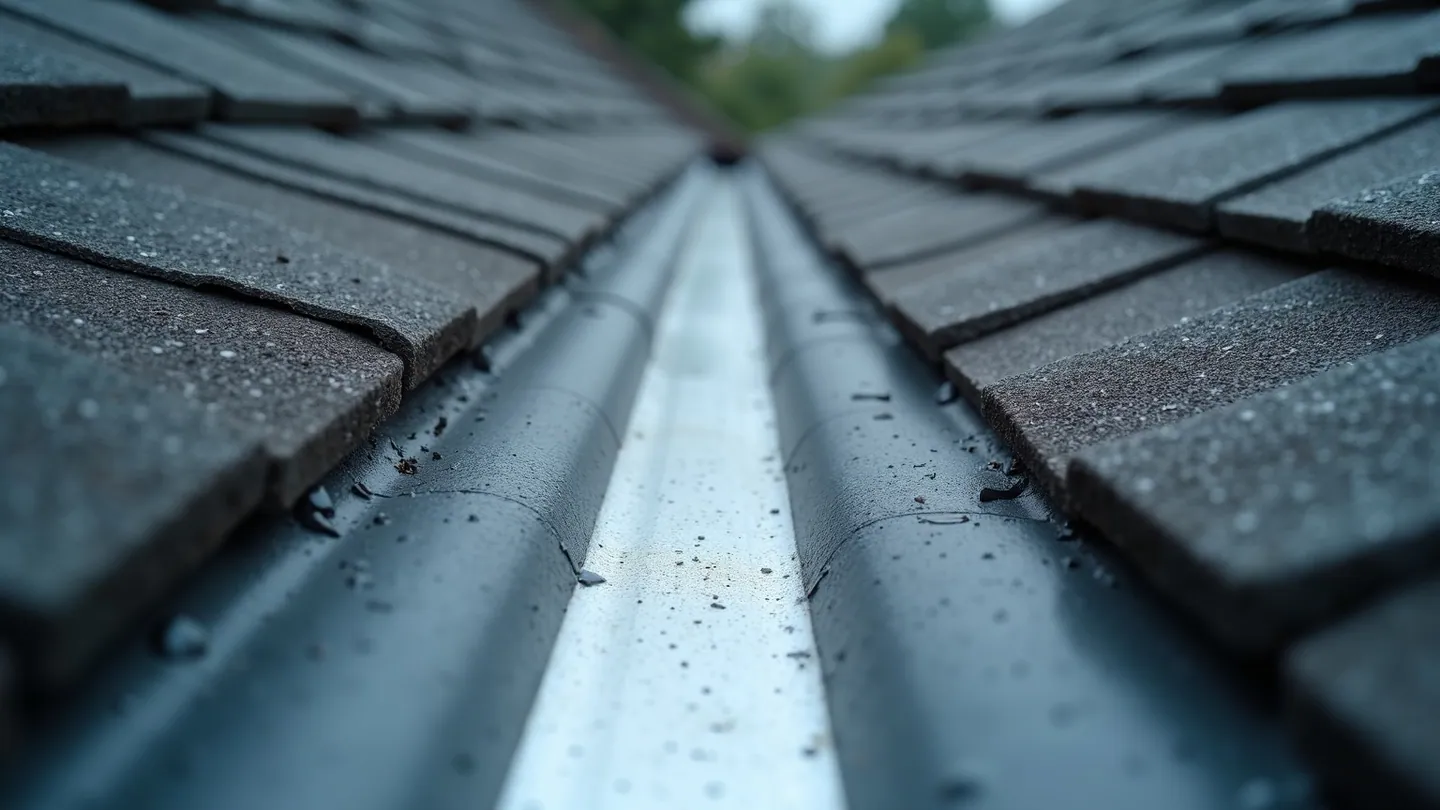
The warranty excludes damage to shingles used to build a closed valley, and states directly that open metal valleys are recommended for best roof performance. A closed-cut valley is faster and cheaper to install, which is why it is on so many quotes, and the manufacturer will not stand behind it.
A valley carries more water than any other part of a roof, and it carries it fast. In a closed valley the shingles themselves form the channel, so the water runs across granules, over a laminated seam, and through the layer where two roof planes fight for the same space. In an open valley a formed metal channel takes the flow and the shingles are cut back cleanly on both sides.
Ontario adds ice to that. A valley packed with frozen slush in February is where water gets under a closed-cut course and finds the deck. We fabricate and install custom valley and flashing metal as standard on re-roofs, and it is the detail we would defend hardest if a homeowner asked us to trim the quote.
One related exclusion, since it comes up on older homes: the manufacturer will not cover conditions arising from shingles installed over dimensional lumber, shiplap, or board decks. On a century home in Peterborough or a cottage in the Kawarthas, the plank deck under the old roof may need sheathing over before anything new goes down.
So does the shingle brand matter at all?
Less than the marketing suggests, and more than nothing. Among the major manufacturers sold in Ontario the mat, the asphalt, and the granules are broadly comparable, and the published warranty terms are close. Brand matters mainly for colour range, availability, and how the accessory system is specified.
Where real differences show up is in the details around the shingle. Some lines carry their higher wind rating as standard rather than only under High Wind Application. Algae resistance runs 10 years on laminated products and half that on cheaper ones, which matters on the north-facing slope of a treed lot in Aurora where black streaking shows first. Colour and shade variation between bundles is excluded from every warranty, so a crew that racks the shingles properly from multiple bundles matters more than the swatch you picked.
The one brand rule worth keeping is that the accessory products should come from the same system as the field shingle: same manufacturer's starter, same hip and ridge, same underlayment where specified. Mixing systems is where warranties go to die, and it is invisible from the ground.
If you want the rest of the picture on roofing materials, the other articles in our roofing library cover metal, standing seam, and the maintenance side.
The eight lines to look for on a shingle quote
A shingle quote that says "supply and install architectural shingles" and gives a price tells you nothing. These are the lines that separate a real specification from a number, and any competent roofer will put them in writing without being asked twice.
- The shingle product and line by name, not just "architectural"
- Nailing pattern, and whether High Wind Application is being used
- Starter strip product at eaves and rakes, named
- Matching hip and ridge product, named
- Ice and water shield coverage: eaves, valleys, and around penetrations
- Underlayment type over the rest of the deck
- Valley method, open metal or closed, and the metal if open
- Ventilation: what intake and exhaust will exist when the job is finished, and the calculated area
The best asphalt shingles on the market will not outlive a quote that leaves those eight lines blank. Add deck inspection and the tear-off and disposal terms and you have a quote you can compare honestly against another one. If two prices are far apart, the answer is almost always sitting in that list. We will write every one of those eight lines into a free quote so you have something real to compare against. For the wider question of vetting the company itself, from WSIB to red flags, work through our 3-step checklist for choosing a roofing contractor, and keep an eye on the roof between visits with our summer maintenance checklist.
How we spec a shingle roof
We quote the assembly, not just the shingle. That means a look in the attic before we price anything, ice and water shield at the eaves and valleys, starter at eaves and rakes, six-nail high-wind application as our default, matching hip and ridge, open metal valleys, and a ventilation plan that meets code with intake and exhaust in balance. The shingle line is the part of that list we have the least strong opinion about. Ask us which are the best asphalt shingles for your house and you will get two or three that genuinely fit it, then we spend the rest of the visit on the details that decide the outcome.
Every roof we install carries a 10 year workmanship warranty on top of whatever the manufacturer covers, we hold $5 million liability insurance, and 10 percent of the price is due only after you are satisfied. The manufacturer's warranty covers manufacturing defects in the shingle. Ours covers the part that actually goes wrong.
Call us at 905 490 8800 or get a free quote and we will write the whole spec down for you.
Sherak Ltd, Head Office
12275 Woodbine Avenue, Gormley, ON L0H 1G0
Phone: +1 905 490 8800
Email: info@sherak.ca
Thinking about your own roof or exterior project?
Get a free, no obligation quote from Sherak, backed by a 10 year workmanship warranty.
Get a Free QuoteFrequently asked questions
What are the best asphalt shingles for an Ontario home?
Does a limited lifetime shingle warranty really last a lifetime?
Are architectural shingles worth the extra cost over 3-tab?
How many nails should be used per asphalt shingle?
Can ridge cap be made from regular shingles?
Does poor attic ventilation void a shingle warranty?
Written by
Emad Alikhanpour
Roofing & Exterior Specialist
Emad has 15 years of hands-on experience across roofing and every exterior service Sherak offers, from shingle and metal roofs to siding, eavestroughs, soffit and fascia, and custom flashing.
15 years in the trade · Roofing and exterior services
View profileReader reviews
Loading reviews...