On this page
- What Does a Roof Inspection Actually Tell You?
- Why the Inspection That Counts Happens in Late October
- How Much Snow Is a Roof Built to Carry in Ontario?
- Fix Before the Snow: The Findings That Cannot Wait
- Watch Through the Winter: What Can Wait for Spring
- Plan a Replacement: When the Answer Is a New Roof
- Roofer or Home Inspector: Who Should Inspect Your Roof?
- What Happens When We Inspect Your Roof
- Frequently asked questions
- Reader reviews
Key takeaways
- A useful roof inspection sorts every finding into one of three verdicts: fix it before the snow, watch it through the winter, or plan a replacement.
- Late October is the last comfortable window for repairs that seal on their own. Shingle sealant strips are activated by the sun's heat, so a repair made in the cold is sealed by hand.
- The National Building Code designs a house roof for 1.0 kPa of snow and rain in Toronto and 1.89 kPa in Collingwood: about 12 to 23 tonnes on a 120 m² footprint.
- The CAHPI national standard of practice for home inspectors does not require them to judge a roof's remaining life, find the cause of a fault, or price the repair. A roofer's inspection exists for those questions.
- At Sherak the roof inspection is free and ends in a clear, no obligation quote, with any repair backed by a 10 year workmanship warranty.
The maples are bare, the furnace has come on, and above your bedroom ceiling is a roof that has to get through four months under snow. A roof inspection in late October is the last clear look anyone gets at it before spring, and it is the one that counts most, because whatever it finds still has a few mild weeks to be fixed properly.
This is not the homeowner checklist. Our summer roof maintenance checklist covers what you can safely check yourself from the ground and the attic. This guide is about the professional inspection: what it should cover, the three verdicts every finding belongs in, how much snow the Building Code expects your roof to carry in your town, and how a roofer's inspection differs from the one a home inspector does when you buy a house.
What Does a Roof Inspection Actually Tell You?
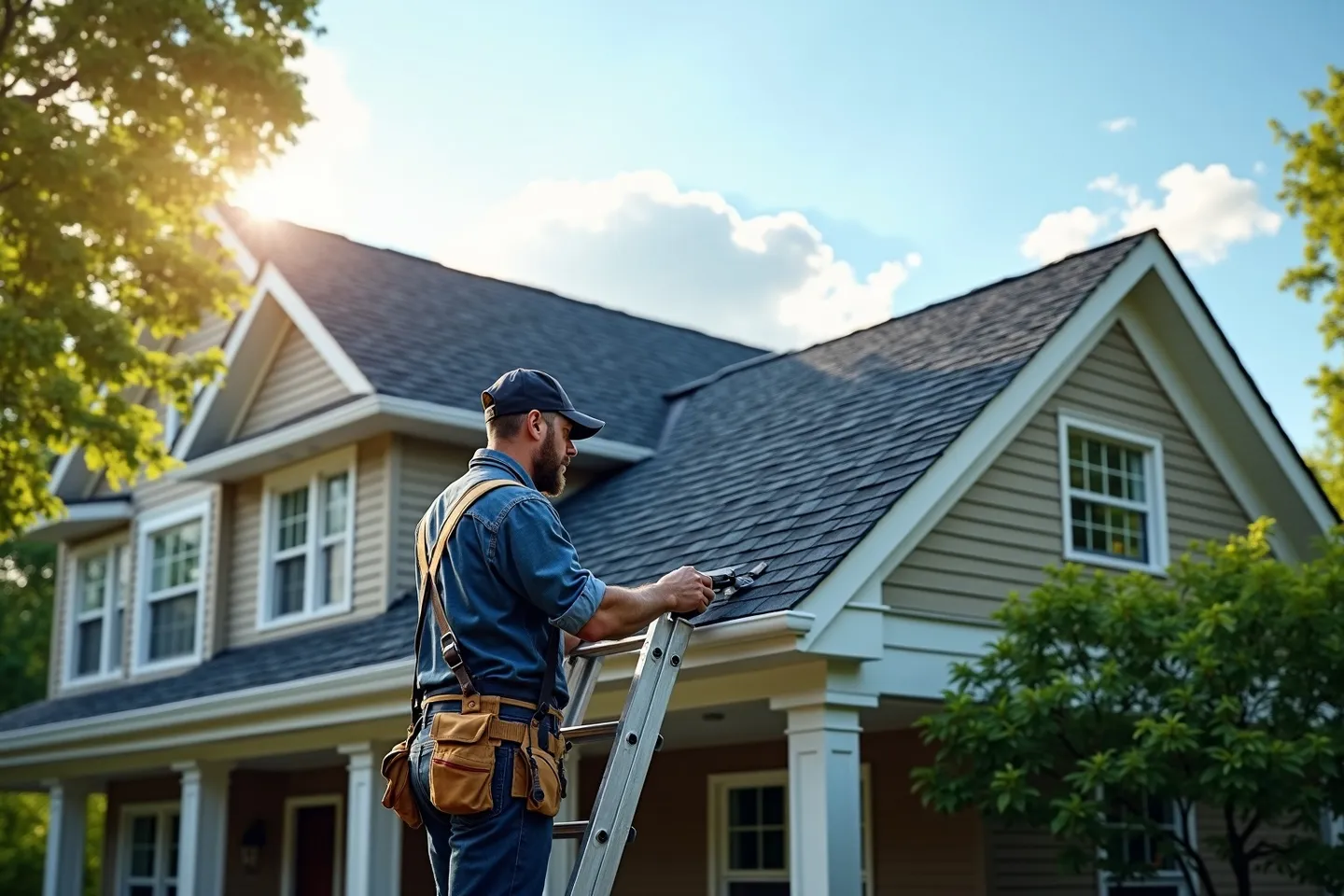
A roof inspection is a close look at every part of a roof that keeps water out: the shingle field, the flashing at walls and chimneys, the vent pipes and other penetrations, the valleys, the eaves and eavestroughs, and the attic underneath. Done properly, it ends in a verdict on each finding, not a list of observations.
That verdict is the whole point. A page of notes reading "granule loss noted, flashing aged, minor curling observed" leaves you where you started. Before winter you need to know which of those notes will let water in over the next four months, which can sit until spring, and whether the roof is so near the end of its life that repairing it is money poorly spent.
So every finding in this guide lands in one of three piles:
- Fix before the snow. Anything that admits water now, or will once ice and meltwater sit against it.
- Watch through the winter. Wear that is real but not yet a leak, to recheck in spring.
- Plan a replacement. A roof where the faults are everywhere rather than in one place.
At Sherak the inspection is free, and it ends with a clear, no obligation quote and honest advice on which pile your roof is in. Our roof repair and inspection team does this across York Region, Simcoe, Kawartha and the GTA, and you can book a free roof inspection any time before the snow settles in.
Why the Inspection That Counts Happens in Late October
Three things line up at the end of October, and none of them last.
The trees are bare. Whatever the maples, oaks and pines dropped is now lying in the valleys and the eavestroughs, so an inspection can see exactly where meltwater will be held back in January. A trough left full into November is the one that freezes solid, and our guide to eavestrough cleaning in Ontario explains why October is the worst month to leave one that way.
The shingles can still seal. Most asphalt shingles carry a strip of thermally activated sealant that bonds each course to the one below, and the Asphalt Roofing Manufacturers Association notes that sealing time depends on the slope, the orientation and how much sun and heat the shingles receive. A shingle replaced on a mild autumn afternoon gets the chance to bond by itself. One replaced in a cold snap is sealed by hand with roofing cement, the approach the same guidance gives for very cold weather.
The roof is still visible. Once snow covers it, nobody sees a lifted tab or an open flashing joint until March or April, and the first sign of either is usually a stain on a ceiling.
Our own job records follow the same calendar. On Baldwin Rd in Georgina, at the end of October 2024, an inspection pinpointed the most vulnerable sections of the roof and we replaced the damaged shingles before winter, along with new siding. About a week later, on King Rd in King City, our crew went over a shingle roof section by section, replaced the worn shingles with matching ones, and installed new eavestroughs to carry water away from the foundation.
How Much Snow Is a Roof Built to Carry in Ontario?
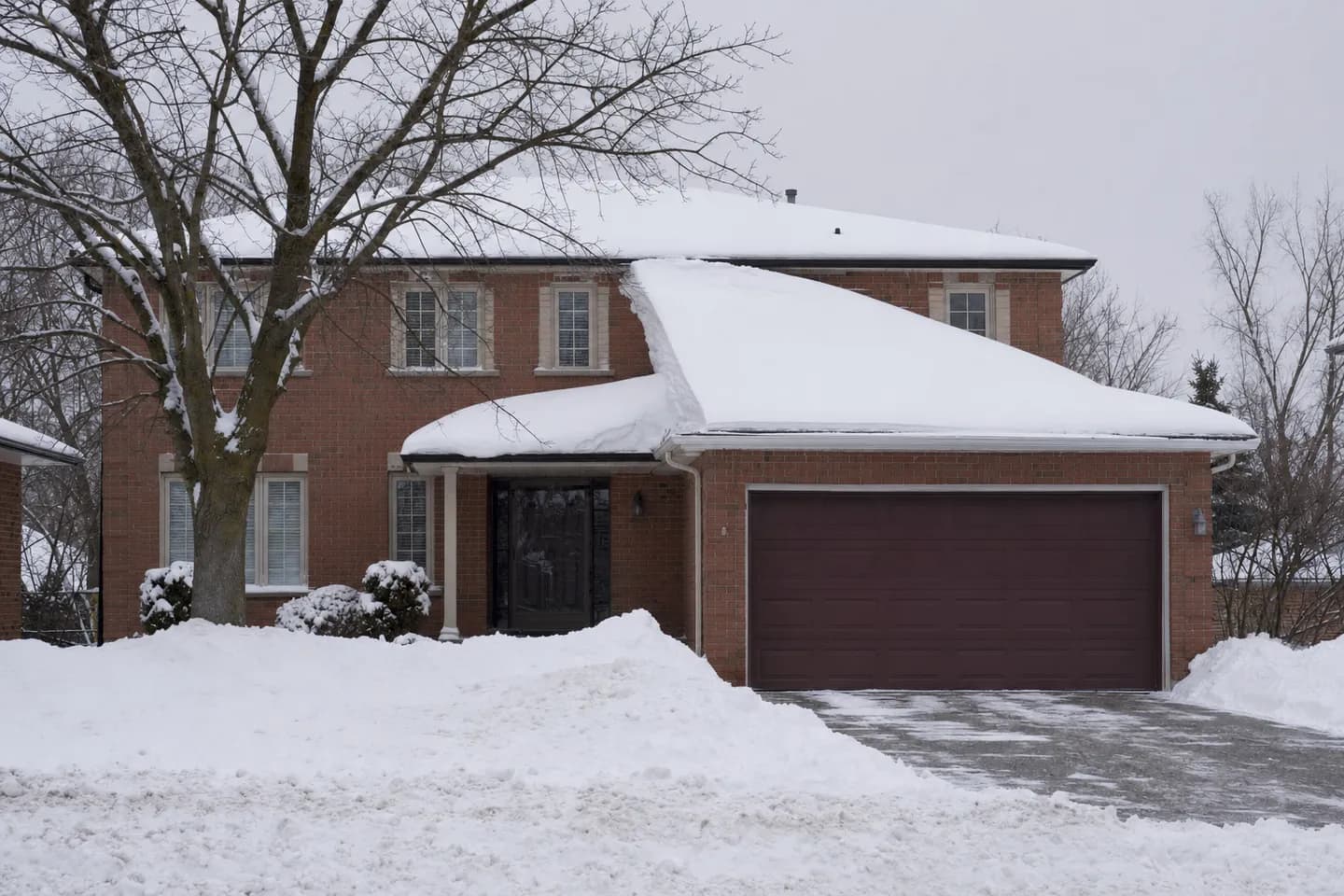
Under the National Building Code of Canada 2020, a typical house roof is designed for 55 percent of the 1-in-50-year ground snow load plus an allowance for rain on that snow, and never less than 1 kPa. That works out to 1.0 kPa in Toronto, 1.5 kPa in Newmarket and 1.89 kPa in Collingwood: roughly 12, 18 and 23 tonnes on a 120 m² footprint.
Those numbers come from two places in the National Building Code of Canada 2020. Table C-2 lists a ground snow load (Ss) and an associated rain load (Sr) for more than 600 Canadian locations, and Article 9.4.2.2 turns them into the load a house roof must carry: S = 0.55 × Ss + Sr, never less than 1 kPa, where 0.55 is the factor for any roof wider than 4.3 m. The chart below runs that formula for eight towns we work in, from the Lake Ontario shore to Georgian Bay.
Three things stand out. The rain share is the same 0.4 kPa in every town on the list, so all of the difference is snow. The ground snow load triples from Toronto City Hall (0.9 kPa) to Collingwood (2.7 kPa), which means a roof about two hours north of the city is designed for close to twice the weight. And downtown Toronto sits on the 1 kPa minimum, because the formula alone comes out below it.
Read the chart for what it is. Both inputs are 1-in-50-year values, so this is the load the framing must be able to carry, not a forecast for this winter. The Code's climate appendix puts the uncertainty on Ss at about 20 percent and notes that surveys of real roofs generally find less snow on them than on the ground. In Ontario, the figures a permit is checked against sit in Supplementary Standard SB-1 of the 2024 Building Code, and your municipal building department holds the exact number for your address.
What an inspection adds is the other half of the sum. Every figure here assumes a sound deck and sound framing. A soft sheet of plywood under a valley, a rafter darkened by an old leak, or a ridge line that has started to dip is a roof going into winter with less margin than it was built with. In Newmarket, where the roof figure is 1.5 kPa, the design load is about 153 kilograms on every square metre.
| Place | Ground snow load Ss | Rain load Sr | Roof snow load S | Kilograms per square metre | Tonnes on a 120 m² (1,290 sq ft) footprint |
|---|---|---|---|---|---|
| Toronto (City Hall) | 0.90 kPa | 0.40 kPa | 1.00 kPa (the Code minimum) | 102 | 12.2 |
| Vaughan (Woodbridge) | 1.10 kPa | 0.40 kPa | 1.01 kPa | 102 | 12.3 |
| Richmond Hill | 1.50 kPa | 0.40 kPa | 1.23 kPa | 125 | 15.0 |
| Newmarket | 2.00 kPa | 0.40 kPa | 1.50 kPa | 153 | 18.4 |
| Lindsay | 2.30 kPa | 0.40 kPa | 1.67 kPa | 170 | 20.4 |
| Orillia | 2.40 kPa | 0.40 kPa | 1.72 kPa | 175 | 21.0 |
| Barrie | 2.50 kPa | 0.40 kPa | 1.77 kPa | 181 | 21.7 |
| Collingwood | 2.70 kPa | 0.40 kPa | 1.89 kPa | 192 | 23.1 |
Fix Before the Snow: The Findings That Cannot Wait
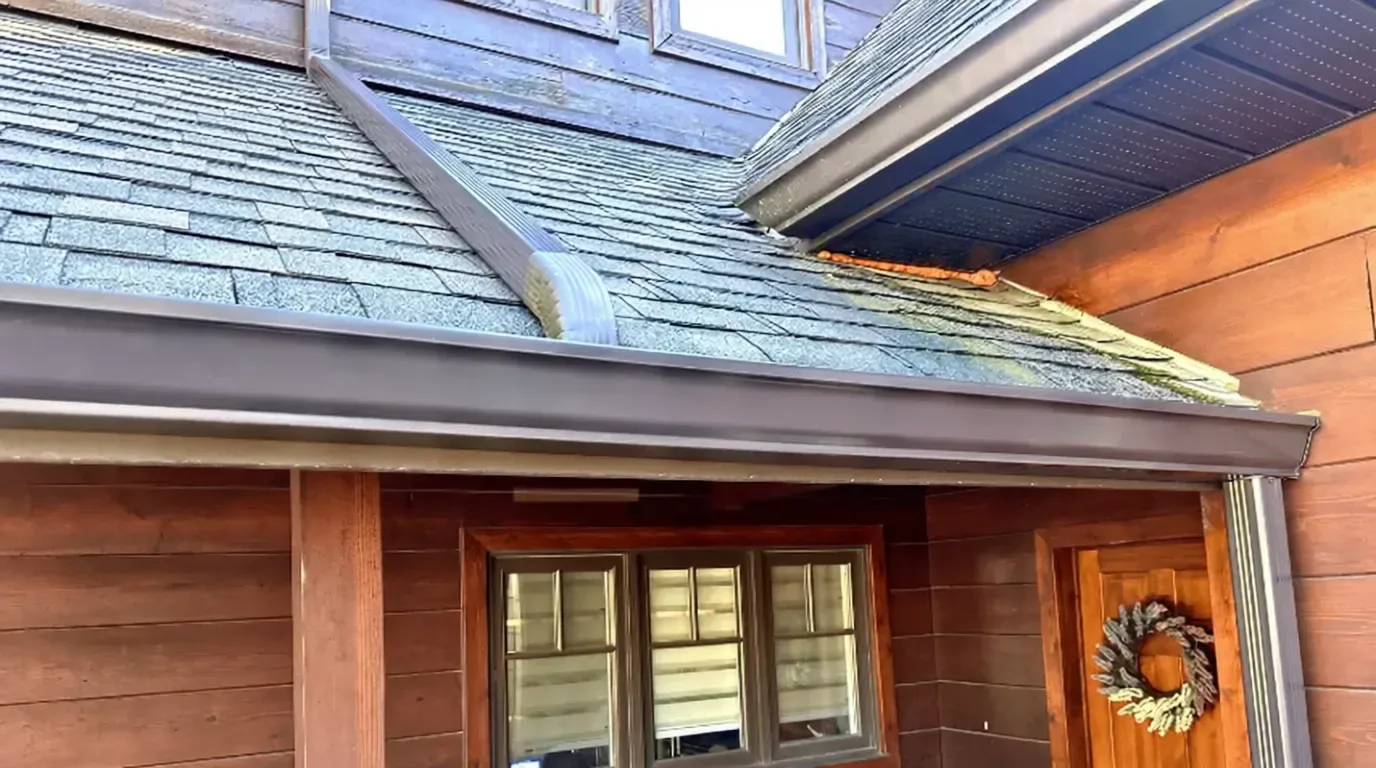
Anything that lets water in now, or will once ice and meltwater sit against it, gets fixed before the snow: a split vent pipe boot, lifted or missing shingles, flashing that has pulled away from a wall or chimney, a soft patch in the deck, and eavestroughs or downspouts that will freeze full.
On the roof itself:
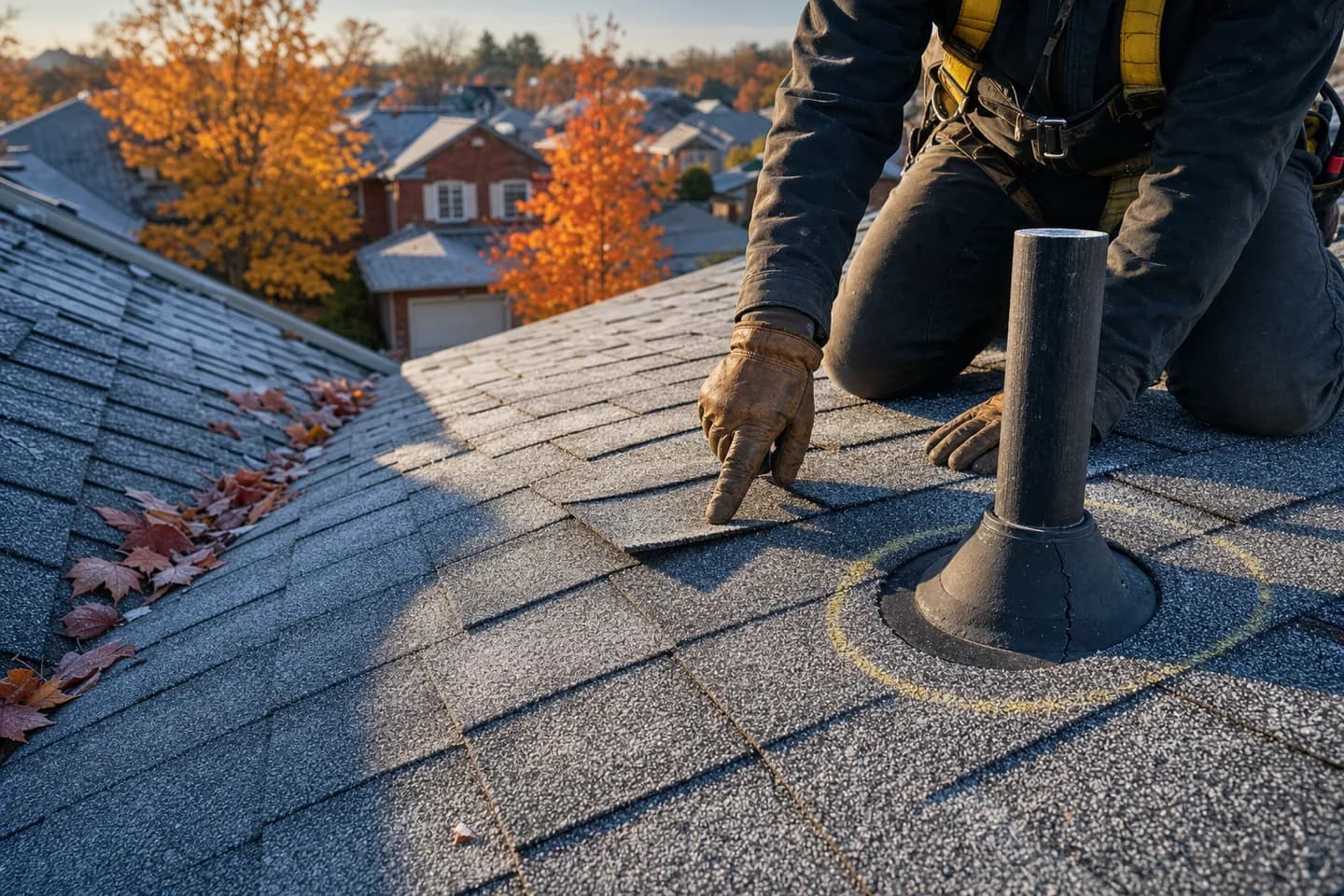
- A split plumbing vent boot. The rubber collar around a vent pipe cracks with age, and meltwater then runs straight down the pipe into the attic. It is one of the cheapest repairs on a roof, and a well-known leak point.
- Lifted, creased or missing shingles. Wind gets under an unsealed tab and works it loose. Shingle sealant needs the sun's heat to bond, so a tab fixed this late in the year is fastened and sealed by hand.
- Flashing that has opened up. Step flashing along a wall, the flashing around a chimney and the metal in the valleys seal the joints that shingles cannot. Our guide to roof flashing shows what failure looks like at each joint.
At the edges and underfoot:
- Soft spots in the deck. Plywood that gives under a knee near a valley or a chimney has been wet for a while, and it is what carries the snow load in the chart above.
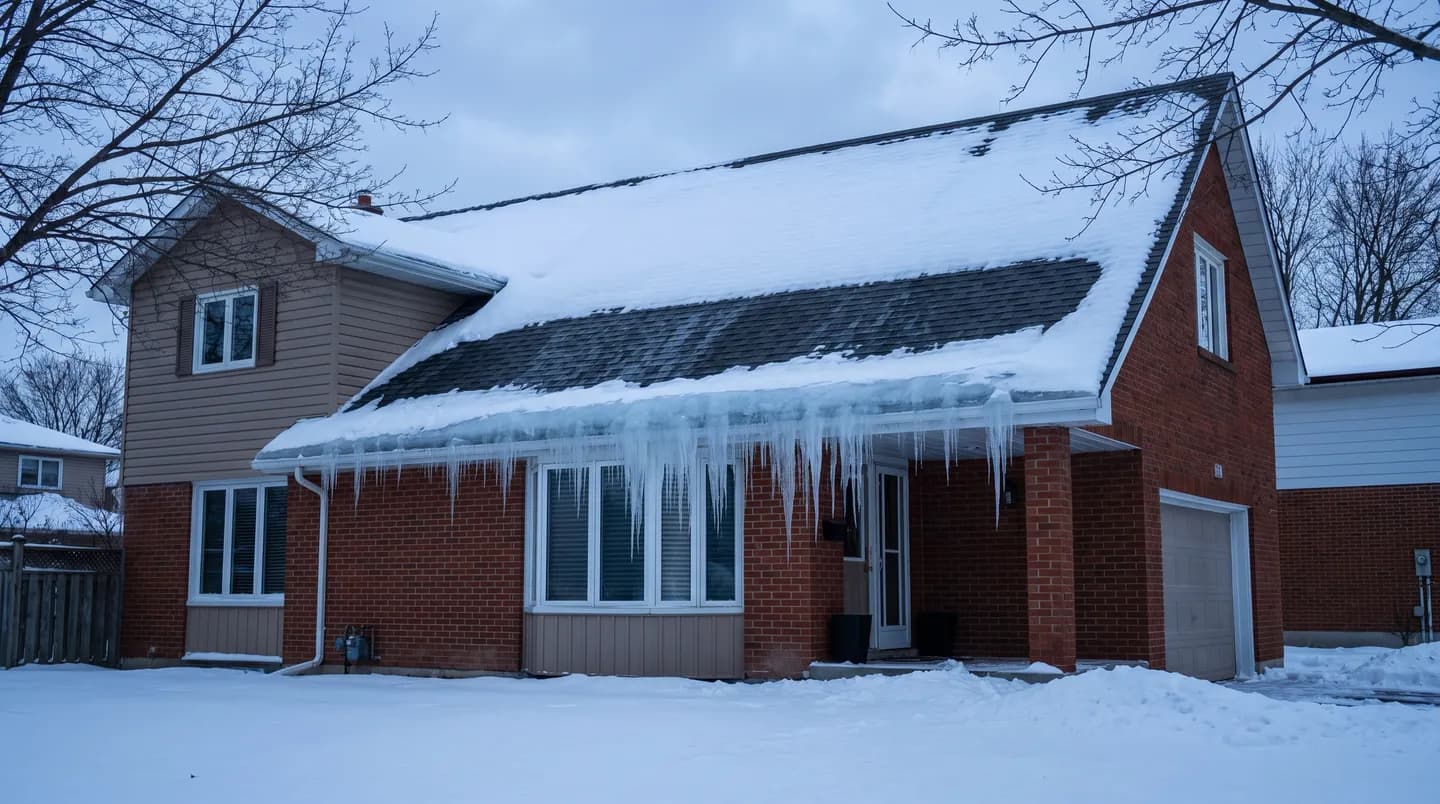
- Troughs and downspouts that will freeze full. A clogged eavestrough freezes into a solid block. It does not cause an ice dam, which starts with heat leaking into the attic, but a trough full of ice has nowhere to send meltwater and hangs extra weight on the fascia. A downspout that empties an upper roof onto a lower one puts a whole slope's meltwater onto a few square metres of shingle.
None of these is a big job on its own. The reason to do them now is that every one gets worse under ice, and none can be reached safely once the roof is covered.
Want to know which pile your roof is in?
We will go over the roof section by section, tell you what has to be fixed before the snow and what can wait, and quote it. Free, and no obligation.
Watch Through the Winter: What Can Wait for Spring
Wear that is real but not yet letting water in can wait for spring: granules thinning on a roof in mid-life, black algae streaks, a thin film of moss, or shingle edges starting to curl without lifting. The job over the winter is to watch for the signs that one of them has turned into a leak.
Black streaks are usually algae. They look bad and do little harm. Thick moss is different, because it holds water against the shingles, but it can wait: the same ARMA guidance warns that in cold weather some sealant bonds between courses get less flexible, and roof traffic can break them. Granule loss is a clock rather than a fault: it says the shingles are wearing, and how much has gone is part of how a roofer judges how many winters they have left.
Once the snow arrives, watch for three things:
- Icicles that keep growing along one stretch of eave, or a ridge of ice building at the edge after a thaw.
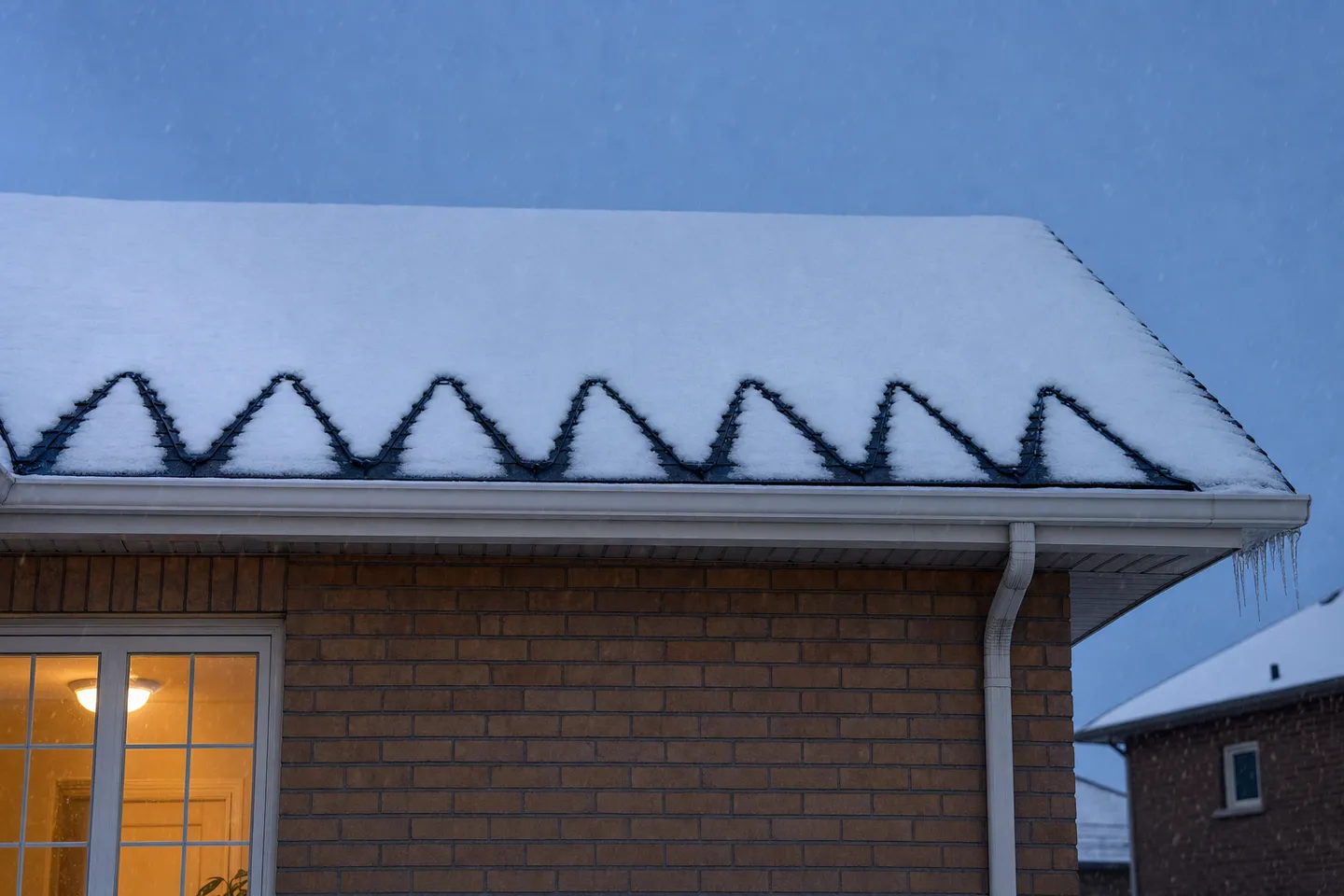
- Bare patches melting through the snow over a heated room while the rest of the roof stays white, which points to heat escaping into the attic.
- A brown ring on a ceiling or at the top of a wall, especially below a valley, a chimney or a vent pipe.
If one stretch of eave ices up every year, our guide to roof heat cables explains when a cable is the right fix, what it costs to run, and when the real answer is in the attic. A stain that is spreading is not a watch item. Our guide to the four real roof emergencies sets out when to call that night and when the morning will do.
Plan a Replacement: When the Answer Is a New Roof
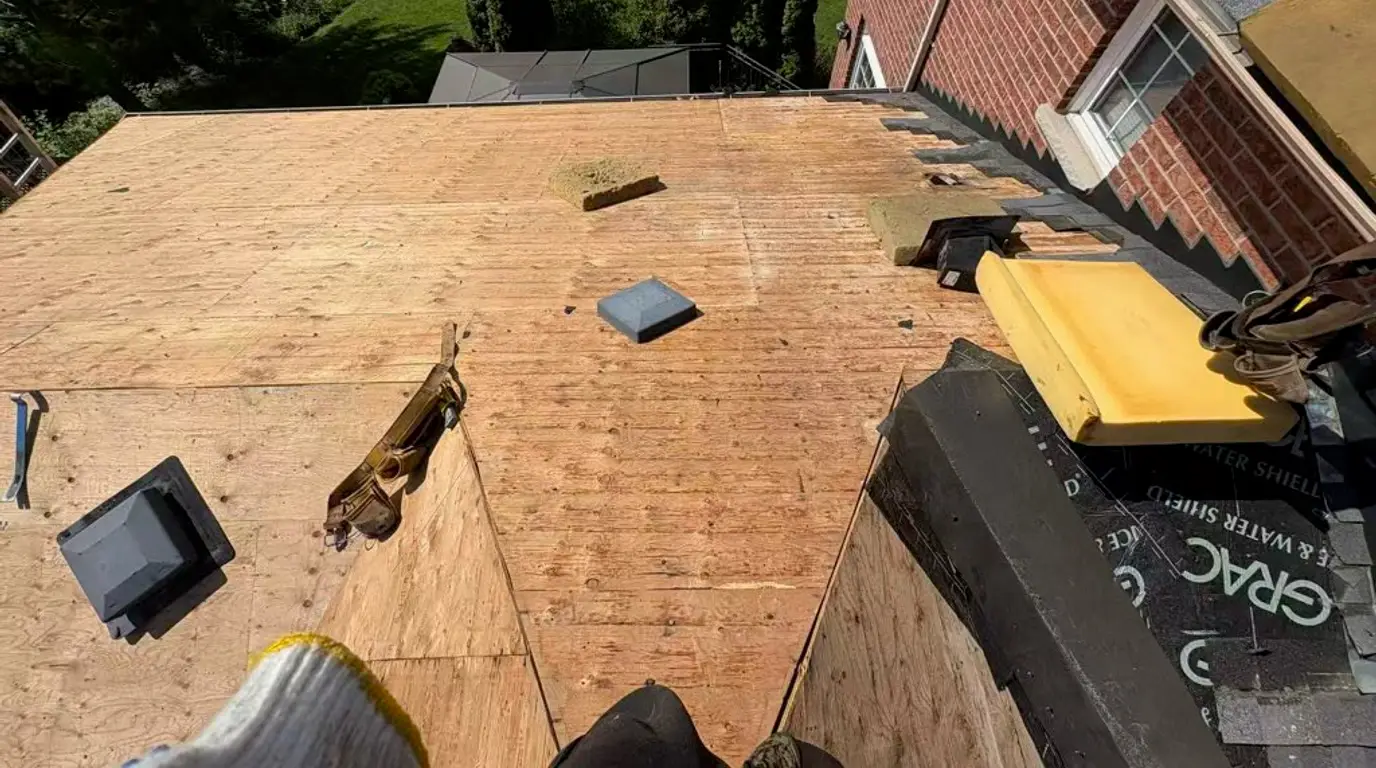
When the faults are spread across the whole roof rather than gathered in one spot, the honest verdict is a replacement: curling or bald shingles on every slope, soft deck in more than one place, or a roof that has needed repairs in different areas year after year. A pre-winter inspection buys you the winter to plan it.
A replacement found in October rarely has to happen in November. If the roof is tight enough to get through the winter, with any active leak repaired, the months under snow are the time to price it, compare quotes and book a spring start. Our breakdown of roof replacement cost in Ontario shows how to price your own roof before anyone quotes it, and our shingle roof service covers what goes into a full replacement.
The deck is where an inspection meets its limit. A roofer can feel for soft spots underfoot and, from the attic, see stains on the underside of the sheathing, but nobody can fully judge plywood through a layer of shingles. On Brant St E in Orillia in March 2025, the tear-off showed that the wood decking had deteriorated, so we replaced all of it and upgraded the ventilation. On a hip roof in Stouffville this summer, we stripped the old shingles to the bare deck and replaced the sheathing wherever it had gone soft.
That is why a good replacement quote shows what sheathing costs per sheet and explains when it is needed, instead of leaving a vague allowance nobody can check.
Roofer or Home Inspector: Who Should Inspect Your Roof?
Both look at the roof, but they answer different questions. CAHPI's national standard of practice for home inspectors requires them to inspect the roof covering, drainage, flashing and penetrations, but does not require them to judge the roof's remaining service life, find the cause of a fault, or price the repair. A roofer's inspection exists for those three questions.
That is the National Standards of Practice of the Canadian Association of Home and Property Inspectors, current edition 2024, and one of the three standards that members of the Ontario Association of Home Inspectors must choose from. It also requires the inspector to report the methods used to inspect the roof, so the report tells you whether anyone stood on it or looked from the ground.
| Question | Home inspection | Roofer's inspection |
|---|---|---|
| Looks at shingles, flashing, drainage and vents | Yes, required by the standard | Yes |
| Says how the roof was inspected | Yes, required in the report | Ask, and expect a straight answer |
| Judges how many winters the roof has left | Not required | The main question |
| Finds the cause of a fault | Not required | Yes |
| Prices the fix | Not required | Yes, in the quote |
| What it costs you | Part of the home inspection fee | Free at Sherak |
Neither replaces the other. Buying a house, the home inspection is the right tool, and a roofer is the follow-up when its report flags the roof. Owning the house and wondering what to do before winter, start with the roofer.
What Happens When We Inspect Your Roof
We are based in Gormley and inspect roofs across York Region, Simcoe, Kawartha and the GTA. The inspection is free and carries no obligation. We go over the roof section by section, the way we did on King Rd, look hard at every joint where the shingles stop and something else begins, and then tell you plainly which of the three piles each finding belongs in. Where something needs fixing before the snow, the quote says what, why, and what it costs.
The work that follows carries our 10 year workmanship warranty and $5 million liability insurance, and you pay the final 10 percent only once you are satisfied. If the inspection comes too late and the roof is already leaking, the emergency side of the same team answers 24/7.
Sherak Ltd, Head Office
12275 Woodbine Avenue, Gormley, ON L0H 1G0
Phone: +1 905 490 8800
Email: info@sherak.ca
Book your free pre-winter roof inspection
We will tell you what to fix before the snow, what can wait for spring, and what it costs. 10 year workmanship warranty and $5 million liability insurance.
Book a Free Roof InspectionFrequently asked questions
How much does a roof inspection cost in Ontario?
How often should a roof be inspected?
Can a roof be inspected in winter?
Does a home inspection include the roof?
Is a drone roof inspection good enough?
What if the inspection finds a problem after the snow has started?
Written by
Emad Alikhanpour
Roofing & Exterior Specialist
Emad has 15 years of hands-on experience across roofing and every exterior service Sherak offers, from shingle and metal roofs to siding, eavestroughs, soffit and fascia, and custom flashing.
15 years in the trade · Roofing and exterior services
View profileReader reviews
Loading reviews...