On this page
- What is the average cost of roof replacement in Ontario?
- How do you work out your own roof size in squares?
- How much does roof pitch change the price?
- What does a new roof cost per square foot in Ontario?
- What is in the price: the half of the roof you never see
- And the half you do: shingles, ridge, vents, and flashing
- Why the invoice is higher than the price per square foot
- The five things that move roof replacement cost the most
- How much roof does $10,000, $15,000, or $20,000 buy?
- Why do three quotes on the same roof differ by $8,000?
- Where you can save, and the lines you should never cut
- Does the time of year change what a roof costs in Ontario?
- How long does a roof replacement take?
- What does the same roof cost in metal?
- Deposits, HST, and the one rebate that exists
- Will insurance pay for any of it?
- Is a repair cheaper than a replacement?
- What a roof costs in York Region, Simcoe, Kawartha, and the GTA
- How we price a roof at Sherak
- Frequently asked questions
- Reader reviews
Key takeaways
- Architectural asphalt shingles run $5.50 to $8.50 per square foot of roof surface installed in Ontario in 2026, and most full replacements land between $8,000 and $20,000.
- Your roof is not your floor area. A 1,200 sq ft footprint at a 6/12 pitch is 1,342 sq ft of roof; at 12/12 the same footprint is 1,697 sq ft.
- Four things move the price more than anything else: pitch, how many layers come off, how much sheathing has rotted, and how cut up the roofline is.
- Ask every roofer for the number of squares, the price per square foot, and the per-sheet sheathing rate in writing. Without those three, you cannot compare quotes.
Two roofers stand on the same driveway in Newmarket, look at the same roof, and hand you numbers $6,000 apart. Neither of them is lying. Roof replacement cost in Ontario swings that widely because a roof is priced by the square foot of actual roof surface, and almost nothing about your house tells you what that surface is until somebody measures it.
Most Ontario homeowners spend between $8,000 and $20,000 on a full shingle replacement in 2026. That range is honest and, on its own, close to useless. What you need is the arithmetic under it: how many squares of roof you have, what a square costs to strip and re-cover here, and which lines on the quote are real work rather than padding.
This guide reads a roofing quote from the top line to the bottom, with the Ontario numbers we and every other contractor in the province are working from this year. If you have not settled on a material yet, start instead with our five-question comparison of a metal roof against asphalt shingles, then come back for the money.
What is the average cost of roof replacement in Ontario?
Most Ontario homeowners spend $8,000 to $20,000 on a full asphalt shingle roof replacement in 2026, and a typical two-storey detached lands between $12,000 and $18,000. The figure that actually prices your house is $5.50 to $8.50 per square foot of roof surface for architectural shingles, supplied, installed, and cleaned up.
An average is a blunt tool for a roof, because the spread inside it is not random noise. It tracks four measurable things: how much roof surface you have, how steep it is, how many layers of old shingle are up there, and how much of the deck underneath has gone soft.
Here is where Ontario homes land in 2026 on architectural shingles, with a single-layer tear-off and disposal included.
| Home | Roof area | Architectural shingle, installed |
|---|---|---|
| Semi or townhouse | 10 to 14 squares | $6,500 to $10,500 |
| Bungalow | 15 to 18 squares | $9,000 to $13,500 |
| Two-storey detached | 20 to 25 squares | $12,000 to $18,000 |
| Large or cut-up detached | 28 to 35 squares | $16,000 to $26,000 |
A square is 100 square feet of roof surface. It is the unit every roofer in the province estimates in, even when the number they hand you arrives as a single lump sum with no arithmetic attached.
Two houses on the same street can sit at opposite ends of that table. We quote plenty of 1980s two-storeys across York Region where one has a plain gable roof and the neighbour has three dormers, two valleys, and a chimney, and the second roof runs about a third more to do properly. The same spread turns up on the 2006 to 2010 subdivisions in Whitchurch-Stouffville, where the houses went up together and are coming due together, and two roofs on one crescent can still differ by thousands on roofline alone. Cost also moves with what a contractor happens to be running when you book, which is what the short clip below covers.
| Category | Low | High |
|---|---|---|
| Semi / townhouse | 6,500 | 10,500 |
| Bungalow | 9,000 | 13,500 |
| Two-storey | 12,000 | 18,000 |
| Large detached | 16,000 | 26,000 |
How do you work out your own roof size in squares?
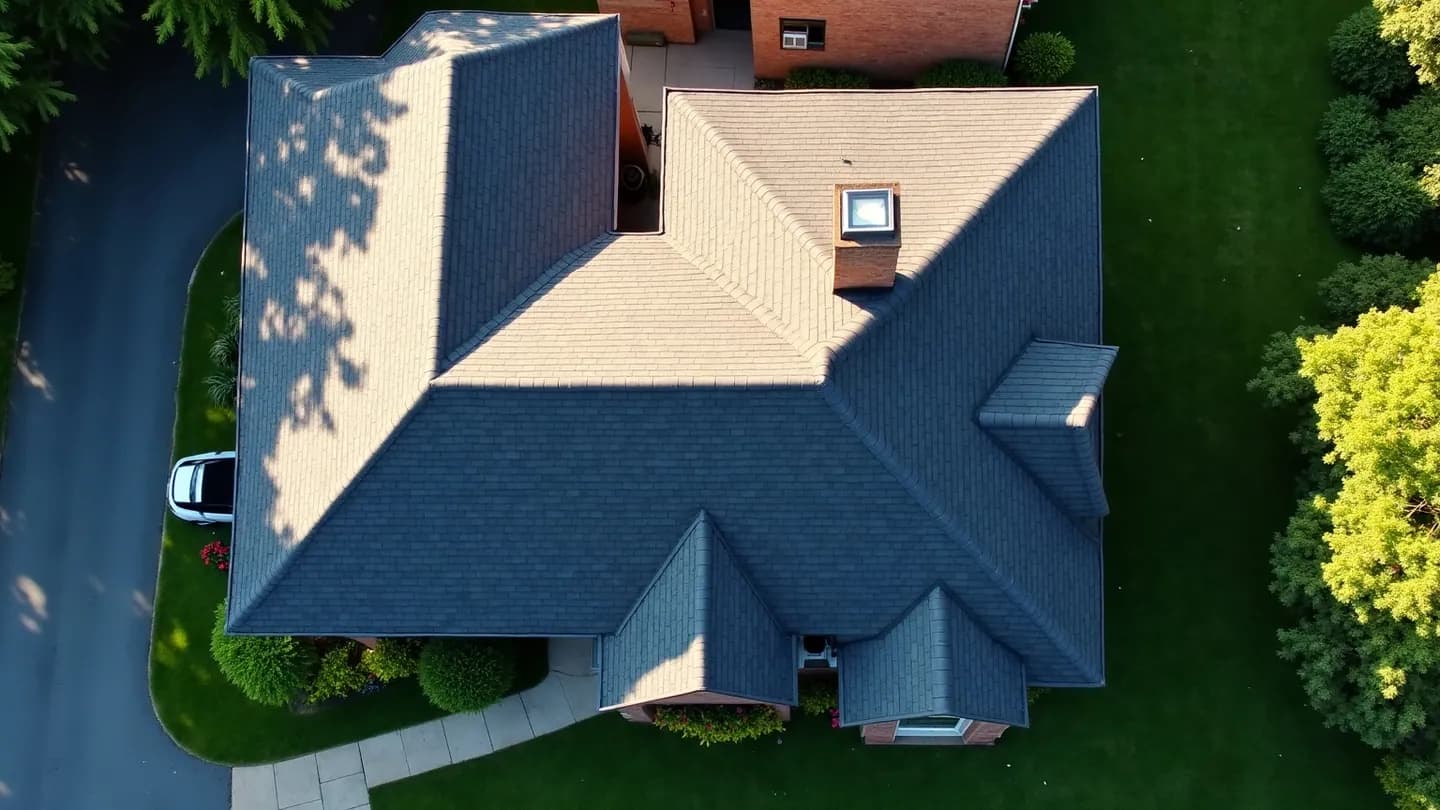
Take the footprint your house covers on the ground, add the garage and any single-storey addition, then multiply by the slope factor for your pitch. A 1,200 square foot footprint at a 6/12 pitch is 1,342 square feet of roof, or 13.4 squares. Floor area is the wrong number entirely.
This is where most online estimates go wrong, and it is why a homeowner with a 2,000 square foot house sometimes gets a quote that looks far too cheap. A 2,000 square foot two-storey usually sits on a footprint nearer 1,100 square feet. Its roof is smaller than its floor plan, not bigger. A 2,000 square foot bungalow, meanwhile, carries close to twice the roof of that two-storey on exactly the same floor area.
Four steps get you close enough to sanity-check a quote:
- Measure the outline of the house on the ground, in rectangles, and add them up. Include the garage and any single-storey addition with its own roof.
- Multiply that footprint by the slope factor for your pitch, from the table below.
- Divide by 100. That is your roof in squares.
- Multiply the square footage by $5.50 to $8.50 for architectural shingles, which brackets what the job should cost.
The slope factor is not a rule of thumb; it is geometry. It is the square root of 144 plus the rise squared, all over 12, and it never changes.
| Pitch | Slope factor | A 1,200 sq ft footprint becomes |
|---|---|---|
| 3/12 | 1.031 | 1,237 sq ft |
| 4/12 | 1.054 | 1,265 sq ft |
| 6/12 | 1.118 | 1,342 sq ft |
| 8/12 | 1.202 | 1,442 sq ft |
| 10/12 | 1.302 | 1,562 sq ft |
| 12/12 | 1.414 | 1,697 sq ft |
Two cautions. Hips and valleys run diagonally, so they carry a steeper factor of their own, 1.500 at a 6/12, which is part of why a cut-up roof costs more than its square count suggests. And material orders carry roughly 10 percent waste for starter, cuts, and hip and ridge, so the shingles bought always exceed the roof measured. That waste belongs in the material order, not as a mystery line on your bill. Siding works the same way and catches people out for the same reason: it is priced by wall area, not floor area, which is why our guide to choosing siding materials in Ontario quotes each material against a wall measurement rather than a house size.
How much does roof pitch change the price?
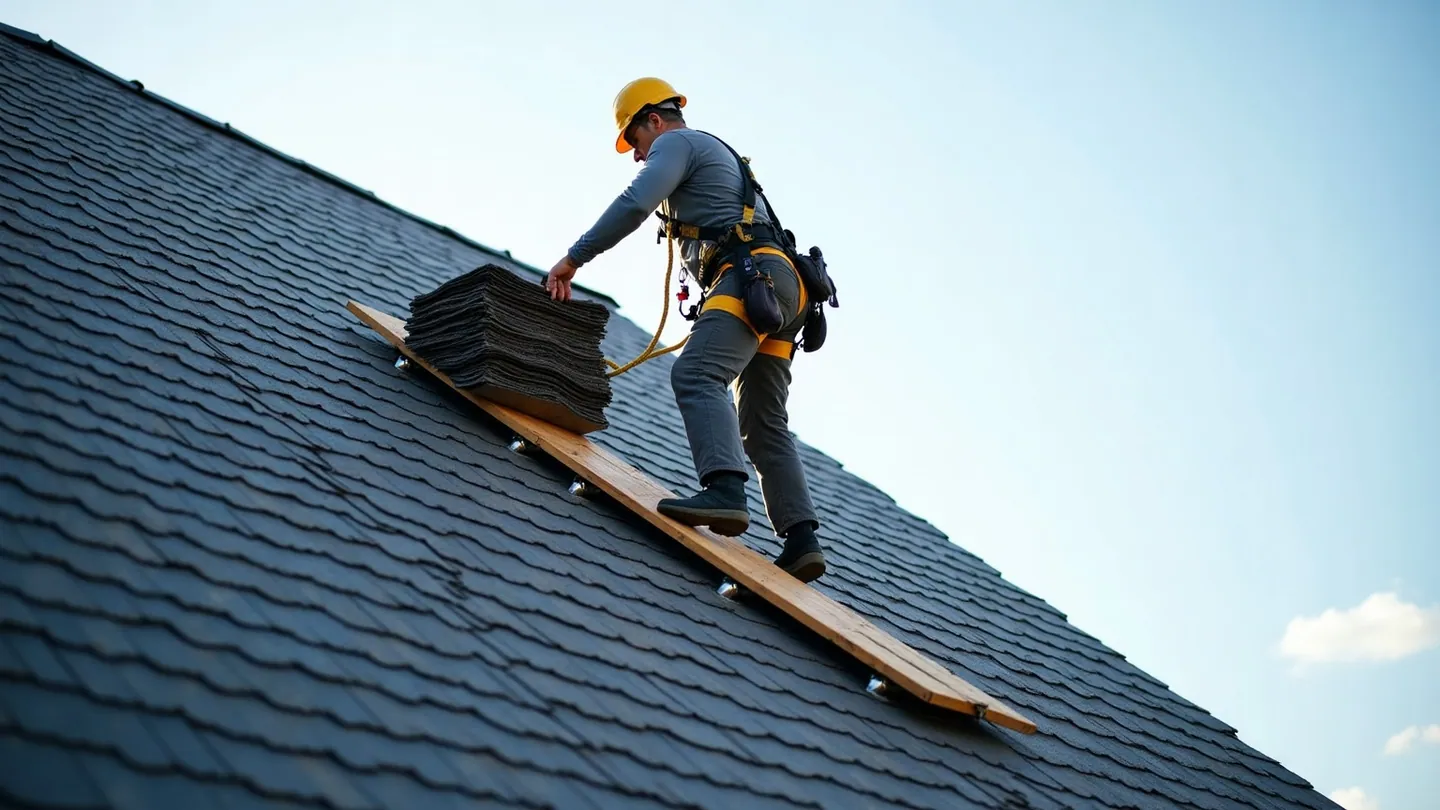
Pitch bills you twice. A steeper roof holds more surface area over the same footprint, and it also costs more per square foot to work, because the crew has to stage it, tie off, and move at half speed. Between a 4/12 and a 12/12 on one footprint, the two effects together nearly double the price.
Up to about a 6/12, a roofer walks the roof. From 7/12 the crew is setting roof jacks and planks, working in harness, and carrying every bundle up by hand instead of sliding it. Most Ontario contractors add 15 to 25 percent between 7/12 and 9/12, and 30 to 50 percent at 10/12 and above. That surcharge is legitimate, and it is one of the few places where a cheaper quote genuinely means a more dangerous job.
You can measure your own pitch in about a minute from inside the attic. Hold a level against the underside of a rafter, mark 12 inches along it, and measure straight down from that mark to the rafter. Four inches of drop is a 4/12, eight inches is an 8/12. Most Ontario subdivision houses built since the 1980s run between 4/12 and 8/12; century homes and custom builds go steeper, and cottage roofs steeper again.
The chart below runs one 1,200 square foot footprint through five pitches at $7 per square foot. The gold bar is the extra roof the slope creates. The red bar is what the trade charges for working on it.
| Roof pitch | Slope factor | Roof area from a 1,200 sq ft footprint | Cost from roof area | Extra for the slope | Total |
|---|---|---|---|---|---|
| 4/12 | 1.054 | 1,265 sq ft | $8,854 | $0 | $8,854 |
| 6/12 | 1.118 | 1,342 sq ft | $9,391 | $0 | $9,391 |
| 8/12 | 1.202 | 1,442 sq ft | $10,096 | $2,019 | $12,115 |
| 10/12 | 1.302 | 1,562 sq ft | $10,934 | $4,374 | $15,308 |
| 12/12 | 1.414 | 1,697 sq ft | $11,879 | $4,752 | $16,631 |
What does a new roof cost per square foot in Ontario?
Ontario prices sit in fairly tight bands per square foot of roof surface. Three-tab asphalt runs $4.50 to $5.50, architectural asphalt $5.50 to $8.50, premium designer shingles $8 to $11, screw-down metal $6 to $9, and standing seam $10 to $18. Pitch, layers, and complexity decide where inside a band you land.
| Material | Installed, per sq ft of roof | Service life in Ontario |
|---|---|---|
| 3-tab asphalt | $4.50 to $5.50 | 15 to 20 years |
| Architectural asphalt | $5.50 to $8.50 | 20 to 30 years |
| Premium / designer asphalt | $8 to $11 | 30 to 50 years |
| Screw-down metal | $6 to $9 | 25 to 40 years |
| Standing seam metal | $10 to $18 | 40 to 70 years |
| Cedar, slate, or synthetic | $12 to $20 and up | Varies widely |
The jump from 3-tab to architectural is the best value on that table, and it is why 3-tab has all but disappeared from full replacements in Ontario. You pay roughly a dollar more per square foot and buy a heavier shingle with a longer wind rating and a much better chance of reaching year 25. Our guide to the best asphalt shingles for an Ontario roof works through what separates the grades once you read the warranty rather than the brochure.
At the other end, the metal bands are wide because metal is not one product. Exposed-fastener panels and a proper standing seam system share a material and nothing else, and our breakdown of standing seam metal roof cost in Ontario covers what the premium buys. We install asphalt shingle roofs and metal roofs both, so we have no reason to steer you to either one.
What is in the price: the half of the roof you never see
Almost every Ontario roofing quote is built from the same twelve lines. Some contractors print all twelve. Most fold them into one number and hope nobody asks. Knowing the list is what lets you tell a thin quote from a merely cheap one, and the first six are the ones that go missing, because they are buried before the shingles ever go on.
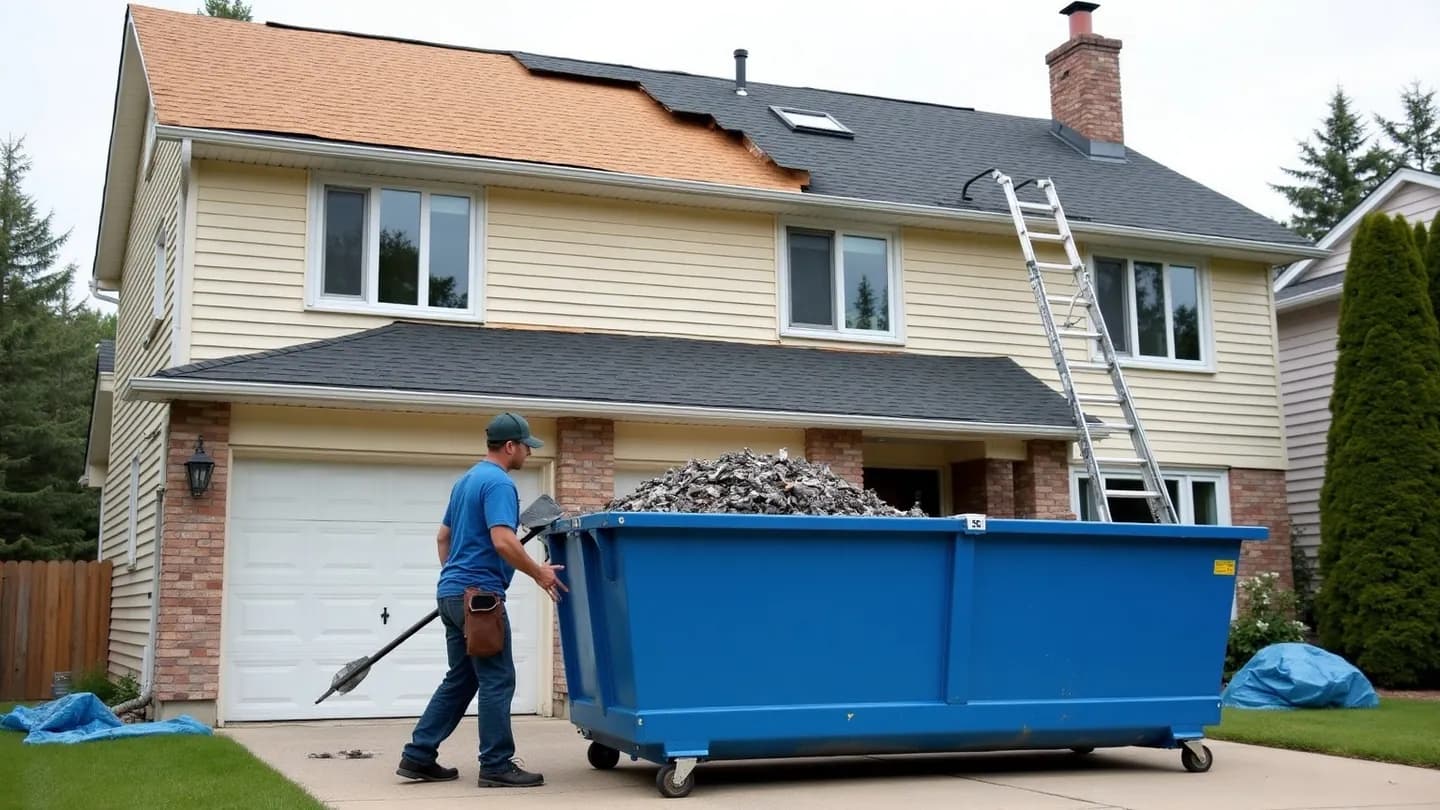
- Tear-off and disposal. Stripping the old roof to the deck and hauling it away, usually $1,000 to $2,500 when it is itemised.
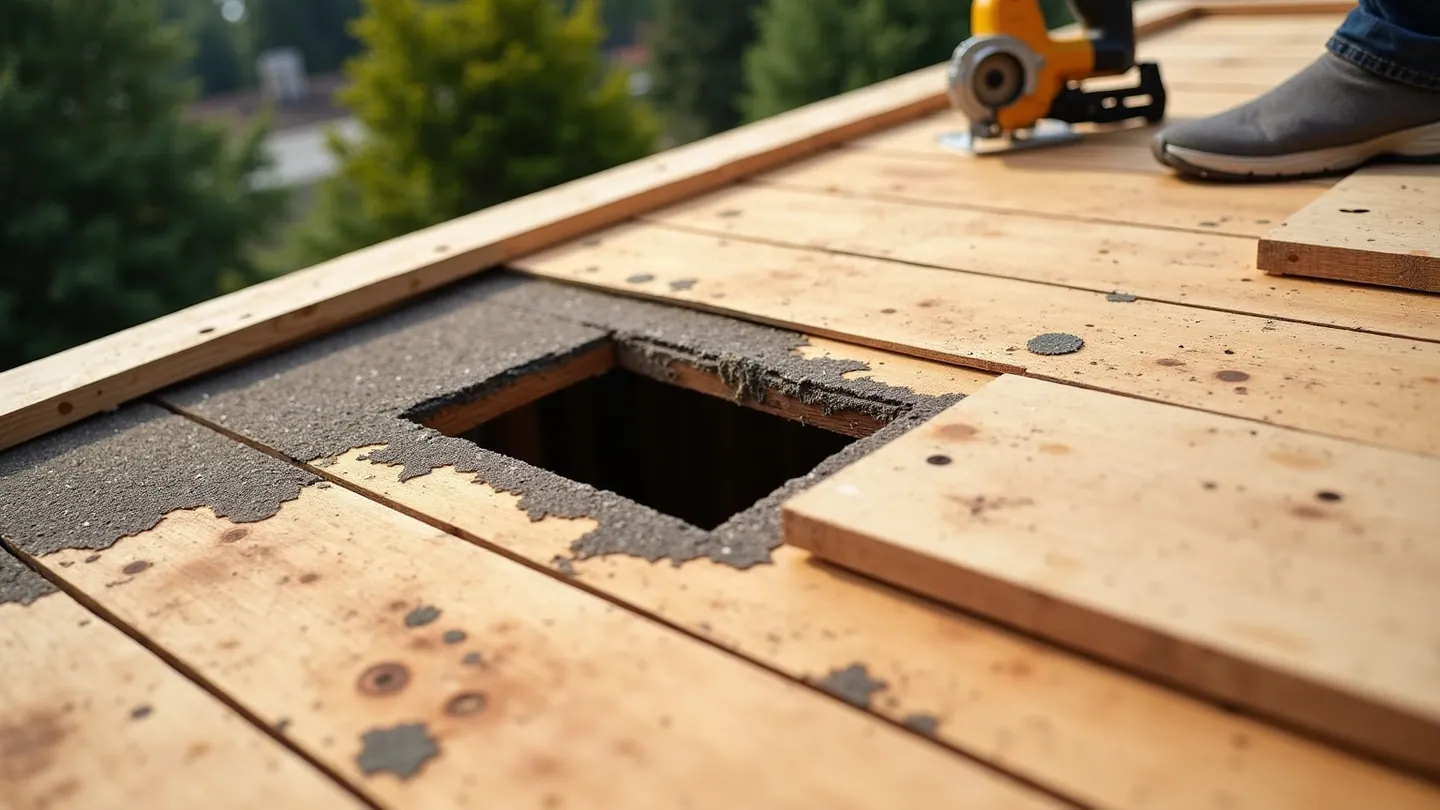
- Deck inspection and sheathing. Every sheet walked and sounded once it is bare, and soft plywood cut out at a per-sheet rate.
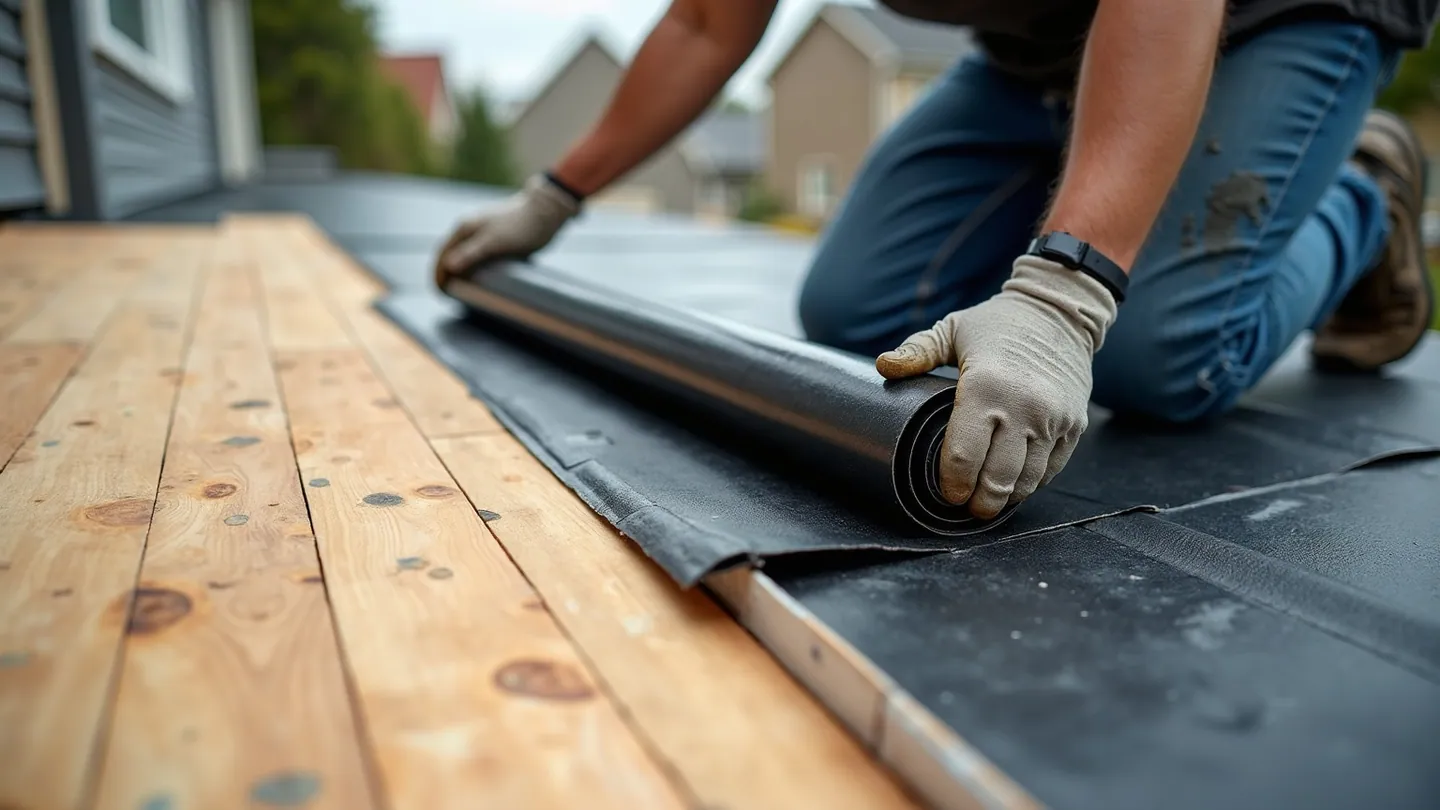
- Eave protection. Self-adhered ice-and-water membrane along the eaves, laid under the starter course.
- Valley and penetration membrane. The same membrane down every valley and around chimneys, skylights, and vent stacks.
- Underlayment. Synthetic underlayment over the rest of the deck, lapped and fastened.
- Drip edge and starter strip. Metal at the eaves and rakes, and a purpose-made starter course.
The disposal line is heavier than it sounds. A 20 square shingle roof weighs 2.5 to 3.9 tonnes, using the 275 to 425 pounds per square that manufacturers publish for architectural shingles, and every pound has to be carried down a ladder and paid for twice: once for the bin and once at the scale. A 14 yard bin in the GTA starts near $330 with one tonne included and runs roughly $130 a tonne after that, and Toronto's own drop-off depots charge $189.96 per tonne for renovation waste in 2026.
The deck inspection is the line with no price on it and the most value in it. The morning your roof is bare is the only morning in twenty-five years that anyone will see your plywood. A crew that sounds every sheet finds the soft one over the bathroom vent before it becomes a hole; a crew in a hurry lays $14,000 of shingles over it.
Eave protection is where the Building Code has an actual opinion. Ontario's Building Code requires the membrane to run from the roof edge at least 900 mm up the slope, and to reach a line no less than 300 mm inside the inner face of the exterior wall. On a house with a shallow overhang that takes two courses of membrane, not one. A quote priced for one course is priced for a different house.
Underlayment, membrane, and flashing together usually come to $500 to $1,200 on an average Ontario roof. It is the cheapest third of the job and the part that decides whether the expensive third reaches its warranty age.
And the half you do: shingles, ridge, vents, and flashing
The other six lines are the roof you will look at from the driveway for the next quarter century.
- Field shingles and fasteners. The shingles, and the nails that hold them: six per shingle, placed in the nailing zone.
- Hip and ridge cap. Purpose-made cap shingles along every hip and every ridge.
- Ventilation. Ridge or box vents at the top of the roof, and clear intake at the soffit.
- Flashing. New step flashing at walls, new counter-flashing at the chimney, and new pipe boots.
- Cleanup. Tarps over the beds during tear-off, a magnet sweep of the lawn and driveway, and the bin gone.
- Warranty and HST. The material warranty, the separate workmanship warranty, and 13 percent tax.
The nail count is the smallest number on the quote and one of the most expensive to get wrong. Six nails instead of four is what earns the high-wind rating on a product like IKO's Cambridge line, and a four-nail install voids exactly the coverage a homeowner thinks they bought. It costs a crew perhaps an hour across a whole roof. Ask which pattern is quoted.
Ridge cap is the other quiet substitution. Field shingles cut into thirds look close enough from the ground and most manufacturers treat them as an installation defect, which means the warranty on the whole roof is arguable the first time you need it.
Ventilation is where a roof either lasts or does not. The Building Code asks for one square foot of unobstructed vent area for every 300 square feet of insulated ceiling, with at least a quarter of it high and a quarter low. Exhaust with no intake behind it moves no air at all, and a blocked soffit is the most common fault we find on roofs that failed early. New vents on an old intake is money spent on the wrong end of the problem, and our guide to soffit and fascia in Ontario shows how little clear air the code actually leaves you at the eave.
Flashing is the corner cut we see most often. Bending the old step flashing back into place and re-bedding the chimney counter-flashing saves a few hundred dollars on the quote and puts a leak on a timer, which is why custom flashing belongs on the page as its own line rather than as an assumption. The same goes for the tax: 13 percent HST is not a detail on a five-figure job.
Two more items belong here when they apply. Fascia and drip-edge work often rides along with the roof, since the boards are exposed the moment the shingles come off, and so does an eavestrough replacement. The eavestrough has to come down for the ice-and-water membrane anyway, so doing both in one visit saves paying a crew to set up twice.
Why the invoice is higher than the price per square foot
The per-square-foot figure prices a clean job on a simple roof. Your house then adds its own conditions: a second layer nobody knew about, a few soft sheets of plywood, tired flashing, and a second storey to stage. Each one is a real cost, and together they routinely add 25 to 40 percent to the base number.
The chart below is a worked example, not a quote: a 2,000 square foot roof, 20 squares, on a two-storey with a 6/12 pitch, starting at the low end of the architectural band and picking up the conditions we find on a typical Ontario job of that age. Every step is priced from the 2026 Ontario ranges in this guide.
Notice what the example does not include. No permit, because a like-for-like reshingle rarely needs one. No skylights to re-flash. No fascia replacement. No steep-pitch surcharge, because a 6/12 is still walkable. Add two or three of them and the same roof clears $19,000 without anybody overcharging anyone.
That is the part homeowners find hardest to accept, and it is worth saying plainly: the base price is real, and so is the invoice. A contractor who quotes $12,000 on the phone and bills $17,000 has not necessarily cheated you. They have simply quoted a roof rather than your roof, which is why the number that matters is the one written after somebody has been up a ladder.
| Line | Amount | Running total |
|---|---|---|
| 20 squares of architectural shingle, $6.00 / sq ft | $12,000 | $12,000 |
| A second layer to tear off and haul | $900 | $12,900 |
| 6 sheets of soft sheathing replaced | $660 | $13,560 |
| Ridge vent, pipe boots, chimney flashing | $950 | $14,510 |
| Two-storey access and staging | $700 | $15,210 |
| HST at 13% | $1,977 | $17,187 |
| What the invoice says | $17,187 | $17,187 |
Want the number for your actual roof?
We measure the roof, count the layers, and give you an itemised quote with the price per square foot on it. Free, and no obligation.
The five things that move roof replacement cost the most
Everything else is rounding. These are the conditions that decide whether your roof prices at the bottom or the top of the band, and what each one is worth in 2026.
| What we find | What it adds |
|---|---|
| A second layer of shingles | $700 to $1,200 on a 20 square roof |
| Soft or rotten sheathing | $70 to $150 per 4x8 sheet, supplied and installed |
| Pitch over 7/12 | 15 to 25 percent, and 30 to 50 percent past 10/12 |
| Three storeys, a tight lot, or no driveway | $400 to $1,200 for access and staging |
| Skylights, chimneys, dormers, and valleys | $400 to $1,500 for the flashing and ventilation package |
| A permit, where the work is structural | $200 to $600 |
Layers are the one you can check yourself. Look at the roof edge from the ground: two distinct bands of shingle at the eave means two layers, and both have to come off. Ontario allows a second layer to be laid over a first in many cases, but it hides the deck, adds load, and cooks the new shingles from below, so we tear off to the deck as a matter of course.
Sheathing is the line that turns a quote into an argument. Nobody, including us, can see under the old shingles from a ladder. What separates a fair contractor from a bad one is not predicting the number of bad sheets; it is putting the per-sheet rate in writing before the tear-off starts, and showing you the rot before it goes in the bin. Ask for that rate. If it is missing, that quote is not finished.
Access is the quiet one. A downtown Toronto semi with no driveway, permit parking, and a bin that has to sit on the street is a genuinely harder job than the same roof in Uxbridge with a two-car pad, and the price says so. So does a house where the fascia has gone and the soffit and fascia need replacing before the drip edge can be fastened to anything solid.
How much roof does $10,000, $15,000, or $20,000 buy?
Work the bands backwards and a budget turns into a specification. On a 15 square bungalow, $10,000 before tax buys a full architectural shingle roof done properly, $15,000 reaches premium shingles, and $20,000 puts you into the bottom of standing seam metal. On a 22 square two-storey, every one of those numbers buys one grade less.
| Budget, before HST | 15 square bungalow (1,500 sq ft of roof) | 22 square two-storey (2,200 sq ft of roof) |
|---|---|---|
| $10,000 | $6.67 / sq ft: architectural shingles, full tear-off, new flashing and vents | $4.55 / sq ft: 3-tab, one layer off, membrane at the eaves only |
| $15,000 | $10.00 / sq ft: premium designer shingles, or architectural plus fascia and eavestrough | $6.82 / sq ft: architectural shingles, full tear-off, new flashing and vents |
| $20,000 | $13.33 / sq ft: the lower half of standing seam metal | $9.09 / sq ft: premium shingles, or exposed-fastener metal |
That table is the whole argument for measuring your roof before you set a budget. The same $15,000 is a premium roof on one house and a mid-grade roof on another, and the difference is not the neighbourhood or the contractor. It is 700 square feet of roof surface.
It also shows why the cheapest quotes cluster where they do. A $10,000 number on a 22 square roof is not a bargain; it is a specification. Somebody has decided which lines to leave out to hit it, and the tear-off, the membrane, and the ventilation are the three easiest to drop without anything looking wrong from the street.
If the budget genuinely does not reach the roof, say so out loud rather than shopping for a thinner quote. Sometimes the answer is to do the worst slope now and the rest next season, which is a real option on a roof with distinct planes, with the honest caveat that shingle colour lots shift and a new slope beside a ten year old one will not match. Sometimes the answer is a good architectural shingle instead of the premium line, which costs you nothing that matters. What is never the answer is the same roof with the membrane and the ventilation quietly deleted.
Why do three quotes on the same roof differ by $8,000?
Because they are not quoting the same job. On a 20 square roof, the cheap quote, the middle quote, and the expensive quote usually differ on six specific lines: shingle grade, how many layers come off, how far the ice-and-water membrane runs, whether sheathing is priced, whether ventilation is corrected, and what the workmanship warranty covers.
Here is the pattern, as it turns up when homeowners lay three quotes on the kitchen table in front of us.
| On the same 20 square roof | Low, $9,000 to $11,000 | Middle, $13,000 to $15,000 | High, $18,000 to $20,000 |
|---|---|---|---|
| Shingle | 3-tab or entry architectural | Architectural, six-nail pattern | Premium or designer |
| Tear-off | One layer; a second is extra | All layers, down to the deck | All layers, deck sounded sheet by sheet |
| Ice and water | Eaves only, minimum width | Eaves, valleys, penetrations | Eaves, valleys, penetrations, low-slope areas |
| Sheathing | Not mentioned | Rate per sheet, in writing | Allowance included in the price |
| Ventilation | Old vents reused | New ridge vent and boots | Intake and exhaust balanced to the code ratio |
| Warranty | Material only | Material plus workmanship | Material plus a 10 year workmanship warranty |
Read down the low column and you can see what the $8,000 buys. None of those omissions show up on the day the roof is finished. Every one of them shows up somewhere between year three and year twelve.
That does not make the cheapest quote wrong. It makes it a different product, and it should be priced as one. What should worry you is a low number with no line items behind it, no proof of WSIB coverage or liability insurance, and a large deposit due in cash. Our three-step checklist for choosing a roofing contractor in Ontario covers the credentials to ask for and the red flags that end the conversation.
Where you can save, and the lines you should never cut
Save on shingle grade, timing, and doing the whole roof in one visit instead of two. Do not save on eave protection, ventilation, flashing, or the nailing pattern. The first list is preference. The second list is what decides whether the roof reaches its warranty age.
Where the savings are real:
- Drop from premium designer shingles to a good architectural shingle. On 20 squares that is $3,000 or more, and the performance gap is far smaller than the price gap.
- Book in the shoulder season rather than the August peak.
- Do the roof, fascia, and eavestrough in one visit. Splitting them across two years costs more than doing them together.
- Keep the old vents if they are the right type, in the right number, and not rusted through. Sometimes they are.
Where cutting costs you the roof:
- Eave protection. In an Ontario winter, meltwater backs up under the shingles at the eave. The membrane is the only thing between that water and your ceiling, and the Building Code sets a minimum for a reason.
- Ventilation. An unvented attic cooks the shingles from underneath and shortens the roof by years. It is also the mechanism behind most ice dams, which is why our summer roof maintenance checklist puts soffit airflow on the list every year.
- Flashing. New step and counter-flashing every time. Old flashing bent back into place is a leak with a schedule.
- Nailing pattern. Six nails, placed in the nailing zone. Four nails is faster, cheaper, and voids the wind coverage you paid for.
- Hip and ridge cap. Purpose-made cap, not field shingles cut into thirds.
One more, from experience: never let a price talk you into leaving a second layer on. It saves the tear-off line and buys you a roof built on a deck nobody has looked at.
Does the time of year change what a roof costs in Ontario?
Yes, by roughly 5 to 10 percent, and mostly through availability rather than a published discount. May through September is peak season across Ontario, and lead times and prices both firm up. Late October through March is quieter, crews have gaps, and a homeowner who can wait usually gets a better number.
Cold weather changes the work, not the roof. Asphalt shingles rely on a heat-activated sealant strip that bonds each course to the one below once the sun warms it. In a January install that strip will not bond on its own, so the crew hand-seals with roofing cement as they go, and the roof seals properly in the spring. It is a real technique, not a compromise, and it is how winter roofs get done here.
What you should not do is stretch a failing roof through one more Ontario winter to catch a spring price. The freeze-thaw cycle is the most destructive thing your roof sees all year, and the interior repairs that follow a February ice dam cost more than the discount you were chasing.
How long does a roof replacement take?
Most Ontario shingle replacements are a one to two day job. A simple bungalow is often done between breakfast and dinner; a 25 square two-storey with valleys and dormers takes two days; a large or steep roof with sheathing repairs runs to three. Weather is the only common reason it stretches further.
The sequence matters more than the clock. A crew of four to six strips only as much roof as it can dry in the same day, so tear-off and deck inspection happen in the morning and the membrane and underlayment go down behind them by early afternoon. Nobody should be leaving an open deck overnight. If it rains, the roof gets covered and the crew comes back, and a contractor who leaves bare plywood out under an Ontario storm is telling you how the rest of the job will run.
What should worry you is not two days; it is an open-ended start. A crew that begins your roof and disappears to another job is usually stretched across too many contracts, and your house is the one sitting under a tarp. Ask for the start date, the crew size, and the finish date in writing, and ask what happens if the forecast turns.
Plan for a full driveway, a genuinely loud day, and a magnet sweep of the lawn at the end. Move the cars out the night before and take anything fragile off the walls in the top-floor rooms, because a tear-off shakes the house more than people expect.
What does the same roof cost in metal?
Roughly double, and the arithmetic only pays off if you stay. A 2,000 square foot roof in architectural shingle is about $14,000 at $7 per square foot. The same roof in standing seam is about $28,000 at $14. Over 50 years you buy the shingle roof around three times and the metal roof once, which is where the total cost of the two converges and then crosses.
The crossover sits near the 25 year mark, so the honest test is not which roof is cheaper but how long you intend to own the house. We work through that in detail, with the 50 year numbers laid out, in the metal against asphalt comparison linked at the top of this guide, and we install metal roofs as readily as shingle ones.
One caution on the cheap end of metal. Exposed-fastener panels at $6 to $9 per square foot undercut a good architectural shingle roof on paper. They are a different product: hundreds of gasketed screws that need re-torquing, on a system that will not see 50 years. Compare standing seam against shingles, or do not compare metal at all.
Deposits, HST, and the one rebate that exists
A fair Ontario roofing job is paid in stages, and no honest contractor asks for most of the money before the bin arrives. A modest deposit secures the date and orders material, progress payments follow the work, and a final portion waits until you have looked at the finished roof. At Sherak the last 10 percent is due only once you are satisfied with the work, which keeps us accountable for the details that are easiest to skip on the last afternoon.
HST is 13 percent in Ontario and it applies to the whole job, labour included. Check whether the number you were given includes it, because a quote that quietly excludes tax reads $1,800 cheaper on a $14,000 roof and is not.
There is no roofing rebate in Ontario, and any contractor who tells you otherwise is selling something. What does exist sits one layer below the roof: the provincial Home Renovation Savings Program, delivered by Enbridge Gas and Save on Energy, pays up to $1,250 toward attic insulation depending on how much you already have, and has been extended into 2026. We do not install insulation, so we have nothing to gain by mentioning it. If your attic is thin, price that separately while the roof is on your mind, because insulation and ventilation are the two things that decide how long the new shingles last.
Will insurance pay for any of it?
Home insurance pays for sudden, accidental damage: wind that lifts shingles off, hail that bruises them, a tree that comes through the deck. It does not pay for a roof that has simply reached the end of its life. Age and wear are maintenance, and every Canadian policy is written that way.
Two details decide how much a claim is actually worth. The first is whether your policy settles at replacement cost or actual cash value. Replacement cost pays what a new roof costs today. Actual cash value subtracts depreciation for the years the old roof already gave you, which on an 18 year old roof can be most of the cheque. Many insurers move older roofs onto actual cash value quietly at renewal, so read that clause before you need it.
The second is age. The Insurance Bureau of Canada notes that insurers generally prefer roofs to be updated within 20 years, and in practice an ageing roof shows up as a higher premium, a coverage limit, or a renewal that comes with conditions attached. A new roof does not usually earn a headline discount, but it does remove the reason an insurer had to charge you more.
If your roof was damaged in a storm rather than by time, document it before anything is touched: photographs from the ground, the date of the storm, and a written assessment. Our guide on what home insurance covers when a roof leaks walks through what claims adjusters look for and where homeowners lose otherwise valid claims.
Is a repair cheaper than a replacement?
For a young roof, almost always. Minor shingle repairs in Ontario run $300 to $1,000, and a properly patched roof at year 8 is money well spent. Past roughly year 18, or after the third leak in three different places, repairs stop buying time and start buying delay.
The test we apply on the ladder is simple. If the shingles are still flexible, the granule loss is local, and the leak traces to one failed detail, we fix the detail. If the mat is brittle, the granules are in the eavestrough, and the deck feels soft in more than one place, patching is throwing good money after bad, and we say so.
Run the arithmetic before you agree to a third repair. Three $800 visits over four years on a nineteen year old roof is $2,400 spent on a roof that still has to be replaced, and it buys nothing you can point at afterwards. The same $2,400 against a $14,000 replacement is a sixth of the job. The rough line we use: once a repair quote passes about a third of what replacement would cost, or the roof is inside three years of the end of its service life, replacement is the cheaper decision even though it is the bigger cheque.
A roof that is leaking now is a separate problem from a roof that is old. If water is coming in today, our roof repair and emergency service runs around the clock, and the first ten minutes matter more than the quote does.
Not sure whether yours needs a repair or a replacement?
Call and we will come out, get on the roof, and tell you plainly. Free inspection, $5 million liability insurance, 24/7 for emergencies.
What a roof costs in York Region, Simcoe, Kawartha, and the GTA
The per-square-foot bands hold across the province. What moves between regions is everything around the roof.
In the older parts of the GTA, lots are narrow, the bin often needs a street permit, and material has to be carried rather than craned, which is the access surcharge in the adder table above. Through the York Region suburbs, driveways are wide and access is easy, so the same roof in Newmarket or Aurora prices closer to the middle of the band. Out through Simcoe and the Kawarthas, haul distance to a transfer station and crew travel are the variables, and cottage roofs bring their own problem: steep pitches, tree cover, and decks that have spent 30 years under a canopy.
Municipal permit fees vary too, from roughly $200 to $600 where a permit is required at all. A like-for-like reshingle usually does not need one in Ontario; new sheathing, a changed slope, or structural repair usually does, and the contractor should confirm with your building department rather than leaving it with you.
What should not vary is the specification. A roof in Peterborough and a roof in Vaughan face the same freeze-thaw cycle, the same wind, and the same Building Code, and a quote that thins out the membrane or the ventilation because the house is further from the city is not a regional price. It is a worse roof.
How we price a roof at Sherak
We measure the roof, we do not estimate it from the street. We count the layers at the eave, look at the fascia and the soffit intake, check the attic where we can get into it, and then write a quote that shows the squares, the price per square foot, the sheathing rate per sheet, and every line from the list above with a number beside it. If the total surprises you, you can see exactly which line caused it.
There is no today-only price, because a roof that is worth doing next week is worth doing next month, and a discount that expires while the salesperson is still in your kitchen is a tactic rather than a saving. Take the quote, hold it against the others, and ask us about any line that differs. We would rather lose a job on an honest comparison than win one on a number that has to grow later.
We are based in Gormley and our crews work across York Region, Simcoe, Kawartha, and the GTA. Every roof carries a 10 year workmanship warranty on top of the manufacturer's material warranty, we carry $5 million in liability insurance, and the final 10 percent is not due until you are satisfied with the work. If you would rather compare on paper first, request a free itemised quote and hold it against whatever else you have been given.
Sherak Ltd, Head Office 12275 Woodbine Avenue, Gormley, ON L0H 1G0 Phone: +1 905 490 8800 Email: info@sherak.ca
Get a roof quote you can actually read
Measured roof area, price per square foot, sheathing rate in writing, and a 10 year workmanship warranty. Free and no obligation.
Request Your Free QuoteFrequently asked questions
How much does a new roof cost in Ontario in 2026?
How do I calculate my roof size in squares?
Does the old roof have to come off?
Is HST included in a roofing quote?
Why is one roofing quote thousands cheaper than another?
When is the cheapest time of year to replace a roof in Ontario?
Written by
Emad Alikhanpour
Roofing & Exterior Specialist
Emad has 15 years of hands-on experience across roofing and every exterior service Sherak offers, from shingle and metal roofs to siding, eavestroughs, soffit and fascia, and custom flashing.
15 years in the trade · Roofing and exterior services
View profileReader reviews
Loading reviews...