On this page
- Is board and batten siding a material or a style?
- The 3 siding materials worth shortlisting in Ontario
- What goes on the wall before the siding does
- What does the first Ontario winter do to each one?
- How often will you have to repaint it?
- What does each material cost installed in Ontario?
- What the warranty actually pays for
- How we would choose for your wall
- Frequently asked questions
- Reader reviews
Key takeaways
- Board and batten is a profile, not a material. You can buy that look in vinyl, engineered wood, or fiber cement, and the material is what decides how long it lasts.
- Installed in Ontario: vinyl $4 to $8 per square foot, engineered wood $6 to $11, fiber cement $7 to $13. That is wall area, not floor area.
- Across 30 years vinyl gets repainted zero times, fiber cement about twice, engineered wood about three times, and cedar about seven.
- James Hardie's 30 year warranty pays for board only. It states in writing that it will not pay any costs for labour.
- Painting vinyl to change its colour voids the Kaycan warranty, so with vinyl you choose the colour once.
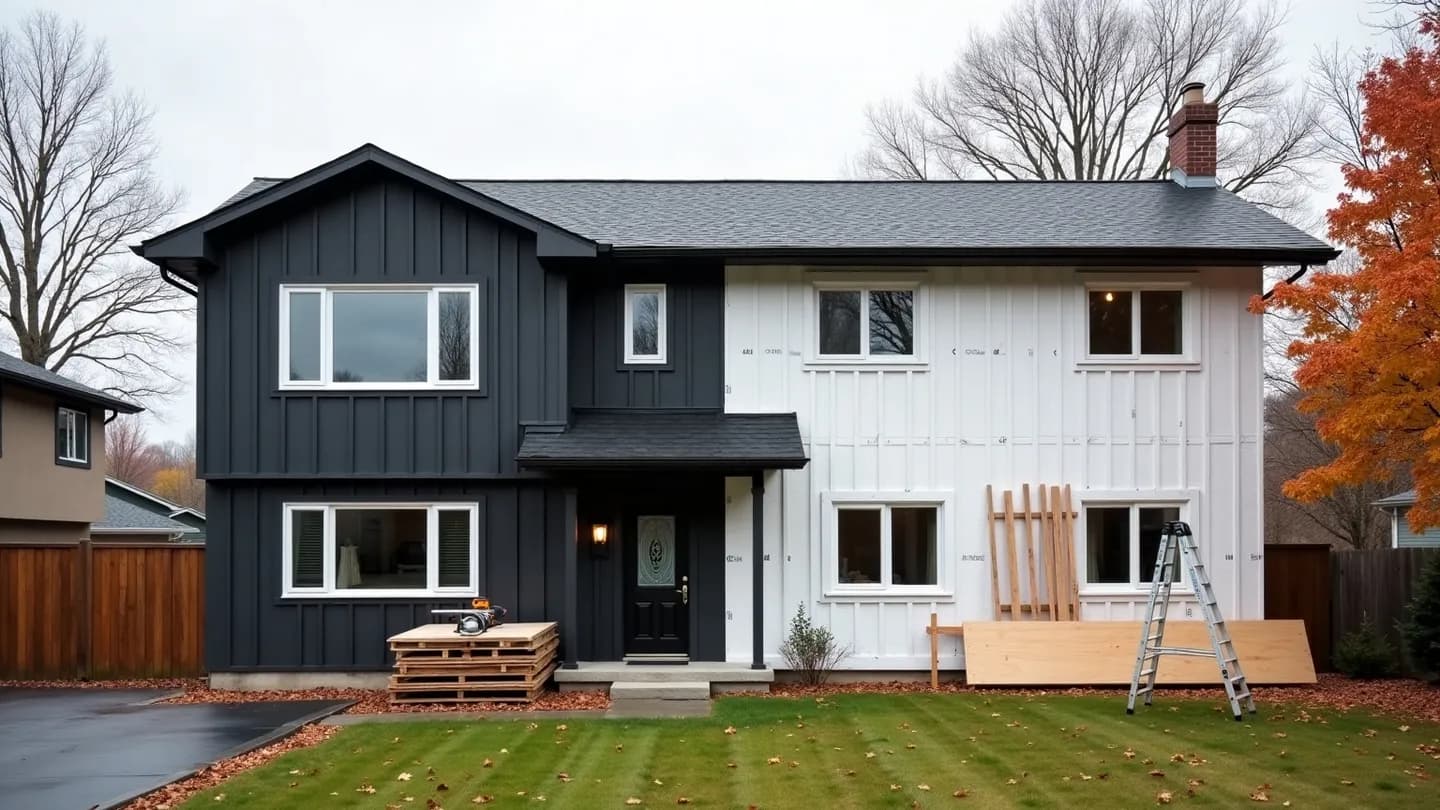
Every spring a homeowner meets us in the driveway, holds up a phone, and shows us the same photograph: a dark farmhouse with tall vertical boards running from the foundation up into the gable. They want that. What they are actually asking us to price is three different siding materials, because the board and batten look in that photo can be built in vinyl, in engineered wood, or in fiber cement, and those three age nothing alike on an Ontario wall.
The profile is the part you fall in love with. The material is the part you live with. One decides how the wall reads from the street, the other decides what you are doing on a ladder in year eight and what the wall looks like in year twenty five. Our complete guide to siding in Ontario covers all six siding materials we hang; this is the closer look at the three that win almost every board and batten job we quote.
We are based in Gormley and re-clad houses across York Region, Simcoe County, and the GTA, so this follows the order we actually work through it on a driveway: what the profile is, what goes on the wall before the siding does, what the first winter does, how often you repaint, and what it costs.
Is board and batten siding a material or a style?
Board and batten is a style, not a material. It is a wall of wide vertical boards with narrow battens covering every seam between them, and that profile is sold in vinyl, engineered wood, and fiber cement. From the curb the three look the same. What changes is the price, the lifespan, and how many times you repaint it.
The profile is older than every material sold today. It started as rough sawn boards nailed vertically to a barn with thin battens over the joints, so the wall could shed water without a single horizontal seam for water to sit in. That is still why it works.
Because the boards run vertically, the batten spacing follows the framing behind them, usually 16 inches on centre to land on the studs, and every batten has to cover its seam with room to spare. Get that spacing wrong and the wall reads as stripes instead of boards. It is the most common thing we are asked to fix on a board and batten wall someone else hung.
One honest note about vinyl. What is sold as vinyl board and batten is a moulded panel with the profile pressed into it, not separate boards and battens. On a two-storey wall seen from the street it reads correctly. From two metres away on a front porch, it does not.
The 3 siding materials worth shortlisting in Ontario
Three siding materials cover almost every board and batten re-clad we quote in Ontario: vinyl, engineered wood, and fiber cement. Vinyl costs the least and never needs paint. Engineered wood gives the deepest and most convincing profile. Fiber cement lasts the longest and does not burn. The table sets them against each other.
| Vinyl | Engineered wood | Fiber cement | |
|---|---|---|---|
| What it is | Moulded PVC panel | Wood strands bonded with resin and wax | Cement, sand, and cellulose fibre |
| Installed cost per sq ft | $4 to $8 | $6 to $11 | $7 to $13 |
| Expected life in Ontario | 20 to 40 years | 20 to 30 years | 30 to 50 years |
| Refinishing | Never | Repaint every 7 to 10 years | Repaint every 10 to 15 years |
| On the wall | Light, clips together | Light, cuts like wood | Heavy, needs blades and dust control |
| Fire | Combustible | Combustible | Non-combustible |
| Warranty headline | Lifetime, ends when you sell | 5 years full, then 50 prorated | 30 years, product only |
Two of those rows do most of the deciding. If the number that matters is the one on the quote, vinyl wins and it is not close. If the number that matters is how many times a painter comes back, fiber cement wins.
Engineered wood sits between them for a reason that has nothing to do with price. It is light enough to hang deep, genuinely thick battens, so the wall throws a real shadow line at three in the afternoon. On the century homes and custom builds we re-clad around Aurora and King City, that depth is usually what the homeowner was picturing all along. All three are materials we hang, and our siding installation and replacement crew prices them the same way.
What goes on the wall before the siding does
Siding is not waterproof and is not asked to be. Ontario's Building Code requires a second plane of protection behind it: a drainage layer of sheathing membrane and flashing that catches whatever gets past the boards and sends it back outside. Vertical siding needs strapping over that layer, and this is where board and batten jobs go wrong.
Subsection 9.27.3 of the Ontario Building Code is blunt about it. The second plane of protection has to intercept all precipitation that gets past the first plane and dissipate it back to the exterior. The siding is the first plane. The membrane, the custom flashing we fabricate, and the gap behind the boards are the second, and that is the part that decides whether the wall is sound in year twenty.
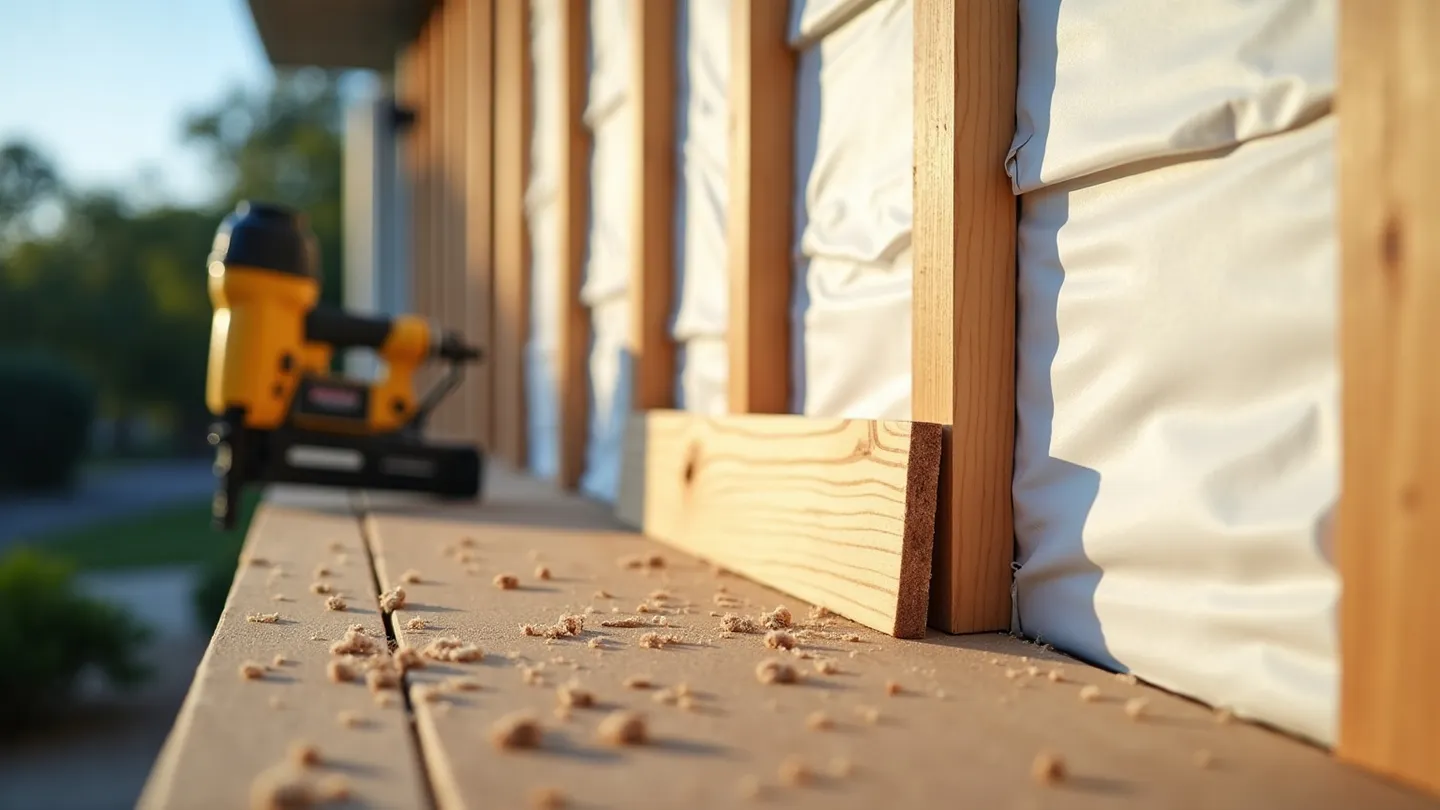
All three siding materials want the same thing behind them, and vertical siding adds a problem horizontal siding does not have. Lap boards hang on the sheathing and their own overlap makes the drainage path. Board and batten runs the same direction as the water, so fastened flat against the membrane there is nowhere for water to go. We strap the wall first: vertical furring over the membrane, then boards over the furring, so a drained and vented gap runs the full height of the wall.
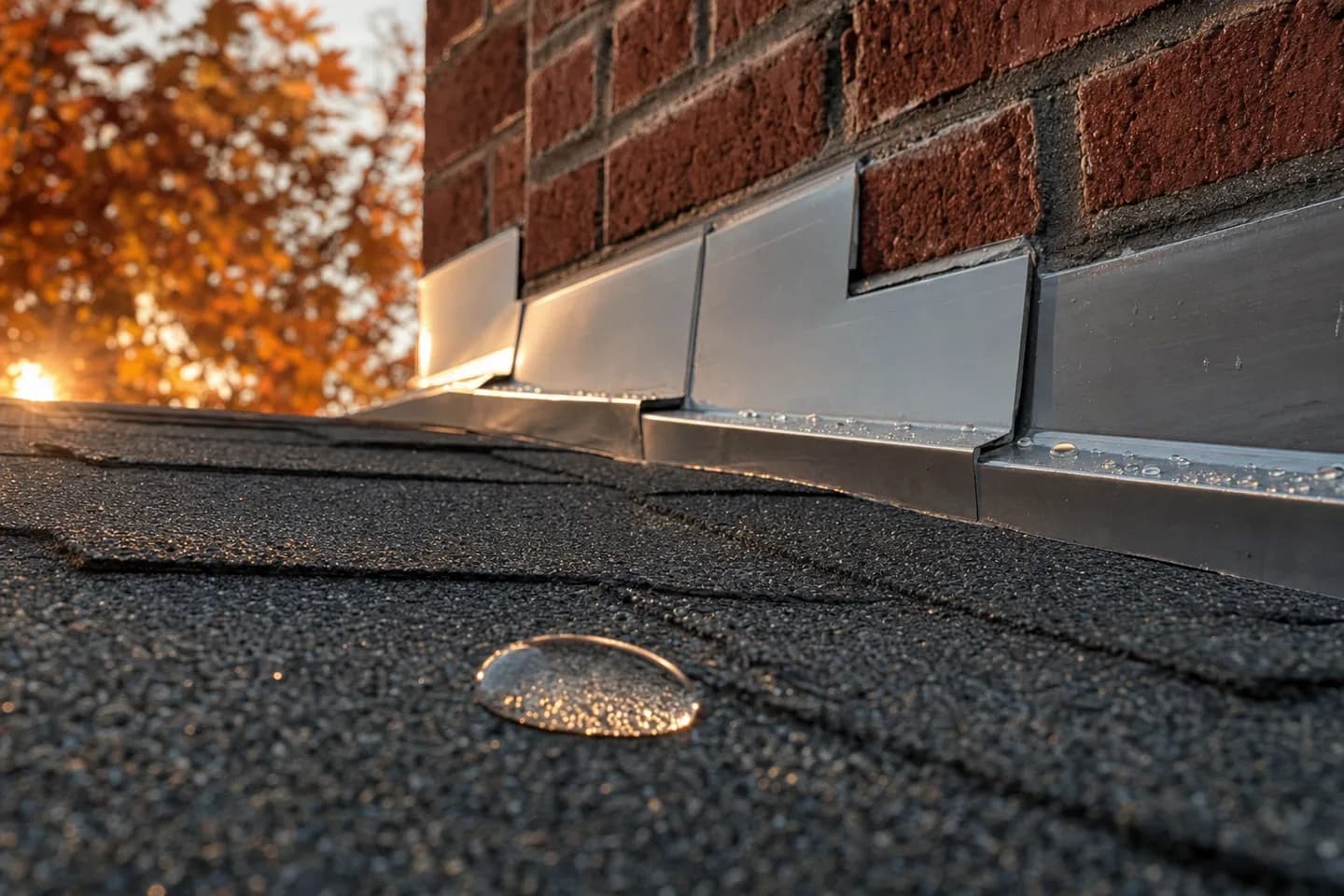
That gap costs a little strapping and an hour or two of labour, and it is the cheapest insurance on the job. Skipping it is why we take off eight year old board and batten walls that look fine from the street and are black behind the battens. The same logic governs every opening, which is why custom flashing at windows and doors is not a detail to let a quote skip.
What does the first Ontario winter do to each one?
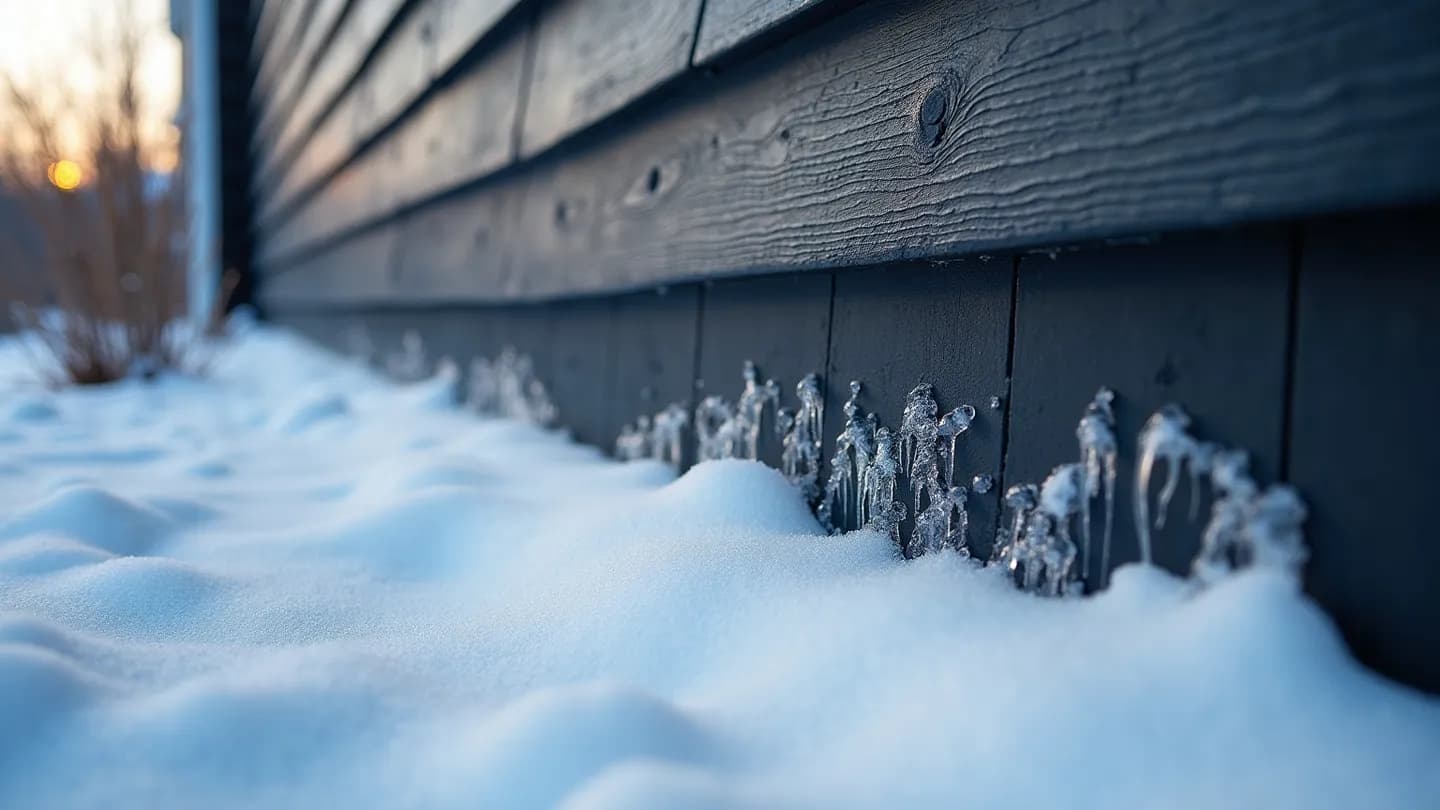
Cold makes vinyl brittle, freeze-thaw pries at every unsealed edge on engineered wood, and fiber cement barely registers either. Wind is the one nobody reads about: Kaycan's Canadian vinyl warranty excludes damage caused by fire, wind, earthquake, or acts of God, so a wind stripped wall is an insurance claim rather than a warranty claim.
PVC grows harder and more brittle as the temperature falls, which is why the impact test in ASTM D3679, the standard vinyl siding is manufactured to, is run cold. In an Ontario January a sheet of ice off the roof edge or a puck off a driveway finds thin vinyl and cracks it, and a cracked panel is replaced rather than patched. Keep a few spares from the original run in the garage, because colour lots drift over the years.
Engineered wood is dimensionally stable but depends completely on sealed edges. Every cut end, every fastener, and every place a batten crosses a board is a way in for water that then freezes and expands. Hung properly it is excellent. Hung quickly it fails at the battens first.
Fiber cement is the one that shrugs at our winters. It does not swell and shrink through freeze-thaw the way wood does, it is non-combustible, and its weakness is not weather at all. It is weight and silica dust: the boards are heavy, the cuts need proper control, and a crew that has not hung it before will be slow and will leave you chipped edges.
The forgotten one is what runs off the roof and onto the wall. A failing eavestrough pours water down the same three feet of siding all winter, and none of these materials survives that indefinitely, which is why we look at the eavestrough on every siding visit.
Not sure which material your wall is asking for?
We measure the wall, look behind the old siding, and price all three. Free, and no obligation.
How often will you have to repaint it?
Across thirty years vinyl gets repainted zero times, fiber cement about twice, engineered wood about three times, and cedar about seven. That single row of numbers moves more homeowners off cedar and onto fiber cement than any price we quote, because a repaint is not only money. It is scaffolding, and two weeks of a summer.
James Hardie puts a number on its own finish. The ColorPlus finish warranty runs 15 years against cracking, peeling, and chipping, and the warranty document itself reduces the payment by 6.67 percent a year from the second year onward, so it reaches zero exactly at year 15. Read that as the manufacturer telling you when it expects the wall to need repainting.
Vinyl is the outlier because the colour runs through the panel instead of sitting on top of it. Kaycan's care instructions for its Canadian vinyl amount to washing the wall with a long handled car brush on a garden hose. There is a catch worth knowing before you choose a colour: that same warranty does not apply to siding which has been painted or coated over the original finish. With vinyl you pick the colour once.
| Material | Refinishing interval | Times in 30 years | Years the work lands |
|---|---|---|---|
| Vinyl | none | 0 | never |
| Fiber cement | repaint every 10 to 15 years | 2 | 10 to 15, 22.5 to 27.5 |
| Engineered wood | repaint every 7 to 10 years | 3 | 7 to 10, 15.5 to 18.5, 24 to 27 |
| Cedar | restain every 3 to 5 years | 7 | 3 to 5, 7 to 9, 11 to 13, 15 to 17, 19 to 21, 23 to 25, 27 to 29 |
- Vinyl: rinse it once a year, and never paint it if you want the warranty to survive
- Engineered wood: repaint every 7 to 10 years, and seal every cut edge you expose
- Fiber cement: repaint every 10 to 15 years with 100 percent acrylic paint, which is what James Hardie's own care sheet specifies
- Cedar: stain or seal every 3 to 5 years without exception, or it greys, cups, and rots
What does each material cost installed in Ontario?
On an average Ontario two-storey carrying roughly 2,500 square feet of wall, vinyl board and batten runs about $10,000 to $20,000 installed, engineered wood about $15,000 to $27,000, and fiber cement about $17,000 to $32,000. Siding is priced by wall area rather than floor area, so gables and a second storey cost more than a floor plan suggests.
| Material | Installed per sq ft | Two-storey, about 2,500 sq ft of wall |
|---|---|---|
| Vinyl | $4 to $8 | $10,000 to $20,000 |
| Engineered wood | $6 to $11 | $15,000 to $27,000 |
| Fiber cement | $7 to $13 | $17,000 to $32,000 |
Two things move that number more than the material does. The first is wall area: a tall two-storey with gables can carry 2,500 to 3,000 square feet of wall on a 2,000 square foot floor plan, the same trap as pricing a roof off floor area instead of actual roof area. The second is what we find when the old siding comes off, because rotten sheathing, missing flashing, and a barrier that was never lapped correctly all get fixed before anything new goes on.
Board and batten also costs a little more than lap in the same material, since the strapping, the extra fasteners, and the trim at every opening add labour. In our quotes it runs about five to ten percent over the same wall in lap.
The cheapest quote on your table almost always reached its number by thinning the part you cannot see: the membrane, the flashing, or the strapping. Before you sign anything, our checklist on how to choose a contractor covers the questions that separate the two.
What the warranty actually pays for
Every siding warranty on this list pays for board, not for the crew that hangs it. James Hardie's 30 year limited warranty states that it will not refund or pay any costs in connection with labour. LP SmartSide is the exception, covering 100 percent of labour and material, though only for the first five years.
Read the three of them side by side and a pattern shows up quickly.
James Hardie warrants HardiePlank and HardiePanel HZ5 for 30 years from purchase, and the Canadian coverage is real but not national: it covers Ontario, and excludes Nova Scotia, New Brunswick, Prince Edward Island, Newfoundland and Labrador, and the three territories. Inside that term Hardie will reimburse up to twice the original retail cost of the defective board, and nothing at all for labour.
LP SmartSide runs the other way at the start, with five years covering 100 percent of labour and material replacement, then a prorated 50 year term on material only.
Kaycan's Canadian vinyl warranty is a lifetime warranty in the narrowest sense of that word. It lasts as long as you live in the house, it ends the day the property sells, and the buyer inherits a prorated version that expires 50 years after the original install. It also has to be registered within 30 days of installation, or the most Kaycan owes you is a replacement panel, with freight, installation, and labour on you.
That last clause is the one worth acting on the week the job finishes. Register the warranty. It takes one form and thirty days, and almost nobody does it.
How we would choose for your wall
Of the three siding materials, one usually settles it inside a minute on the driveway. If the house is a keeper and the budget allows it, we put fiber cement on the walls. Thirty to fifty years, two repaints, non-combustible, and it holds a crisp shadow line through everything Ontario does to it.
If you want the deepest and most convincing board and batten, and you accept a painter at year eight, engineered wood is the better looking wall of the three.
If the plan is to sell inside a decade, or the budget is fixed, vinyl is not a compromise. It is the right answer, as long as you buy a quality panel, choose a colour you can live with permanently, and pay for the strapping behind it. A re-clad is also the moment to deal with the roofline, since new walls under original aluminum soffit and fascia show the difference immediately, and our soffit and fascia replacement crew usually follows the siding crew by a week.
We hang all three across York Region, Simcoe County, and the GTA, and we quote them side by side on the same visit, so the comparison is your wall rather than a table on the internet. Homeowners in Newmarket, Aurora, and Richmond Hill get all three prices with the same wall detail behind each one. The conversation runs a little differently in Whitchurch-Stouffville, where a quarter of the town went up between 2006 and 2010 and whole crescents are reaching the end of their builder-grade cladding in the same couple of seasons, and differently again around Innisfil, where snow falls on twice as many days a year as it does in York Region and it is the freeze and thaw cycling rather than any one storm that opens a lap.
Every Sherak re-clad carries a 10 year workmanship warranty, we hold $5 million liability insurance, and 10 percent of the price is due only once you are satisfied. Call 905 490 8800 or get a free quote and we will measure the wall and price all three.
Sherak Ltd, Head Office
12275 Woodbine Avenue, Gormley, ON L0H 1G0
Phone: +1 905 490 8800
Email: info@sherak.ca
Thinking about your own roof or exterior project?
Get a free, no obligation quote from Sherak, backed by a 10 year workmanship warranty.
Get a Free QuoteFrequently asked questions
Is board and batten siding more expensive than lap siding?
Which siding material lasts longest in Ontario?
Does vinyl siding crack in Ontario winters?
Can I paint vinyl siding to change the colour later?
Do I have to repaint fiber cement siding?
Can new siding go over the old siding instead of tearing it off?
Written by
Emad Alikhanpour
Roofing & Exterior Specialist
Emad has 15 years of hands-on experience across roofing and every exterior service Sherak offers, from shingle and metal roofs to siding, eavestroughs, soffit and fascia, and custom flashing.
15 years in the trade · Roofing and exterior services
View profileReader reviews
Loading reviews...