On this page
- Metal roof vs asphalt shingles: the short answer
- Question 1: How long will you own the house?
- Read the chart honestly, including what it leaves out
- Question 2: What does each roof cost on your house?
- Question 3: Does your roofline actually suit metal?
- Question 4: Which roof handles an Ontario winter better?
- Question 5: What happens the day the roof gets damaged?
- Score it: where each roof genuinely wins
- Three things Ontario homeowners get wrong about metal
- How we quote both roofs on the same visit
- Frequently asked questions
- Reader reviews
Key takeaways
- Asphalt shingles run $5.50 to $8.50 per square foot installed in Ontario. Standing seam metal runs $10 to $18, so roughly double.
- Shingles last 15 to 30 years here, metal 40 to 70. On a 50 year view that is three shingle roofs against one metal roof.
- The break-even is your ownership horizon, not the roof. Under about 12 more years in the house, shingles almost always win.
- Ontario insurers treat an aging asphalt roof as a risk: the Insurance Bureau of Canada says insurers generally prefer roofs updated within 20 years.
- Metal can usually go over one existing layer of shingles, which takes the tear-off out of the quote. Two layers have to come off first.
Two quotes land in your inbox for the same house. One is about $14,000 for architectural asphalt shingles. The other is about $28,000 for a standing seam metal roof. Both crews are competent, both roofs will keep the rain out, and one costs twice as much as the other. The metal roof vs asphalt shingles decision is not really a roofing question. It is a question about how long you plan to live in the house, what your roofline looks like, and what your winter does to it.
At Sherak we quote both materials on the same roof most weeks, across York Region, Simcoe, Kawartha, and the GTA, and the right answer genuinely changes house to house. Five questions settle it. Work through them in order and you will know which roof belongs on your home before anyone hands you a price. If metal is already the front-runner, our breakdown of standing seam metal roof cost in Ontario goes deeper on that side, and we install metal roofs and asphalt shingle roofs alike, so we have no stake in which one you pick.
Metal roof vs asphalt shingles: the short answer
Asphalt shingles cost about half as much and last about a third as long. In Ontario shingles run $5.50 to $8.50 per square foot installed and last 15 to 30 years, while standing seam metal runs $10 to $18 and lasts 40 to 70. Shingles win on the price today, metal wins across decades.
That trade is the whole comparison, and every other difference hangs off it. Shingles are cheap to buy, cheap to fix, easy to find a crew for, and they will need doing again inside your mortgage. Metal is expensive to buy, awkward to fix, needs a crew that knows the system, and it should be the last roof the house ever needs.
Neither is the better roof in the abstract. The five questions below are the ones we actually walk homeowners through on the driveway, in the order that settles the decision fastest:
- How long will you own the house?
- What does each roof cost on your roof, not on an average one?
- Does your roofline suit metal panels?
- What does an Ontario winter do to each one?
- What happens the day something goes wrong?
Answer those and the quote almost writes itself.
Question 1: How long will you own the house?
This is the question that decides it, and it has nothing to do with roofing. If you will be in the house for another 12 years or less, asphalt shingles are almost certainly the right buy. Past roughly 25 years, metal usually costs less in total. In between, the other four questions break the tie.
Run the arithmetic over 50 years on a 2,000 square foot roof and the shape of the decision becomes obvious. An architectural shingle roof at about $7 per square foot is roughly $14,000, and on a 20 year replacement cycle you buy it three times. A standing seam roof at about $14 per square foot is roughly $28,000, and you buy it once.
| Roof | Service life (years) | Cost each time | Times bought in 50 years | Total over 50 years |
|---|---|---|---|---|
| Architectural asphalt shingle | 20 | $14,000 | 3 | $42,000 |
| Standing seam metal | 50 | $28,000 | 1 | $28,000 |
Read the chart honestly, including what it leaves out
Those totals are nominal. They are in today's dollars, with no inflation, no financing, and no repairs on either roof, and they assume the shingle roof gets 20 years, which is the number Canadian insurers work to as much as roofers do. Change that one assumption and the answer moves: a well-ventilated shingle roof that reaches 25 years only gets replaced twice in 50, which lands at about $28,000 and ties the metal roof outright.
So the honest framing is not that metal is cheaper. It is that metal stops being more expensive somewhere around the 25 year mark, and every year past that it pulls further ahead. Under 12 years, you are paying a premium for durability you will hand to the next owner for free.
Resale does not rescue the difference either. US Remodeling data puts the resale recovery of a metal roof near 48 percent against roughly 57 percent for asphalt, and there is no equivalent Canadian study. A metal roof is bought to be lived under, not to be sold. Homeowners who tell us they are staying put, or that this is the cottage they intend to stop fussing over, are the ones who almost never regret it.
Question 2: What does each roof cost on your house?
Ontario pricing lands in fairly tight bands per square foot of roof area, not floor area. Architectural asphalt shingles sit at $5.50 to $8.50 installed, exposed-fastener metal at $6 to $9, and standing seam at $10 to $18. Tear-off, pitch, and roof complexity move you inside those bands, and sometimes past them.
Here is how the two materials compare on the numbers that actually differ:
| Factor | Standing seam metal | Architectural asphalt shingle |
|---|---|---|
| Installed cost | $10 to $18 / sq ft | $5.50 to $8.50 / sq ft |
| Service life in Ontario | 40 to 70 years | 15 to 30 years |
| Weight per 100 sq ft | 85 to 120 lb (steel) | 275 to 425 lb |
| Finish or product warranty | 30 to 40 year PVDF paint | Limited lifetime, largely prorated |
| Wind warranty | Uplift-rated per panel and system | 177 km/h, 210 km/h with high-wind install |
| Fire rating | Class A, non-combustible | Class A over approved underlayment |
| Impact rating | Class 4 available (UL 2218) | Class 3 typical (UL 2218) |
| End of life | Recyclable as scrap steel | Almost always landfilled |
The warranty and rating figures on the shingle side are the published specs for a Canadian-made architectural shingle, IKO's Cambridge line, which is representative of what goes on most Ontario homes. Metal ratings are earned per panel and per system, so confirm the specific product rather than assuming.
One line in that table quietly matters more than the rest: weight. A shingle roof puts roughly three times the load on your framing that a steel roof does. On a century home in Peterborough or a cottage in the Kawarthas with older rafters, that difference is occasionally the deciding factor, not a footnote.
There is a middle ground worth knowing about. Metal shingles and tile panels are stamped and interlocked to imitate slate, shake, or cedar rather than run as long vertical pans, so they suit a heritage look and a broken-up roof better than standing seam does. They price between exposed-fastener metal and standing seam, and the difference between the metal systems is worth understanding before you compare metal shingles vs asphalt shingles on price alone. Whichever way you lean, our line-by-line guide to roof replacement cost in Ontario shows how a per-square-foot price turns into an invoice.
Averages are not your number
We will measure your roof and quote metal and asphalt shingles side by side on the same visit, free and with no obligation.
Question 3: Does your roofline actually suit metal?
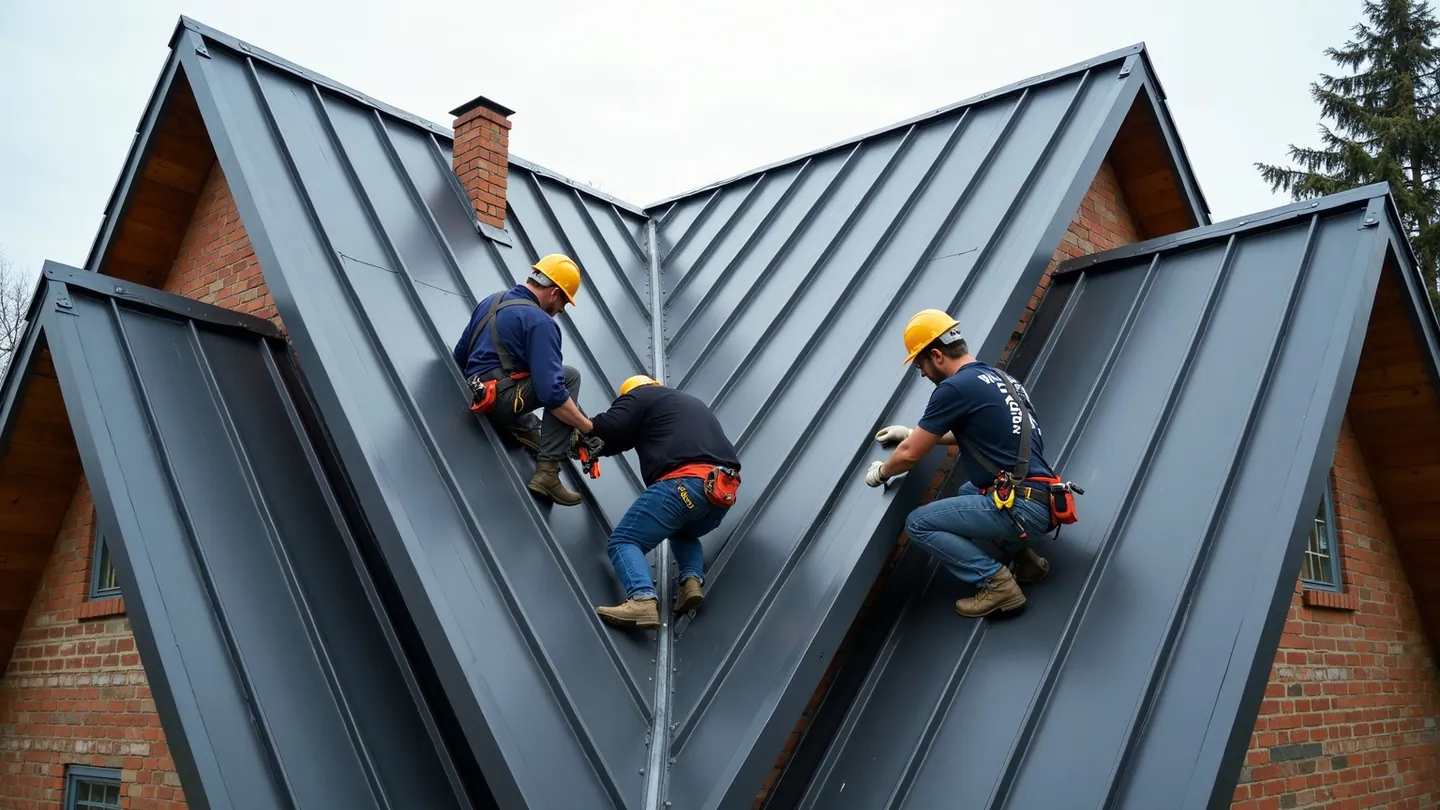
Metal loves long, uninterrupted planes and gets expensive fast when it has to work around obstacles. Shingles do not care. Every dormer, valley, chimney, and skylight adds custom cut-and-flash labour to a metal roof, while a shingle crew simply works around it. A simple gable roof narrows the price gap. A cut-up roofline widens it.
That is because a standing seam panel is a single continuous piece of metal running from ridge to eave. Interrupt it and someone has to cut it, form a flashing, and make that junction watertight by hand. On a plain two-storey gable, panels run out fast and the labour is predictable. On a 1990s subdivision home with three dormers, two valleys, a bay window roof, and a chimney, the same job can take half again as long.
The features that push a metal quote up hardest:
- Dormers, especially several of them on one plane
- Valleys where two roof planes meet, each needing formed metal
- Skylights and chimneys, which need custom flashing fabricated to fit
- Low slope sections, which restrict which panel profiles are eligible
- Difficult access, which slows a crew handling twenty foot panels
None of these disqualifies metal. They just change the maths, and they are why an online cost calculator is close to useless on a complicated house. The roof we quote most often across York Region, in Aurora, Newmarket, and Richmond Hill, is a two-storey with a moderately cut-up roofline, and on those homes the metal premium usually lands nearer the top of the range than the bottom.
Question 4: Which roof handles an Ontario winter better?
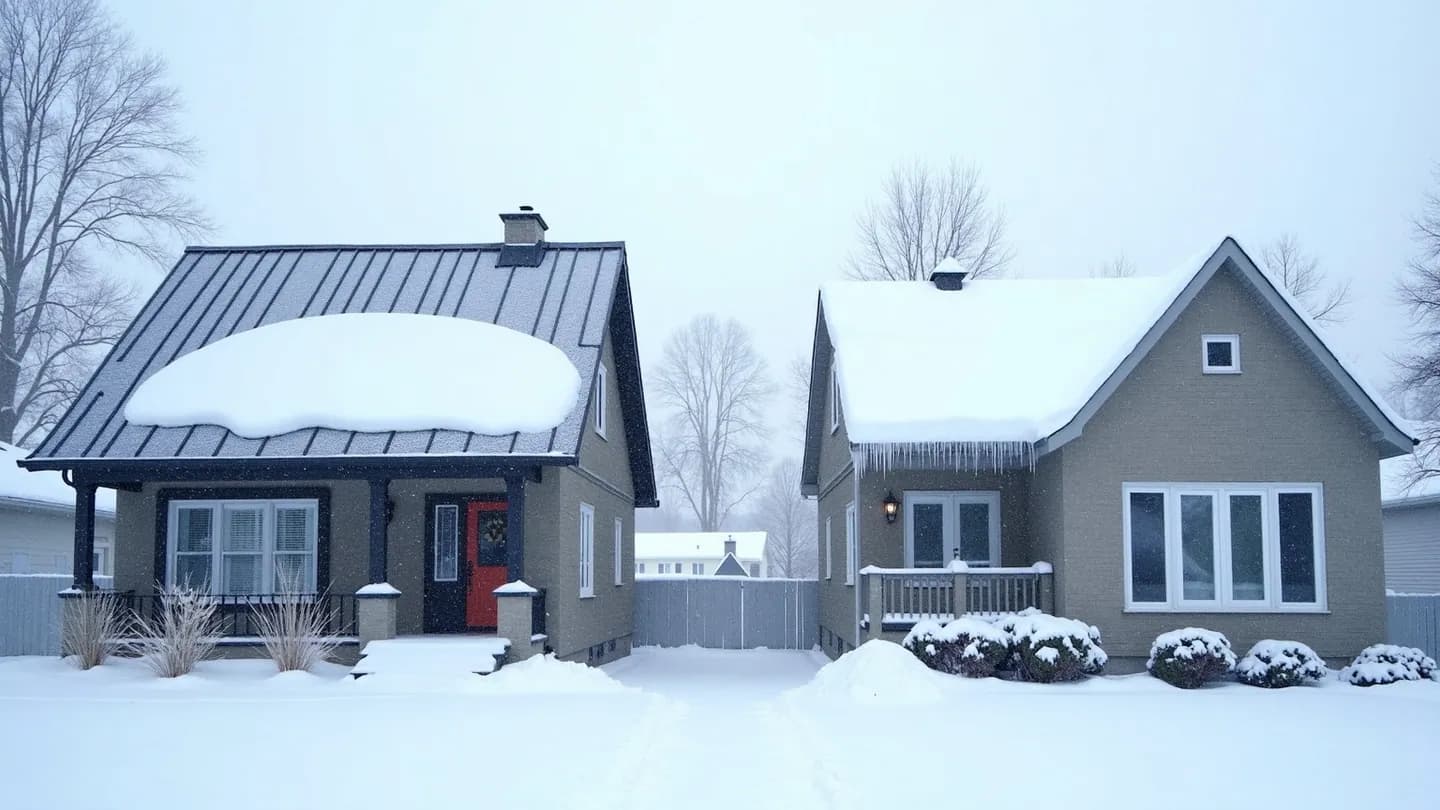
Metal handles winter better, with one caveat. A smooth metal surface sheds snow before it can melt and refreeze at the eaves, which lowers ice-dam risk and takes snow load off the structure. But ice dams are caused by heat escaping into a cold attic, so metal reduces the symptom rather than curing the disease, and preventing ice damming starts above your ceiling.
Get the attic right and either roof performs. The Ontario Building Code requires unobstructed attic venting of at least 1/300 of the insulated ceiling area, with a quarter of it high and a quarter low, which our guide to soffit and fascia in Ontario turns into the length of vented panel a roofline actually needs, and insulation and air sealing above the ceiling is what actually stops the melt-freeze cycle. We have pulled ice dams off metal roofs on badly vented attics more than once. If ice dams are an annual event at your house, book a free roof and attic assessment before you spend on either material, and our summer roof maintenance checklist covers what to look at before the cold arrives.
Snow shedding also has a downside nobody mentions at the sales stage. A slab of snow releasing off a metal plane above a doorway, a walkway, or a driveway is a genuine hazard, and it can tear an eavestrough off the fascia on the way down. Snow guards solve it, but they belong in the quote from the start, and the eavestrough system underneath needs to be fastened for the load.
Wind and snow load are local. Ground snow load in Barrie and the Kawarthas is meaningfully higher than in Toronto, so a roof we spec for a home in Barrie is not the same roof we spec in Scarborough. On wind, a good architectural shingle carries a 177 km/h limited wind warranty and 210 km/h when installed by the high-wind method, which covers Ontario conditions comfortably. Metal is rated by panel and system rather than by shingle, and a correctly specified standing seam roof will meet or beat it.
Question 5: What happens the day the roof gets damaged?
Shingles are far easier to repair and far harder to insure as they age. A damaged shingle roof is a two-hour fix by any roofer in Ontario. A damaged metal roof needs seams opened with the right tools and a colour match that may no longer be made, but it is far less likely to need the visit in the first place.
The repair story is genuinely lopsided. Wind lifts a few tabs on a shingle roof and we swap them from stock the same week, often for a few hundred dollars. Metal rarely fails that way, but when a panel is damaged it is a specialist job, and a discontinued colour can mean custom matching. If your roof is already leaking, our guide on what to do about a roof leak covers the first steps, and emergency roof repair runs 24/7 either way.
Insurance is where the shingle roof quietly gets expensive. The Insurance Bureau of Canada states that insurers generally prefer roofs to be updated within 20 years, and that once a roof has reached the end of its life a leak may see the interior damage covered while the roof itself is not. In practice that means an asphalt roof past 20 tends to attract an inspection request, a move from replacement cost to depreciated actual cash value, or a surcharge at renewal.
Read that alongside the 50 year chart above and the point sharpens: the 20 year shingle cycle is not really optional. Your insurer enforces it whether or not the roof still looks fine from the ground. Impact rating is worth asking your broker about too, since a Class 3 or Class 4 rating under UL 2218 is used for premium reduction, and metal is the material more likely to reach Class 4.
Score it: where each roof genuinely wins
Most homeowners already know the answer by this point. Set the metal roof vs asphalt shingles choice against real situations and it becomes plain.
Pick asphalt shingles when:
- You expect to move within about a decade, so the durability premium goes to the next owner
- The roofline is cut up with dormers, valleys, and skylights, which is where metal labour climbs fastest
- The budget is the constraint and the choice is a good shingle roof now against a stretched metal one
- You want repairs that any crew in Ontario can do quickly and cheaply
Pick standing seam metal when:
- This is the house or cottage you intend to stay in, and you would rather not do this again
- The roof is steep, tall, or awkward to access, so paying for scaffolding and access three times is the real cost
- The roof planes are long and simple, which is where metal is at its most cost-effective
- Snow, ice dams, and eaves have been a recurring problem, and the attic is already sorted
- Framing or weight is a concern on an older home
There is one pattern we see often enough to name. Homeowners in their forties re-roofing a family home in Vaughan or Whitchurch-Stouffville with fifteen or twenty more years in it will save money with shingles and buy one more roof later. Homeowners in their sixties doing the same house usually buy metal, because it is the last roof they will ever pay for. Both are correct, and it is the same house. If shingles are your answer, our guide to the best asphalt shingles for an Ontario roof covers which grade to buy and what the warranty quietly requires of the installer, and the rest of our roofing articles go deeper on individual materials.
Three things Ontario homeowners get wrong about metal
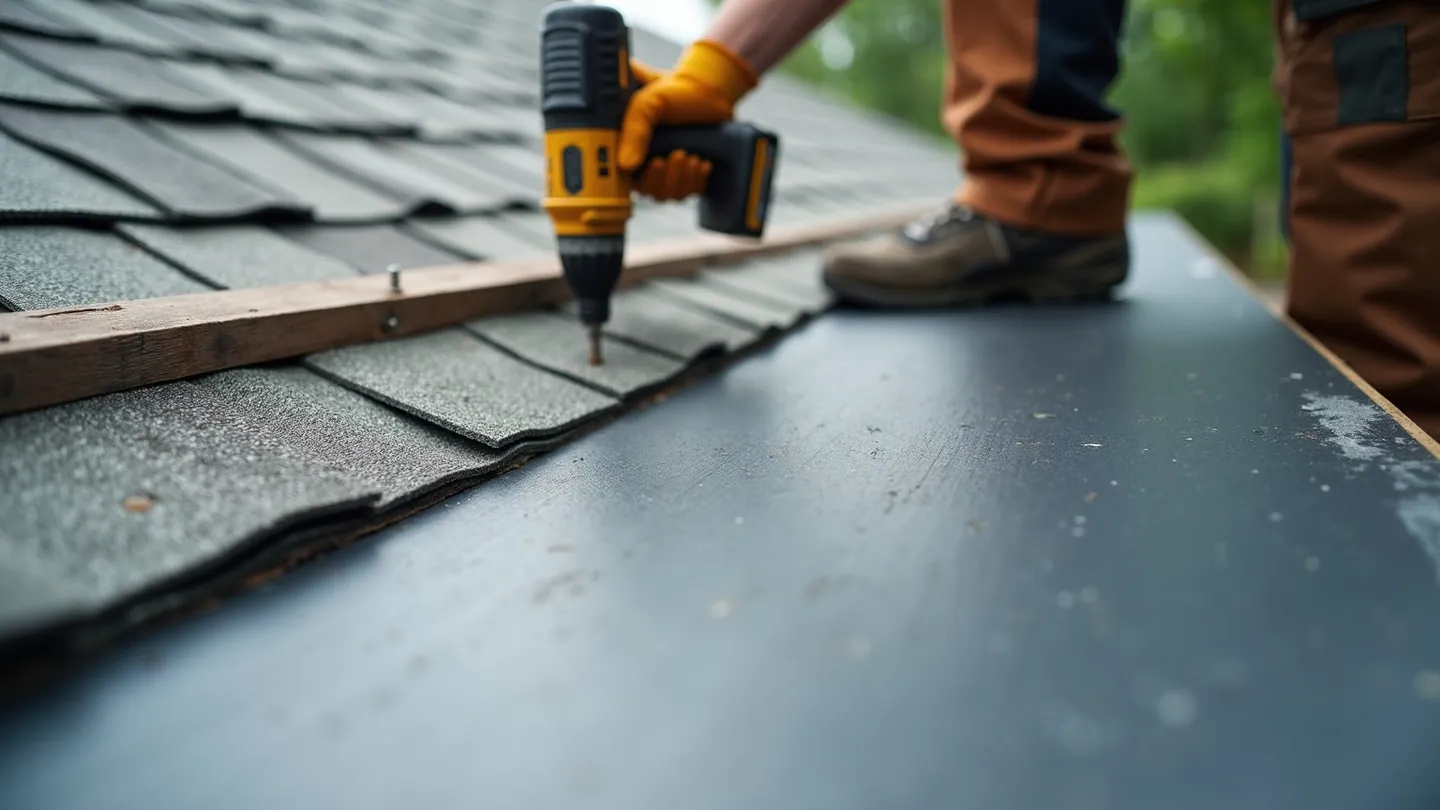
The three objections we hear most, in order, are noise, lightning, and tear-off cost. The first two are myths. The third is backwards: metal can usually be installed over one existing layer of asphalt shingles, which removes the tear-off and disposal from the quote entirely.
Noise. Over a solid deck and underlayment, a metal roof measures about as quiet inside as asphalt. The loud metal roofs people remember are bare panels over open framing on a barn or a shed, with nothing between the metal and the air.
Lightning. Metal does not attract lightning. It is not more likely to be struck than any other roof, and because steel is non-combustible and conductive, a strike is less likely to start a fire than it would be on a combustible surface.
Tear-off. The Ontario Building Code generally permits a second roofing layer, so a metal system over one existing layer of shingles is usually eligible, and metal is light enough to make that sensible where the framing allows. Two existing layers have to come off. We always look before we promise it, because a soft or rotten deck underneath is a tear-off no matter what goes on top, and covering a bad deck is how a good roof becomes a bad one.
How we quote both roofs on the same visit
The only number that settles the metal roof vs asphalt shingles question is your number, on your roof, with your tear-off, your pitch, and your dormers counted. So we measure the roof, look in the attic, check the deck and the ventilation, and hand you two itemised quotes side by side. No pressure toward the expensive one, because we install both and we would rather you buy the right roof once than the wrong roof twice.
Every Sherak roof carries a 10 year workmanship warranty, we hold $5 million liability insurance, and 10 percent of the price is due only after you are satisfied with the work. A metal roof in particular is only as good as the crew that installs it, so before you sign with anyone, read our checklist on how to choose a roofing contractor.
Call us at 905 490 8800 or get a free quote and we will price both.
Sherak Ltd, Head Office
12275 Woodbine Avenue, Gormley, ON L0H 1G0
Phone: +1 905 490 8800
Email: info@sherak.ca
Thinking about your own roof or exterior project?
Get a free, no obligation quote from Sherak, backed by a 10 year workmanship warranty.
Get a Free QuoteFrequently asked questions
Is a metal roof worth the extra cost over asphalt shingles?
How much more does a metal roof cost than shingles in Ontario?
Can a metal roof be installed over existing asphalt shingles?
Which roof is better for ice dams, metal or shingles?
Does a metal roof make my home insurance cheaper?
How long does an asphalt shingle roof actually last in Ontario?
Written by
Emad Alikhanpour
Roofing & Exterior Specialist
Emad has 15 years of hands-on experience across roofing and every exterior service Sherak offers, from shingle and metal roofs to siding, eavestroughs, soffit and fascia, and custom flashing.
15 years in the trade · Roofing and exterior services
View profileReader reviews
Loading reviews...