
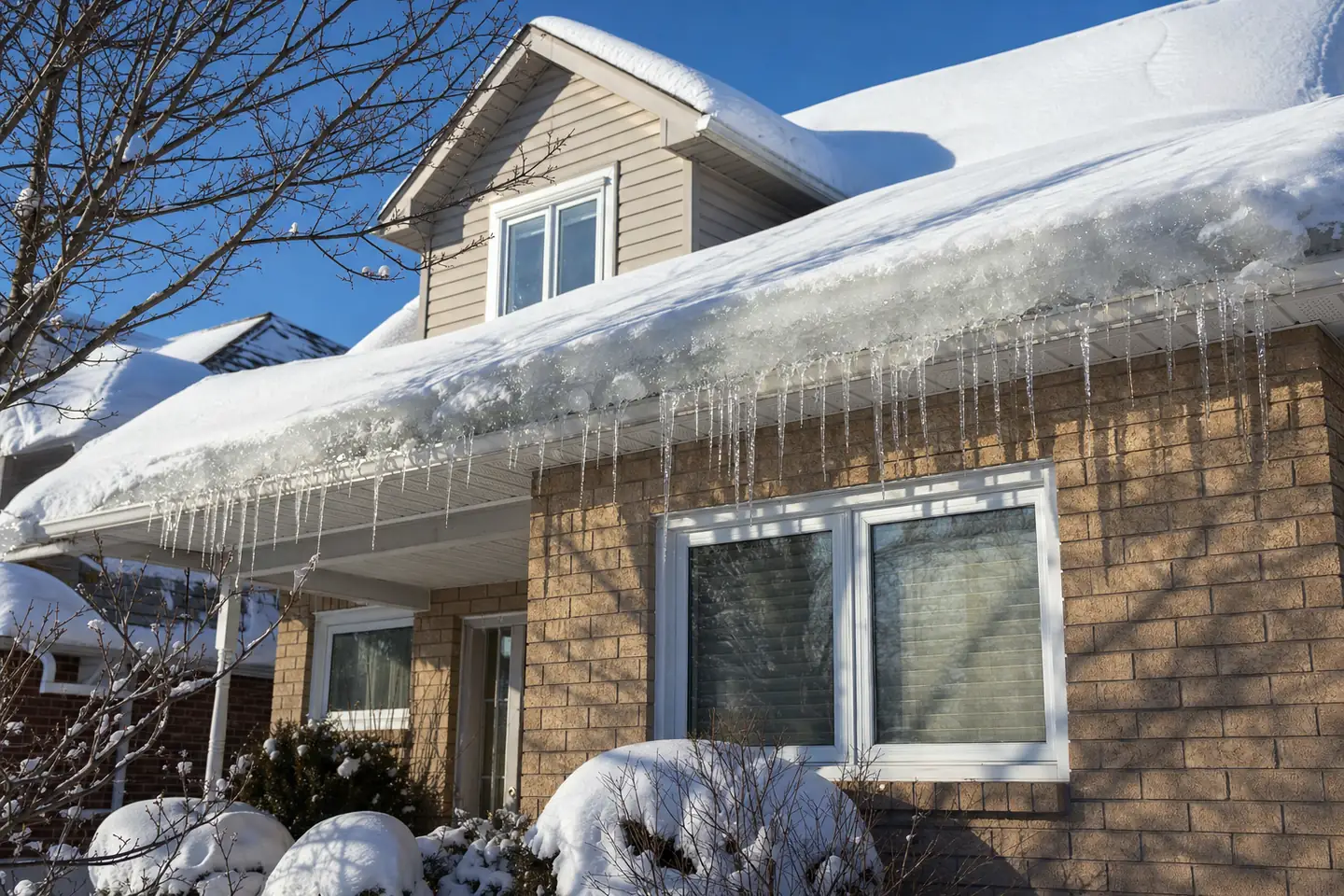
Snow on a roof is rarely the problem on its own. The trouble starts when it melts against a warm attic and freezes again at the eave, when a mild spell soaks a deep snowpack, or when a metal roof drops its whole load over the front steps. Sherak provides roof snow removal and ice dam removal for homes and commercial buildings across York Region, Simcoe, the Kawarthas and the GTA: a one-off visit after a storm, an emergency call when water is already getting in, or a seasonal plan that keeps a roof clear all winter.
It is also a job that is easy to do badly. A steel shovel through the shingles, an axe in the ice, a ladder on a frozen driveway, a long rake swung near the service wire: each one turns a winter chore into an insurance claim or an injury. Here is how to tell when your roof needs clearing, what a careful job looks like, and what happens when you call.
When does a roof need snow removal?
Most of the time it does not. A house roof in Ontario is designed for the snow its town gets in a heavy winter, and our pre-winter roof inspection guide sets out what that design load is in eight of the towns we serve. Snow removal from your roof becomes worth paying for when the snow stops sitting still: when it turns to ice at the eave, piles into drifts, soaks up rain, or starts to strain the structure under it. Call when you see any of these:
- Ice building along the eave, or icicles thickening over the eavestrough day after day.
- Water on a ceiling or an outside wall during a cold spell, with no rain in the forecast.
- Deep drifts against a wall, a dormer or a chimney, or snow that has slid off an upper roof onto a lower one.
- Rain forecast on top of deep snow. The snow soaks it up, and the roof carries both.
- A metal roof about to shed its load over a door, a walkway or a parked car.
- Doors or windows that suddenly stick, new cracks in the walls, or creaking and popping from the roof. FEMA lists these as warning signs of a roof under strain, and its advice is to get everyone out of the building and have it checked before anything else.
How heavy is the snow on your roof?
Heavier than it looks, and the kind of snow matters more than the depth. FEMA's Snow Load Safety Guide puts a foot of fresh snow anywhere from 3 pounds per square foot when it is light and dry to 21 when it is wet and heavy, and ice at a little under 5 pounds for every inch. In metric, on an ordinary house roof:
| What is on the roof | What it weighs |
|---|---|
| 30 cm of light, dry snow | about 15 kg per m² |
| 30 cm of wet, heavy snow | about 100 kg per m² |
| 30 cm of wet, heavy snow on a 140 m² (1,500 sq ft) roof | about 14 tonnes |
| 2.5 cm of ice | about 23 kg per m² |
| An ice dam 15 cm thick and 60 cm deep along 10 m of eave | about 820 kg, all on the edge |
For comparison, the National Building Code designs a Toronto house roof for 1 kPa of snow, about 102 kg per square metre, so 30 cm of wet snow is already the full figure. In Newmarket the design load is about 153 kg, reached at roughly 45 cm of wet snow, and in Collingwood about 192 kg, at roughly 57 cm.
Reaching that figure is not a collapse point, because a sound roof is built with a margin beyond its design load. It does mean the roof is carrying a full design winter, and more snow or a day of rain on top is the moment to have it cleared. Ice is the worst of it: FEMA notes that an ice dam puts a concentrated load on the eave and stops a sloped roof from shedding the snow above it.
What careful roof snow removal looks like
No two roofs come off the same way. How a roof is cleared depends on its pitch, the roofing, how much ice has formed and the weather on the day. The ground rules underneath do not change, and they are the ones FEMA sets out for anyone removing snow from a roof. They also make good questions for whoever you hire, us included:
- Leave a layer on. FEMA advises leaving at least a couple of inches of snow, because scraping a roof bare damages the covering and can lead to leaks.
- Plastic on the roof surface. No picks, no axes and no metal shovels.
- Drifts first, then the rest. Drifted snow comes off first where a roof meets a wall or a higher roof, and a sloped roof is cleared from the ridge down toward the eave.
- Nothing left piled on the roof, and nothing dumped against doors, vents or downspouts.
- Someone on the ground, keeping people and cars clear of falling snow and ice.
- A look at the roof afterwards for any damage the winter has already done.
Roof ice removal needs more care than snow. Sharp tools are out for the same reason: the shingles are frozen into the ice, and whatever cuts the ice cuts them too.
Why roof snow is not a ladder job
From the ground, with a plastic roof rake, clearing the bottom metre of a slope is a reasonable job for a homeowner, and our ice damming guide shows how. Climbing up is a different job. Ontario's construction rules require guardrails or other protection wherever a worker could fall more than 3 metres, and the eave of a two-storey house sits well above that, on a surface of snow over ice.
Power lines are the other hazard. The Electrical Safety Authority tells Ontarians to keep themselves and their tools at least 3 metres from overhead lines, because electricity can arc to a tool that gets close, and a roof rake on a long pole reaches a service wire easily. FEMA adds that metal rakes damage roofing and carry an electrocution risk. And snow on a sloped roof can let go at any moment: Canada's National Research Council warns that a sliding mass of roof snow can land a considerable distance out from the eaves.
When we clear a roof, the people on it and the house under it are covered: Sherak carries $5 million in liability insurance and WSIB coverage.
Roof snow removal and ice dam removal: emergency, one-off or seasonal
We take roof snow removal and ice dam removal three ways, on houses and on commercial buildings:
- Emergency calls. Water coming through a ceiling, ice tearing an eavestrough off, or a load you are worried about. Call +1 905 490 8800 at any hour.
- One visit after a storm. One roof, cleared once, booked when you need it.
- Seasonal plans. Clearing through the winter on a schedule, for homes and for commercial roofs where the snow cannot be left to build up.
Every roof is priced on its own, from its size and pitch, the depth and kind of snow, how much ice has formed, how easy it is to reach, and how quickly you need us there. The fastest way to a price is the free quote form: choose snow and ice dam removal and add a few photos of the roof and the eaves.
What snow removal will not fix
Clearing a roof deals with this winter. It does nothing about why the ice formed. An ice dam is a heating problem that shows up on the roof: warm air leaking into the attic melts the snow from underneath, and the meltwater freezes again at the cold overhang. Our guide to preventing ice damming walks through the fix in the order that works, and most of it happens in the attic, not on the shingles.
Some fixes do belong to the roof. Where one spot dams every year and the cause cannot be reached, a roof heat cable keeps a channel open. On a metal roof that sheds over a door, snow guards hold the snow where it lies. When the ice has already pulled a trough down, our seamless eavestrough crews put it back, and when water has reached the inside, emergency roof repair comes first and the snow second.
We are based in Gormley and take roof snow and ice dam calls from Newmarket and Aurora north to Innisfil, Wasaga Beach and the Georgian Bay shore, across the Kawarthas, and south into the GTA.
What ice dams left behind: three repairs from March 2025
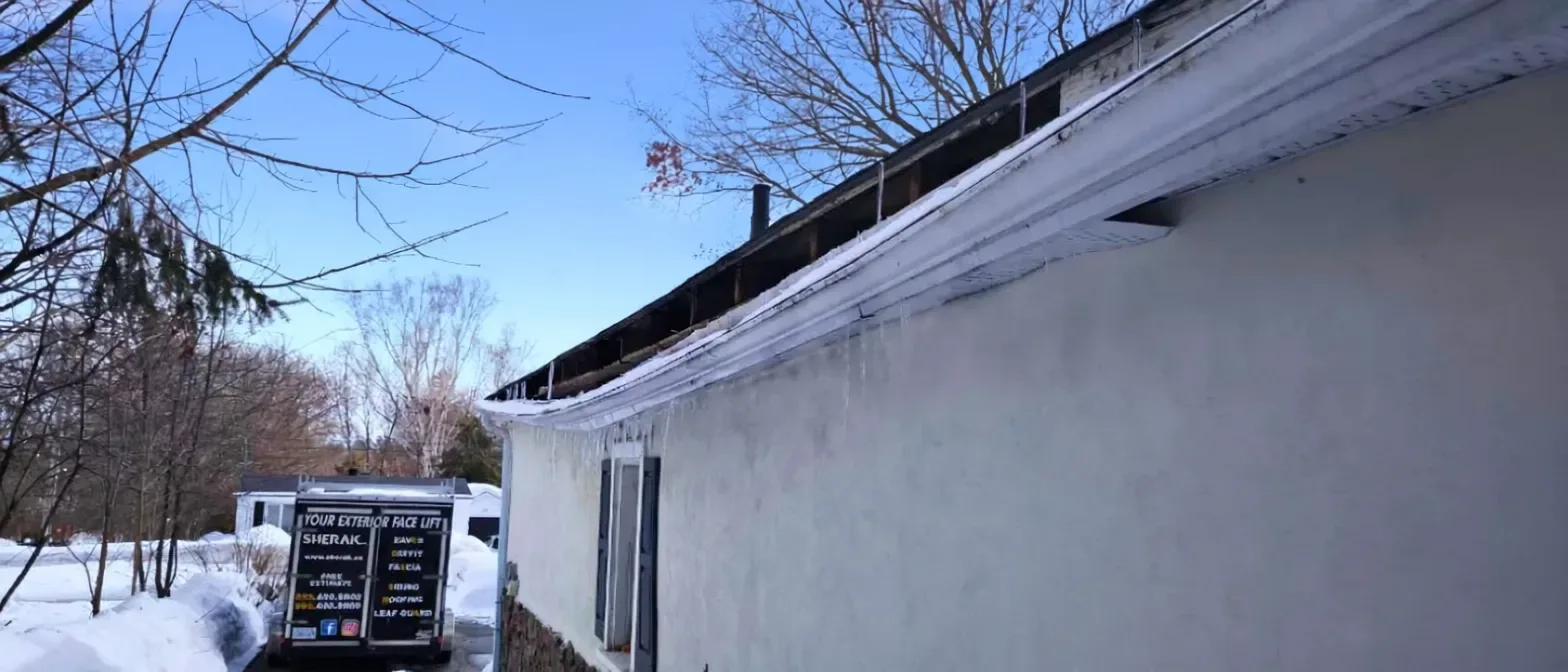
Orillia, March 2025
An ice dam along the roofline let water into the soffit and fascia, and the eavestroughs and downspouts failed under the weight of the ice. New troughs and a downspout, and the damaged soffit repaired.
See the project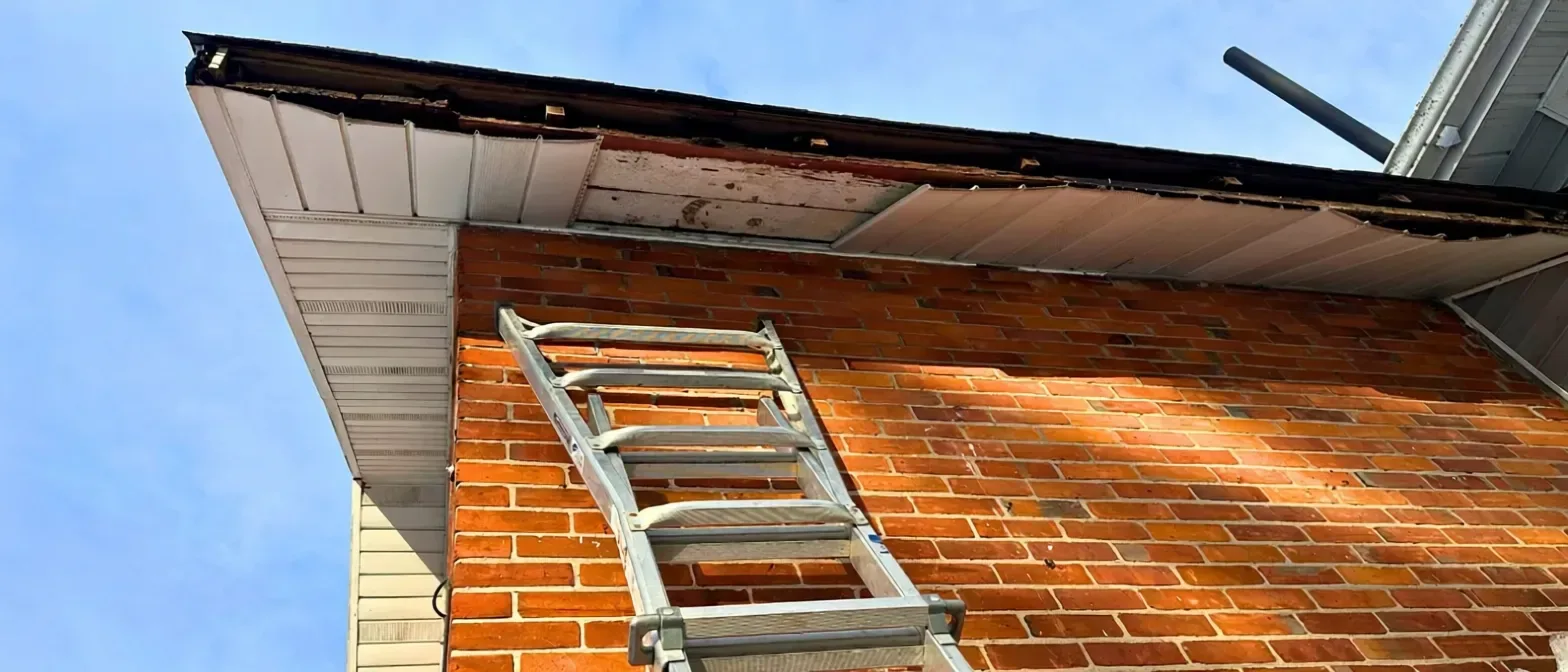
Sutton, March 2025
An ice dam backed water into the eavestrough and damaged the soffit behind it. We replaced the troughs and downspouts and repaired the soffit.
See the project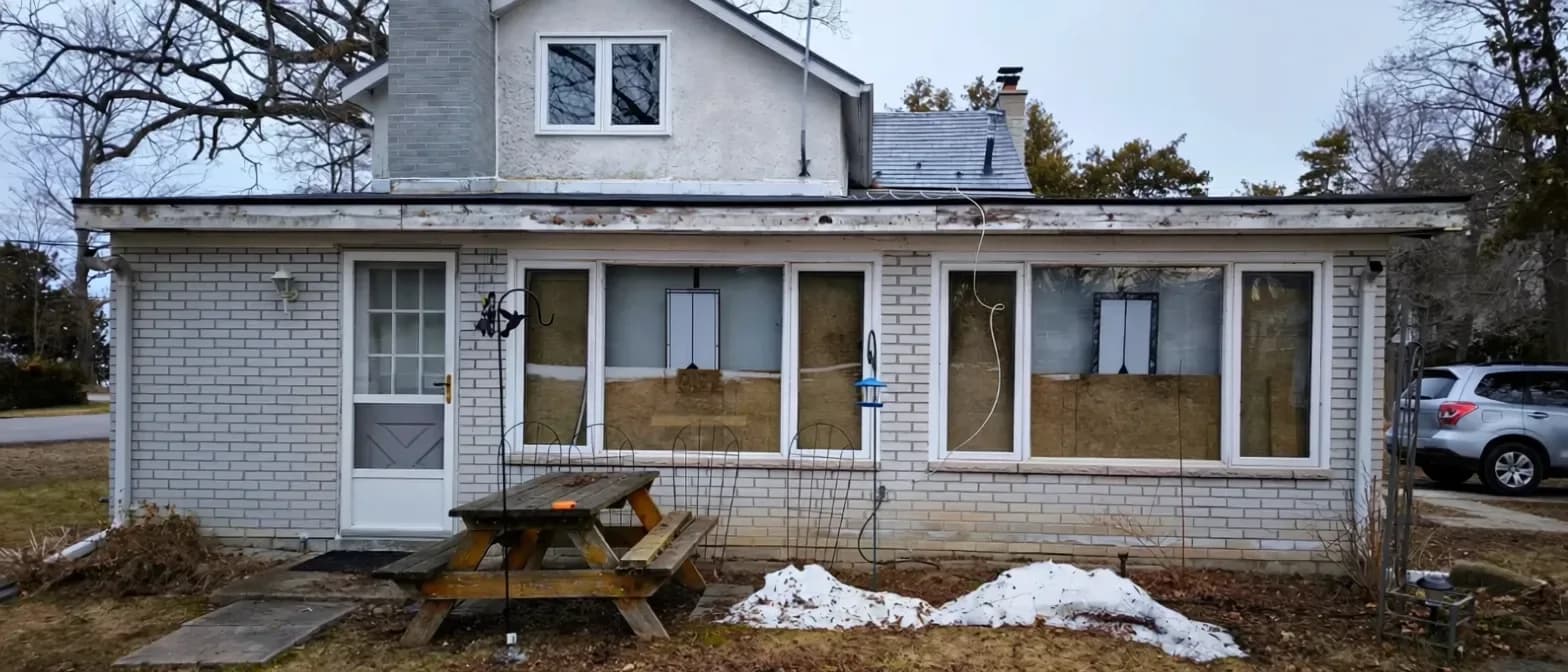
Jackson's Point, March 2025
The original eavestroughs were on the ground, brought down by an ice dam. New eavestrough, downspout repairs, soffit, fascia and siding over two days.
See the projectFrequently asked questions
- How much does roof snow removal or ice dam removal cost?
- It depends on the roof: its size and pitch, the depth and kind of snow, how much ice has formed at the eaves, how easy the roof is to reach, and how fast you need someone there. Ice dam removal is priced the same way, and we price each roof on its own. Send a few photos through our free quote form, or call +1 905 490 8800 if it is urgent.
- Can I remove an ice dam myself?
- You can clear snow off the bottom of the roof from the ground with a plastic roof rake, kept well away from overhead wires, and that takes away the snow a dam feeds on. Leave the ice itself alone. A ladder onto an icy roof is how winter falls happen, and chipping at a dam damages the shingles frozen into it. Our ice damming guide covers the safe part.
- Is ice dam damage covered by home insurance in Ontario?
- Often, but check your own policy. The Insurance Bureau of Canada says standard home policies commonly cover sudden and accidental water damage caused by ice dams, that policies vary, and that basic policies might not cover it. Speak to your insurer early, and take photos of the ice and of any water inside before anything is cleared.
- How much snow is too much for a roof?
- There is no single depth, because wet snow can weigh seven times as much as dry. Thirty centimetres of wet, heavy snow weighs about 100 kg per square metre, roughly what the Building Code designs a Toronto house roof to carry. Watch for ice at the eaves, deep drifts, rain on deep snow, and doors that start to stick, and see our roof inspection guide for the design figures in your town.
- Do you offer emergency roof snow removal?
- Yes. If water is coming in, ice is pulling the eavestrough down, or you are worried about the load, call +1 905 490 8800 at any hour.
- Do you clear snow from commercial roofs?
- Yes. We take one-off and emergency calls on commercial buildings, and we set up seasonal plans for owners who want a roof kept clear through the winter.
- How do you get rid of an ice dam on a roof?
- In two steps. For this winter, take away what feeds it: clear the snow off the lower roof, from the ground with a plastic roof rake or with a crew on the roof, and have thick ice removed without sharp tools, which cut the shingles frozen into it. For good, stop the heat that melts the snow. The dam forms because warm air leaks into the attic, and sealing and insulating the attic is the fix that lasts. Our ice damming guide covers that part.
- Are icicles on the roof a sign of an ice dam?
- Often. Icicles that thicken over the eavestrough day after day mean meltwater is running down from a warmer part of the roof and freezing at the cold edge, which is how an ice dam builds. They are a hazard in their own right too: FEMA warns that an icicle falling even a short distance can cause damage or injury, so keep people and cars out from under them and do not knock them down from a ladder.
Why homeowners choose Sherak
- Emergency calls. Call any hour when snow or ice is already causing damage.
- $5M Liability Insurance. Fully insured with $5 million liability coverage.
- WSIB Coverage. Registered with WSIB, so every worker on your roof is covered.